Temporary Protected Status ruling lifts deportation path
A Supreme Court ruling on Temporary Protected Status gives the Trump administration a clearer path to end protections for Haitians, Syrians and others.
Lauren Collins ·
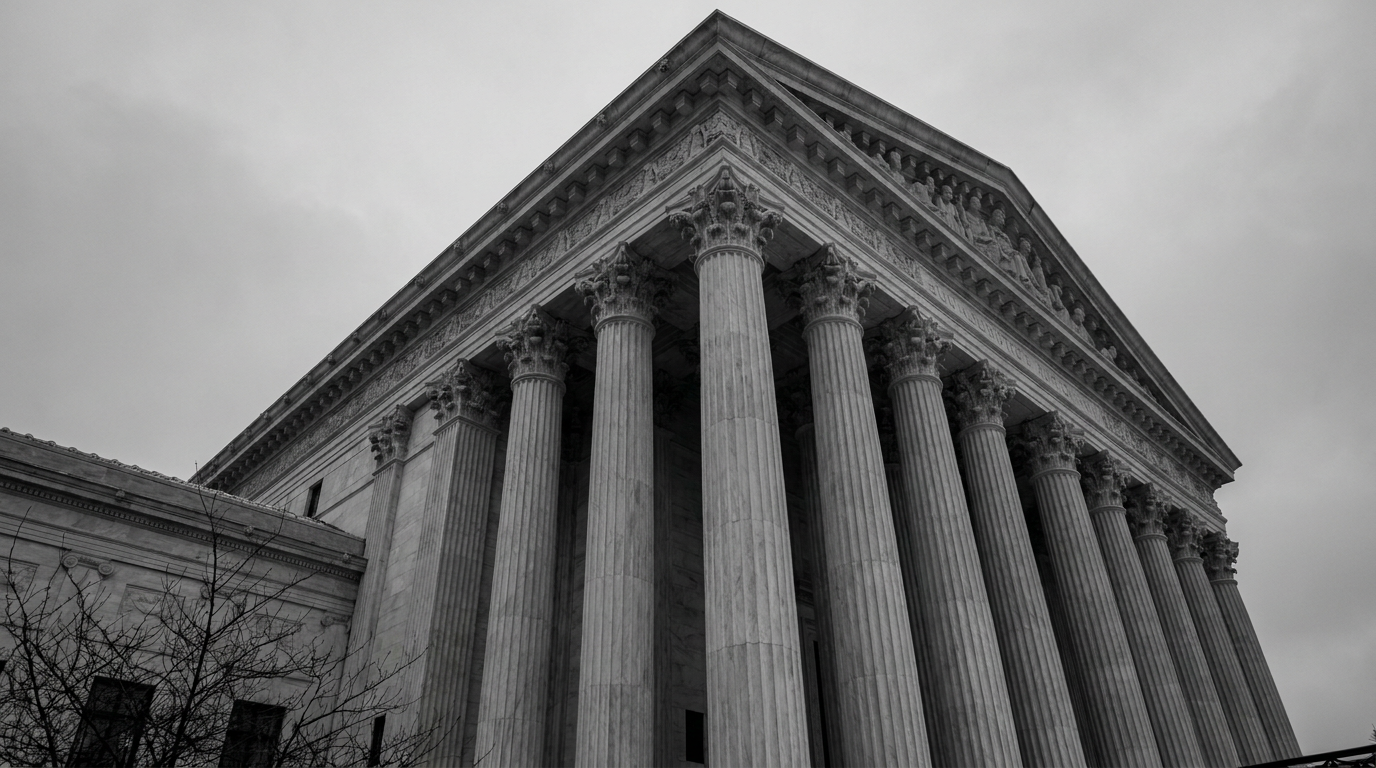
Temporary Protected Status is now central to President Trump's deportation drive after a Supreme Court ruling narrowed judicial review.
The decision gives the administration a faster legal route to strip protections from large groups of immigrants, even after Trump lost a separate fight at the Supreme Court over birthright citizenship. The immediate focus, according to people briefed on internal discussions, is on Haitians whose protection could be ended under the court's ruling.
Court ruling changes leverage
The high court ruled 6-3 that judges have limited authority to review executive branch decisions involving Temporary Protected Status. That finding matters because TPS decisions often turn on whether the government may keep, extend or terminate relief for people from countries facing crises.
Under the ruling described in the source material, the administration can move at once to end TPS benefits for about 350,000 people from Haiti and about 6,000 from Syria. The same legal opening could also affect immigrants from at least 11 other countries, with total protections at risk reaching as many as 1 million people.
Trump has repeatedly attacked Haitian immigrants in public remarks, and officials are weighing how to act without creating a visible confrontation in cities with large Haitian communities. People briefed on the talks said the discussions remain preliminary and center on using data and targeting tools rather than broad agent deployments in places such as Springfield, Ohio.
Haitians become first pressure point
Haitian TPS holders appear to be the most exposed group because of the scale of the protected population and the administration's stated enforcement priorities. If their status is terminated, many could lose protection from deportation and become subject to removal proceedings.
The policy shift would not require a new statute from Congress. It would rely on executive authority over the TPS program and on the Supreme Court's conclusion that courts have little room to second-guess those decisions.
That legal posture changes the balance between immigration courts, federal judges and the White House. For immigrant families, the practical question becomes whether a formal TPS termination is followed by notices, arrests or other enforcement steps, and how quickly those measures are carried out.
The administration's reported caution also shows the political risk attached to mass deportation efforts. A large operation in one city could draw immediate attention; a data-led campaign would be less visible at the start but could still reshape communities over time.
Enforcement system absorbs shock
The broader immigration system would face a different kind of pressure if protections are ended across multiple nationalities. More people could enter removal proceedings, seek other legal relief or challenge individual enforcement actions even if the TPS decision itself is harder to review.
For the Trump administration, the ruling offers a way to turn court victories into operational momentum. The constraint is execution: officials must decide which groups to prioritize, how to locate people, and how to manage the response from cities, advocates and foreign governments.
If the administration starts with Haitians and Syrians, the effect would be concentrated but immediate. It would test whether the ruling can be converted into deportations at scale, while signaling to other TPS populations that their status may be next.
If officials instead phase decisions across the wider list of at least 11 countries, the enforcement impact would spread over a longer period. That path could reduce the visibility of any single operation but increase legal and logistical demands across the immigration system.
If courts find room to intervene in later individual cases, the administration's advantage could narrow without reversing the Supreme Court's core holding. The key uncertainty is whether the government uses the ruling as a targeted tool or as the foundation for a much larger rollback of humanitarian immigration protections.