UN secretary-general vote puts Rodrigues ahead of field
Carolyn Rodrigues Birkett led the second UN secretary-general straw poll with eight encourage votes, but permanent-member veto power still controls the path.
Mateo Fernandez ·
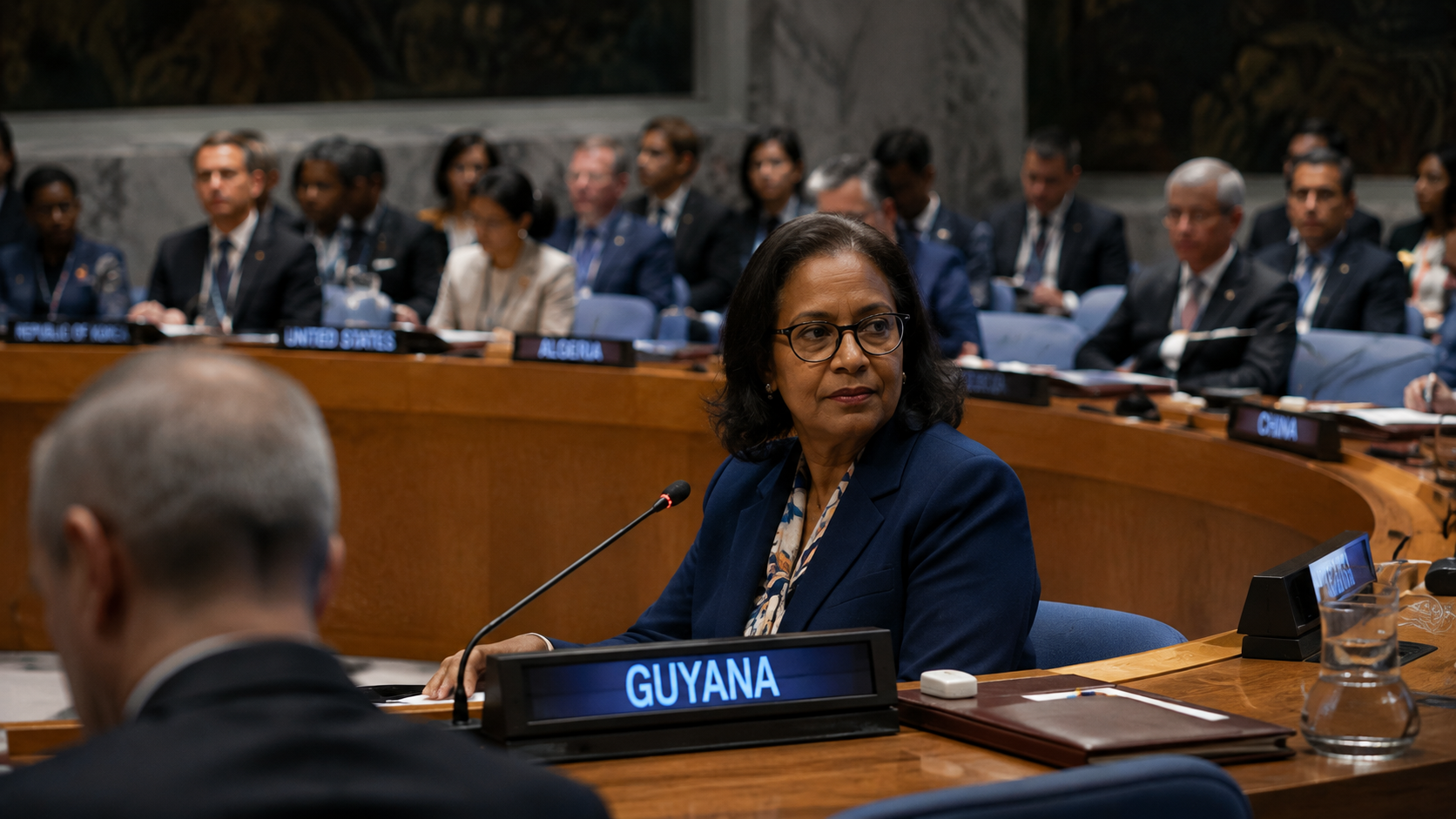
UN secretary-general candidate Carolyn Rodrigues Birkett led a second Security Council straw poll with eight encourage votes, leaving veto math open.
The informal vote on Friday put Guyana's ambassador ahead of seven other declared contenders, according to results circulated after the ballot. Costa Rican diplomat Rebeca Grynspan and Rafael Grossi of Argentina, the International Atomic Energy Agency chief, each received seven encourage votes.
Eight votes put Rodrigues ahead
Rodrigues Birkett also drew three discourage votes, while four council members recorded no opinion, the circulated results showed. Grynspan received four discourage votes after leading the first round in July, while Grossi drew six discourage votes, a higher level of resistance despite matching Grynspan's support tally.
Ambassador Christina Markus Lassen of Denmark, the Security Council president for August, confirmed that the vote had taken place. The straw poll was non-binding and did not amount to a formal nomination.
The remaining candidates are former Senegalese President Macky Sall, former United Nations General Assembly President Maria Fernanda Espinosa of Ecuador, former Chilean President Michelle Bachelet, Ugandan diplomat Olara Otunnu and Ecuadorian diplomat Ivonne A-Baki. The field still includes former heads of state, senior diplomats and officials with experience across the UN system.
Veto power shapes nomination math
The Security Council uses secret straw polls to measure backing among its 15 members before deciding whether to recommend a nominee to the General Assembly. The assembly typically approves the council's choice, making the council stage the decisive part of the selection process.
A candidate needs at least nine votes in a formal Security Council vote to advance, according to the selection rules described in the source material. Any of the five permanent members, the United States, China, France, Russia and the United Kingdom, can block a nominee with a veto.
That structure makes the discourage count as important as the headline support figure. Rodrigues Birkett led the field on encourage votes, but the four no-opinion marks leave room for the balance to shift before a formal vote.
Guterres term ends December 31
Current UN Secretary-General Antonio Guterres has held the post since 2017, and his second five-year term ends on December 31. The job has no formal two-term cap, but no secretary-general has served more than two terms.
The timing gives the council a narrowing window to test whether any candidate can command broad enough support without triggering opposition from a permanent member. The next secretary-general will inherit an institution whose authority depends heavily on whether major powers allow the office room to act.
For the UN, a contested selection can weaken the handover by consuming diplomatic attention that would otherwise go to staffing, budget priorities and crisis management. For member states, the process is also a measure of whether the council can still converge on personnel decisions when its permanent members are divided on security issues.
Scenarios hinge on no-opinion votes
If Rodrigues Birkett converts some of the four no-opinion votes into support while limiting further discourage votes, the council could move toward a consensus recommendation. That path would give the UN a clearer transition, reduce public bargaining among major powers and allow UN agencies to plan around a likely change in leadership.
If Grynspan regains momentum from the July round, her lower discourage count than Grossi's could matter in a council where avoiding veto risk is central. In that scenario, the UN contest would remain fluid, and diplomatic attention would shift from raw encourage totals to which candidate appears least likely to face a permanent-member block.
If Grossi or another contender builds support but keeps a high discourage count, the race could slow as council members test alternative names. The main uncertainty is whether Friday's no-opinion votes represent movable support, tactical withholding or resistance that has not yet been made explicit.