Cuba blackout tests Havana as fourth outage hits in a month
Cuba restored power after a 36-hour blackout, but repeated grid failures are sharpening pressure on Havana’s fuel supply and economic reforms.
Sofia Reyes ·
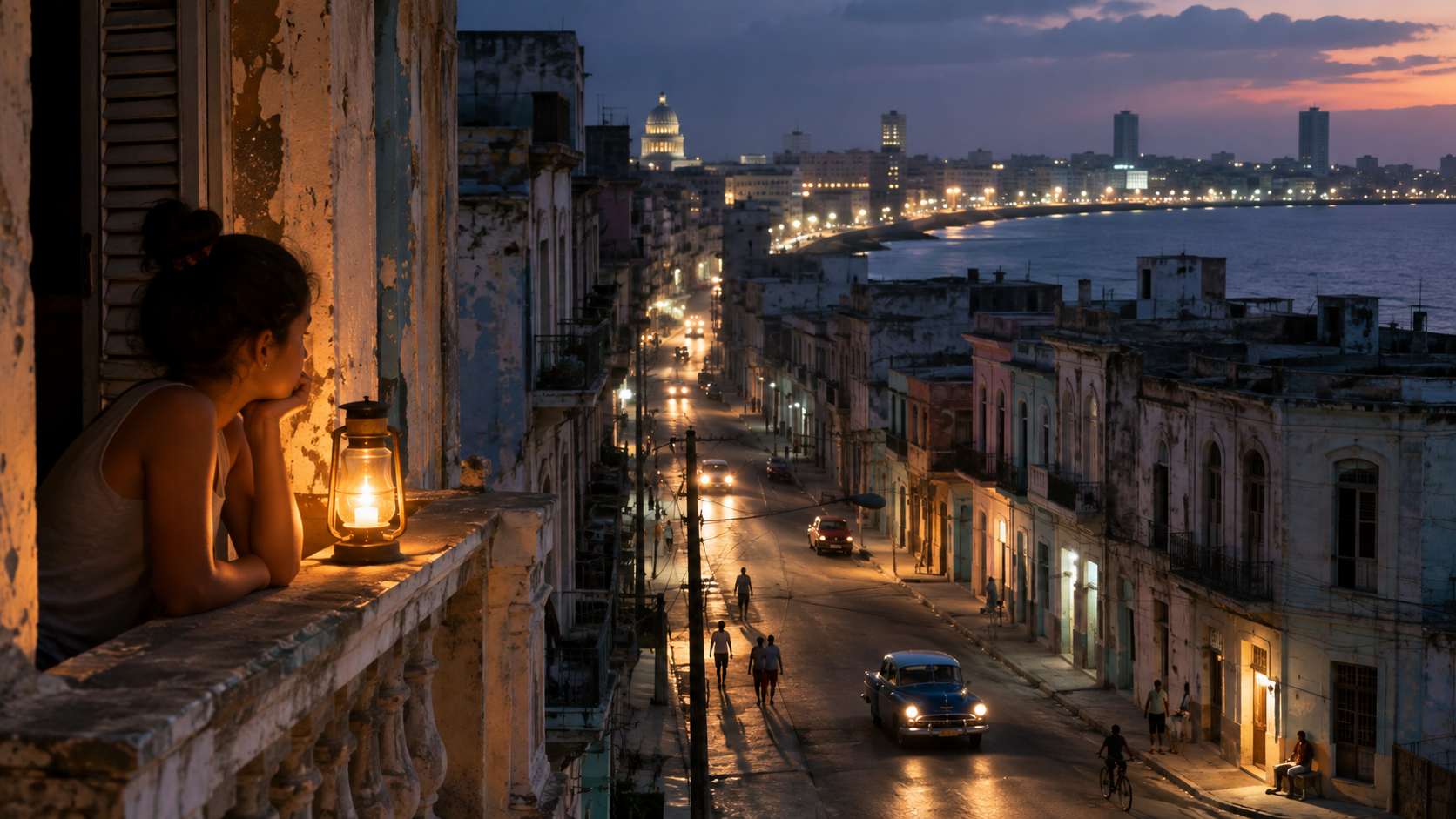
Cuba blackout repairs restored national power Tuesday after 36 hours, easing an islandwide failure that again exposed fuel and grid strain.
The energy ministry said the national grid was operating again at about 11:35 a.m. local time. The outage began Sunday night and hit a country of 9.4 million people, marking the fourth nationwide failure in less than a month.
Grid returns after 36 hours
The government said foul weather on Monday slowed the effort to bring electricity back. That delay mattered because each extra hour without power compounds pressure on food storage, water pumping, hospitals, communications and transport.
National blackouts are especially damaging in Cuba because households and businesses have limited private backup capacity. When the grid goes down at national scale, the disruption is not confined to one province or a single industrial zone.
Rodríguez blames sanctions
Foreign Minister Bruno Rodríguez linked the outage to US sanctions, saying the country has been deprived of fuel, replacement parts and outside technical help. He also referred to what he described as a de facto oil blockade that has lasted eight months.
Rodríguez wrote on X that the repeated failures were the “direct consequence of the genocidal blockade.” His language reflects Havana’s long-running argument that US pressure has weakened Cuba’s ability to import the fuel and equipment needed to keep basic systems functioning.
President Trump’s administration has increased economic restrictions on Cuba as part of a campaign against the island’s communist-run government. Havana’s leadership has responded to pressure by presenting market-oriented economic changes, while insisting that its political system is not open to negotiation.
Fuel shortage meets old infrastructure
The immediate problem is electricity, but the deeper issue is the link between fuel availability, grid maintenance and hard-currency access. If fuel shipments are delayed or spare parts cannot be sourced quickly, power plants become more vulnerable to cascading failures.
The repeated outages also carry a political cost for Havana. Power cuts are among the most visible signs of economic stress because they reach every household, regardless of whether the original cause is weather, maintenance, fuel supply or sanctions.
For businesses, unreliable electricity raises costs even when production is not directly energy-intensive. Shops lose refrigerated goods, factories face stoppages, and service providers have to operate around uncertain schedules rather than normal demand.
Scenarios for Havana’s grid
If Tuesday’s restoration holds, the near-term macro effect is containment: Cuba avoids a longer disruption that would further drag on daily commerce and public services. For the government, that would buy time to manage fuel and maintenance needs, while the wider energy sector would still face pressure to stabilize generation before the next weather or supply shock.
If another national failure follows, the mechanism is different. Repeated shutdowns would weaken confidence in the grid, force more emergency rationing, and make sanctions enforcement, fuel procurement and infrastructure repair even more central to Cuba’s economic debate.
A third path depends on whether Havana’s market-friendly reforms can ease bottlenecks without changing the political framework officials say is fixed. If reforms improve access to supplies or investment, the grid could become less fragile; if they stall, electricity failures may remain the clearest public measure of Cuba’s wider economic strain.
The unanswered questions are practical rather than rhetorical: how much fuel Cuba can secure, how quickly worn equipment can be repaired, and whether weather disruptions keep hitting restoration work. Those factors will determine whether Tuesday’s restart becomes a pause in the crisis or the start of a steadier period for the island’s power system.