Uganda media shutdown ordered as army chief targets NMG
Uganda media shutdown orders from army chief Muhoozi Kainerugaba forced Nation Media Group outlets to halt operations, with soldiers deployed in Kampala.
Amina Diallo ·
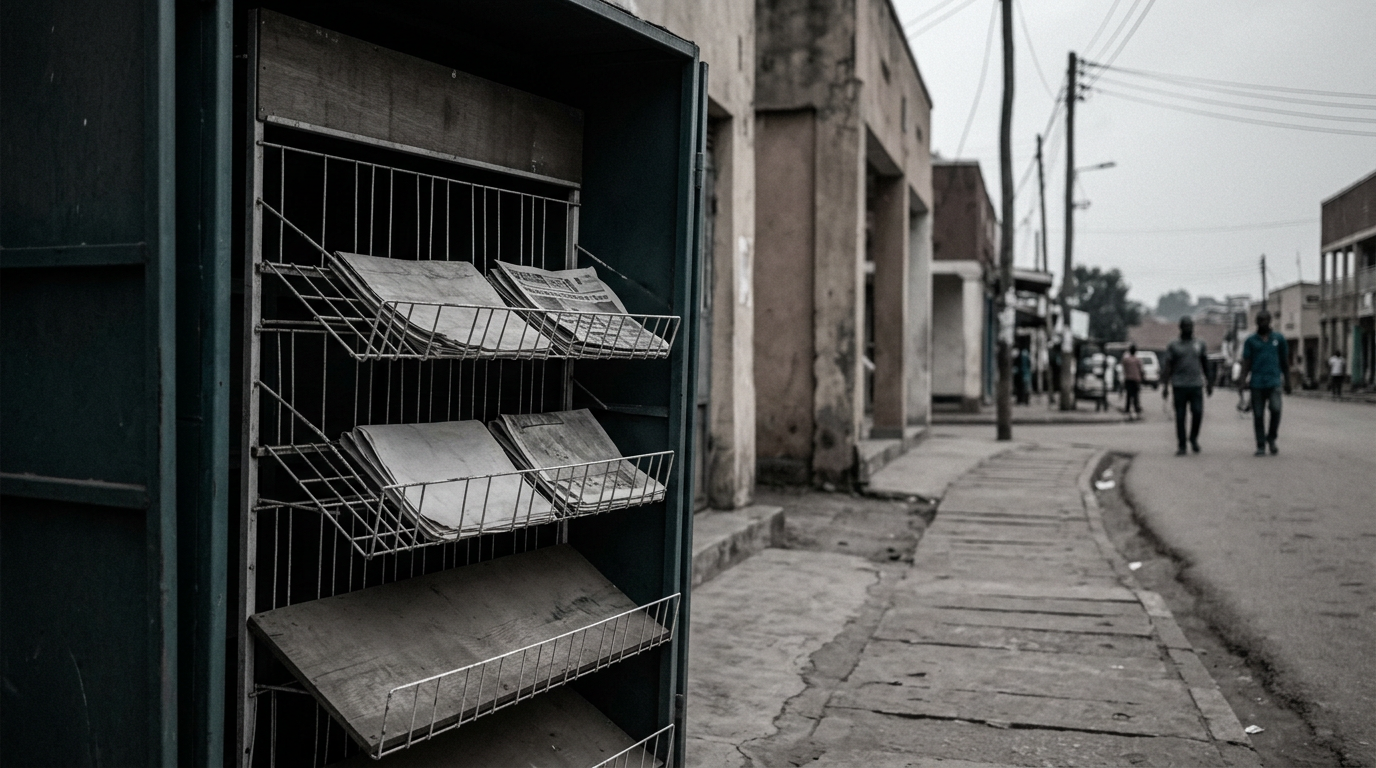
Uganda media shutdown orders issued by the country’s army chief have forced Nation Media Group’s leading outlets off air and out of print, escalating a long-running standoff between authorities and independent newsrooms.
Gen Muhoozi Kainerugaba said in posts on X early Sunday that NTV Uganda and the Daily Monitor would remain closed “until further notice,” accusing the group of biased coverage. Phone calls to the company’s main office did not connect when Bloomberg sought comment.
In the same online posts, Kainerugaba rejected the idea of an unfettered press, writing that he does not believe in “a free press” and that media should be “guided” by revolutionary cadres. The remarks drew renewed scrutiny because of his senior military role and his public political ambitions.
Soldiers deployed as outlets report power cut
NTV Uganda reported that its premises and the Daily Monitor’s offices were surrounded by military personnel following the directive. The broadcaster published video footage showing soldiers stationed outside the media group’s headquarters in Kampala.
The company said the intervention began in the early hours of Sunday and included an electricity disconnection that interrupted operations across radio, television and newspaper platforms. Nation Media Group also said the clampdown affected Dembe FM, Spark TV and KFM.
The closures come at a time when Kainerugaba, 52, has become one of Uganda’s most prominent political voices, often via social media. He has previously issued controversial statements online, including comments that threatened neighboring Kenya and posts interpreted as intimidation of opposition figures.
Powerful position, explicit views on press freedom
Kainerugaba is the son of President Yoweri Museveni, who has led Uganda since 1986 and is now in his 80s. The army chief has repeatedly said he intends to succeed his father, placing his statements and actions under heightened domestic and international attention.
Uganda’s security services have historically played an outsized role in political life, especially around periods of heightened dissent and contested reporting. The decision to halt operations at the country’s best-known independent media group is likely to sharpen debate over the limits of public criticism and the role of state institutions in regulating journalism.
Nation Media Group’s outlets command large audiences in Kampala and beyond, making them a key source of political and economic news. Any prolonged shutdown would constrain information flows for viewers, readers and advertisers, and could increase pressure on other outlets to moderate coverage.
Pattern of disputes between Nation Media and authorities
The latest action fits a longer pattern of conflict between Nation Media’s Ugandan brands and government authorities. In 2023, the group was barred from covering certain presidential and parliamentary functions, restricting access to official events.
Earlier, in 2013, the Daily Monitor, Dembe FM and KFM were shut for more than a week after reporting on an alleged plot to assassinate political and military officials said to be opposed to Kainerugaba’s succession drive. At the time, the government denied there was any succession plan.
Sunday’s shutdown order differs in its bluntness, with the army chief publicly asserting that the press should operate under ideological guidance. The combination of a public directive, a reported military presence at offices, and disruption of utilities signals a move beyond regulatory pressure toward direct operational constraint.
Next steps will depend on whether the closure order is formalized through civilian regulators or remains an exercise of security power, and on how long the reported siege and power disruption continues. Observers will be watching for court challenges, statements from communications authorities, and any indication that other independent outlets could face similar action.