Iran leaders press for war exit as economy deteriorates
Iran’s president and speaker urged attention to ending the war and reviving the economy as sanctions and a port blockade squeeze Tehran.
Omar Farouk ·
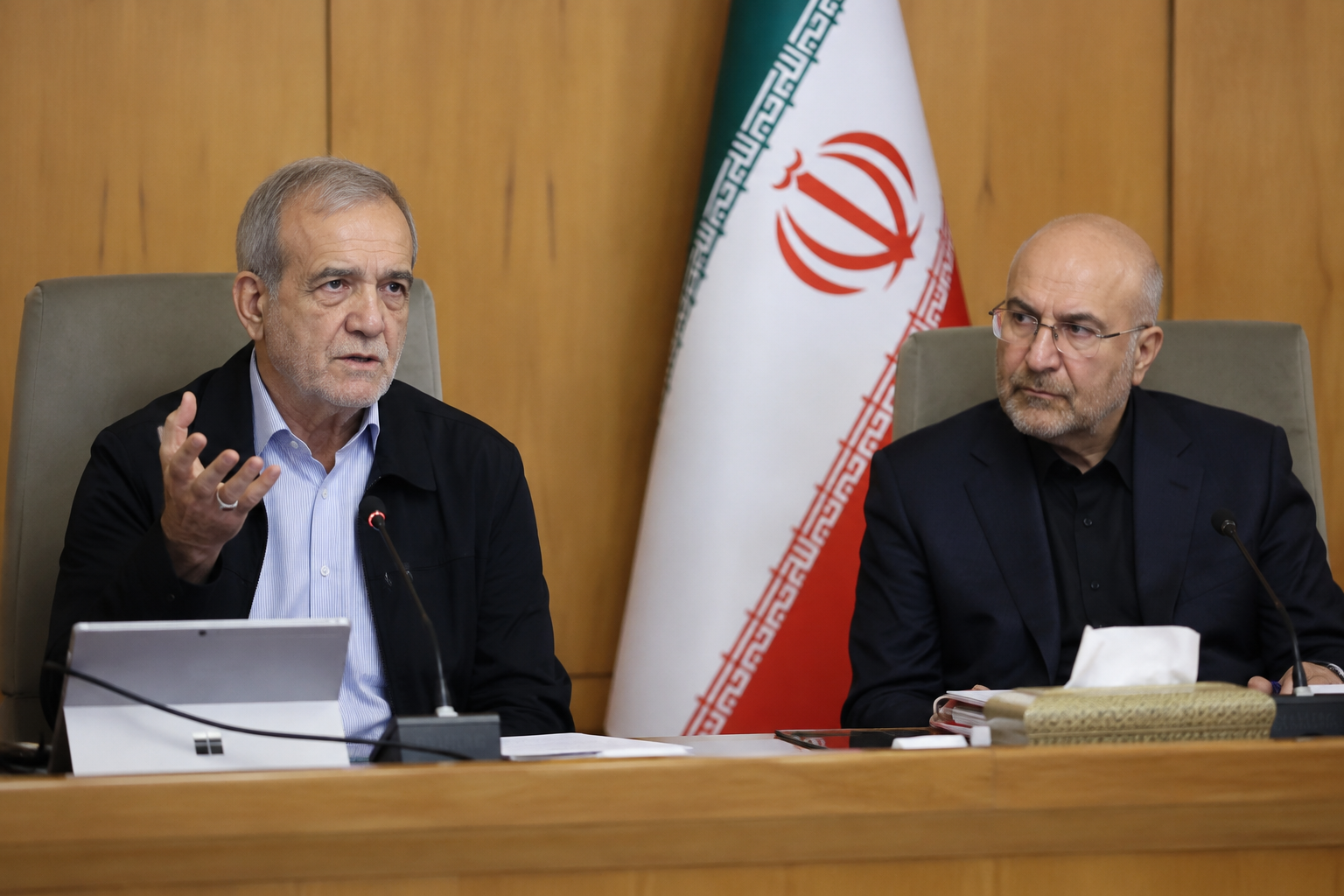
Iran war leaders urged an end to the six-month conflict as sanctions and a port blockade deepen pressure on Tehran’s economy.
President Masoud Pezeshkian and Parliament Speaker Mohammad Bagher Ghalibaf both pointed to the economic cost of continuing the fight, setting them apart from harder-line voices pressing for a more defiant stance. Their remarks came with diplomacy stalled and President Trump’s administration applying tighter economic pressure through sanctions and a naval blockade of Iranian ports.
Pezeshkian presses a war exit
Pezeshkian said Friday in comments reported by Iranian media that the conflict could not continue indefinitely. “The war must come to an end at some point,” he said, adding that Iran should present the decision as one made from “strength and dignity.”
Ghalibaf framed the issue through domestic stability rather than battlefield terms. “No matter how much military power we have, if our people are struggling and the country lacks financial circulation and economic growth, we will not achieve progress,” he said.
The speaker’s remarks matter because he is not a marginal critic of Iran’s security establishment. By linking national security to household strain and commercial activity, Ghalibaf put the economy at the center of a debate that hardliners have cast largely around resistance and leverage.
Hormuz terms block diplomacy
The diplomatic track has failed to produce a durable framework. A memorandum of understanding signed in June to wind down the conflict collapsed after disputes over Iran’s attempts to regulate traffic through the Strait of Hormuz, the waterway at the center of the talks.
Negotiations earlier this month also stalled after the US refused terms that did not guarantee unimpeded passage through the strait. President Trump, speaking to reporters Friday, said Iran wanted an agreement but had not accepted terms the White House considered adequate.
“They would love to make a deal, but they’re not ready to make the right deal,” Trump said. The administration has also called this week for the collapse of the Iranian regime, a position that narrows the political room for Iranian officials to present concessions as a negotiated settlement.
Iranian hardliners have treated the pause in fighting as a period to prepare for further escalation, according to the account of the political debate reflected in the public comments. Their position rests partly on distrust of Washington and partly on the view that control over Hormuz traffic remains one of Tehran’s strongest bargaining tools.
Currency pain reaches politics
The war and economic restrictions have added to an economy already under strain, with Iran’s currency weakening further and daily costs becoming harder for households to meet. Pezeshkian and Ghalibaf appear to be warning that economic exhaustion could become a security problem if it continues.
Hamidreza Azizi, an Iran analyst, wrote on social media that President Trump appeared to be using Iran’s economic weakness to seek deeper concessions. He said that approach risks making compromise harder for Tehran by turning any retreat into a public humiliation.
“This is creating a vicious circle,” Azizi wrote. Danny Citrinowicz, the former head of the Iran division of Israeli defense intelligence, wrote Friday that neither side appeared ready to make the concessions needed for a settlement.
For global markets, the immediate channel is not Iranian growth alone but the risk attached to Gulf shipping, insurance and energy flows if the Strait of Hormuz dispute remains unresolved. A deal that secures passage would lower that risk channel; renewed fighting would push it back into shipping contracts and regional security planning.
If sanctions and the port blockade keep tightening, Iran’s government faces a harder trade-off between preserving bargaining leverage and easing domestic economic strain. If talks reopen around guaranteed traffic through Hormuz, Tehran could claim a managed exit while the White House argues it protected navigation, but both sides would still need language that survives criticism at home.
If hardliners instead prevail, the next phase is more likely to run through maritime restrictions, new sanctions and further military preparation than through a broad settlement. That path would deepen pressure on Iranian households, keep regional shipping exposed and leave diplomacy dependent on whether either side can accept a narrower bargain without presenting it as defeat.