Kyiv Air Defenses Strained by Relentless Missile Barrages
Recent missile attacks on Kyiv, using diverse weaponry including North Korean ballistic missiles, expose significant vulnerabilities in Ukraine's air defense…
Atlas Newsdesk ·
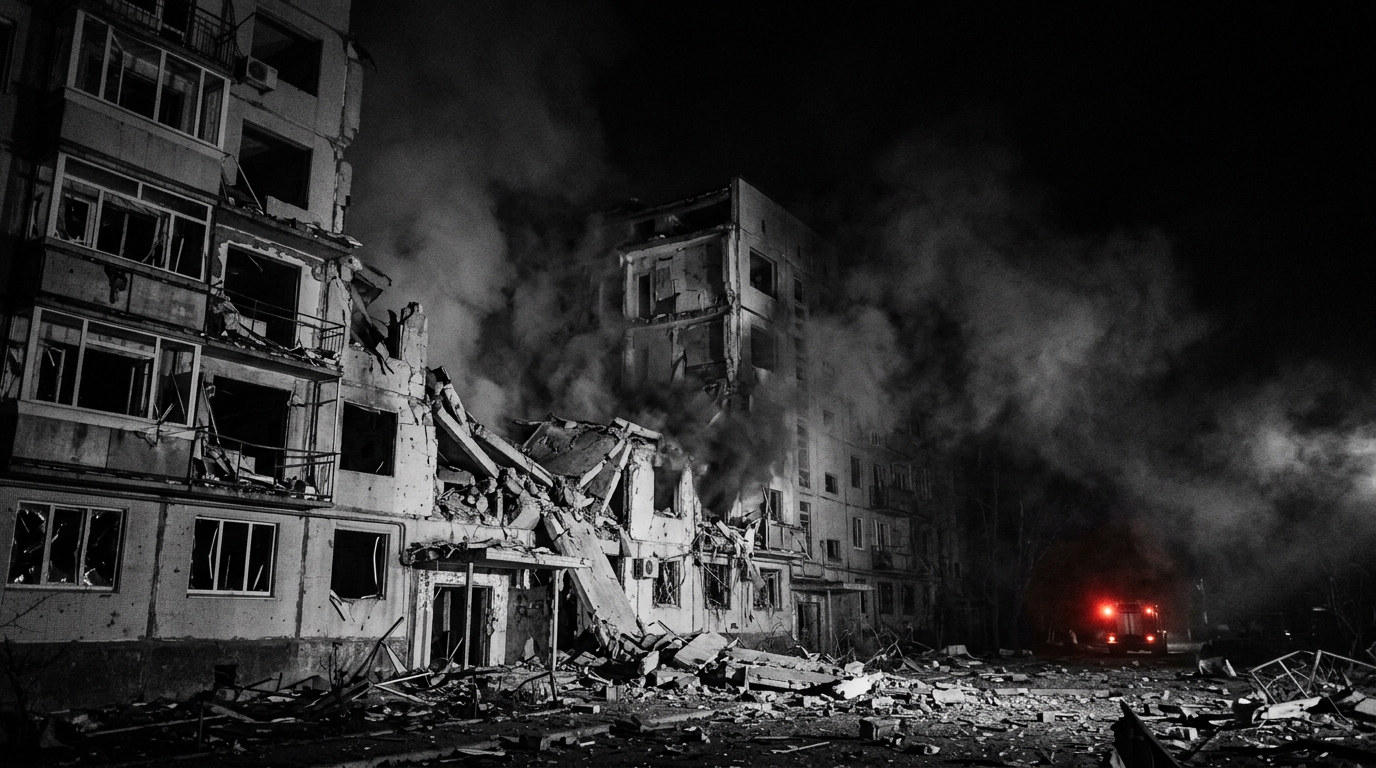
Kyiv experienced a series of intensive aerial attacks between August 19 and 20, 2026, when Russian forces launched 22 missiles in two distinct waves. The strikes reportedly targeted civilian infrastructure, including a residential complex, an academic institution, and a children's hospital. Authorities confirmed that 12 individuals died, and 30 others sustained injuries as a direct result of these bombardments.
The munitions deployed in the assault included Iskander, hypersonic Zircon, and KN-23 ballistic missiles. Officials indicated that some of the ballistic missiles used were supplied by North Korea, highlighting a broader international dimension to the ongoing conflict. The varied arsenal employed underscores a developing technological and logistical strategy by the attacking forces.
Ukraine's Air Defense Limitations
Ukrainian military officials have consistently voiced concerns regarding the current limitations of their air defense infrastructure. These systems are reportedly insufficient to effectively counter three specific threats: high-speed ballistic missiles, long-range glide bombs, and recently developed jet-powered Shahed drones. This existing gap in defensive capabilities presents a persistent challenge for Ukraine.
Glide bombs, which are modified Soviet-era FAB-series munitions fitted with jet-boosted kits, now reportedly possess an extended operational range of up to 150 kilometers. These enhanced bombs can operate at altitudes that surpass the current engagement parameters of Ukrainian defensive measures, complicating interception efforts and increasing their destructive potential on target areas.
Evolving Warfare Technology
The conflict has entered a dynamic phase marked by rapid technological advancement and adaptation from both sides. Russian forces are reportedly integrating components, such as turbine parts from China and hardware from North Korea, in an apparent effort to circumvent existing Ukrainian interceptor technologies. This strategic incorporation of diverse foreign technology points to an evolving arms race within the region.
While Ukrainian defense industries are actively developing faster interceptor drones specifically designed to counter the new jet-powered Shahed variants, officials noted that large-scale production of these advanced countermeasures is still several months away. This delay creates a window of vulnerability that opposing forces may seek to exploit.
Military analysts are closely observing the refined strike architecture, noting its potential as a proving ground for broader adversarial collaborations. This evolving tactical synchronization among various nations carries significant implications for global security dynamics and the future trajectory of military technology.
Broader Strategic Implications
The use of advanced and internationally sourced weaponry by one side, coupled with identified vulnerabilities in the other's defensive capabilities, underscores the complex and evolving nature of modern warfare. This situation not only impacts the immediate conflict zone but also serves as a critical case study for defense planners worldwide.
The observed adaptation in both offensive and defensive technologies suggests a future landscape where rapid innovation and diverse sourcing of military components will be paramount.
The reported involvement of multiple nations in supplying advanced military components points to a potential realignment of global defense strategies and alliances. Observers suggest that the conflict is serving as a crucible for new military doctrines and equipment, which could influence international security policies for years to come.
The long-term implications extend beyond the immediate battlefield, touching upon arms control, geopolitical stability, and the development of next-generation defense systems.