

Incoming Congressman Scott Wiener Prioritizes Federal AI Regulation
Newly elected Representative Scott Wiener plans to prioritize federal AI regulation, focusing on safety standards and oversight to mitigate existential risks.
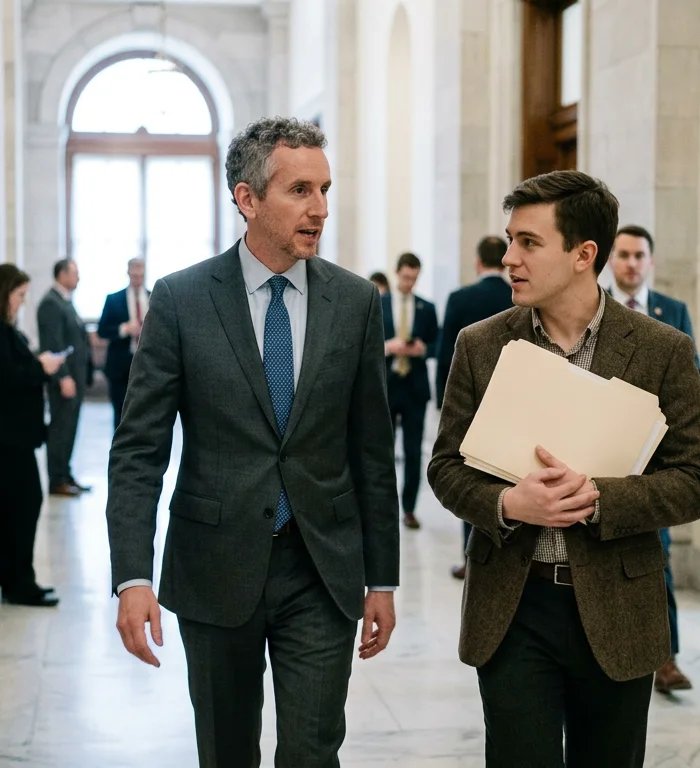
Scott Wiener, the newly elected representative for California’s San Francisco district, has identified the regulation of artificial intelligence as a primary legislative objective. Having previously authored state-level AI safety legislation, including the vetoed SB 1047 and the enacted SB 53, Wiener intends to translate his state-level experience into federal policy. His focus centers on mitigating risks associated with "recursive self-improvement" in frontier AI models, which he characterizes as a potential threat to human control over technology.
Wiener advocates for the establishment of an empowered federal regulatory body, the implementation of mandatory testing and auditing requirements, and the creation of robust whistleblower protections. He has expressed interest in serving on a potential congressional select committee on artificial intelligence. Furthermore, he opposes broad federal preemption of state-level AI laws, arguing that states should retain the authority to act as "laboratories" for policy innovation when federal action is insufficient or delayed.
His legislative agenda faces significant political hurdles, including a potential misalignment with the current administration's stance on AI risk. While some federal proposals have been influenced by his previous work, Wiener remains "cautiously optimistic" regarding Congress's capacity to effectively regulate the technology sector. He notes that while local opposition to data centers is growing, this movement is largely driven by community-level concerns regarding infrastructure and utility costs rather than the existential risks he prioritizes.
During his campaign, Wiener received over $3 million from Public First Action, a nonprofit supported by Anthropic. This funding drew criticism from opponents who alleged a conflict of interest, though Wiener maintains that the support was based on his established record of pursuing AI regulation against industry opposition. As he transitions to Congress, his ability to build a coalition around catastrophic AI risk will be tested against a national political climate that has historically struggled to pass comprehensive technology oversight.
More stories
- FCC approves prison cellphone jamming despite 2.5-mile warning
- Congress tests Black Democrats' growing policy influence
- Cotton faults Lutnick over AI chips allegedly sent to China
- Vance declines to back Iran strikes as Trump defends war
- Paul seeks 20%-30% federal credit for U.S. film shoots
- Trump targets data centers abroad with tax threat to firms
- T-Mobile agrees to drop 50 GB cap in New York broadband deal
- Iran threats put Bessent security alongside sanctions push
- Democrats hold Michigan Senate seat with El-Sayed victory
- Democrats face limits on gains as midterm voting arrives
Latest news
- Trump prepares tariffs on China and other major exporters
- New-car buyers pay record average $50,087 in October
- Banks face ECB reserve debate over liquidity and profits
- Investors see Anthropic debut gains fade below $83 a share
- Iraq orders federal control over Kurdish-area oilfields
- Germans oppose Ukraine aid as poll shows support slipping
- Kim Jong-un receives 10 envoys after constitutional shift
- Ukraine claims Libya strike sinks Russian naval corvette