

Little Caesars Turkey deal tests $100 billion trade goal
Dinçerler Group’s takeover puts a US fast-food brand under local operation as Washington and Ankara try to deepen civilian commerce.
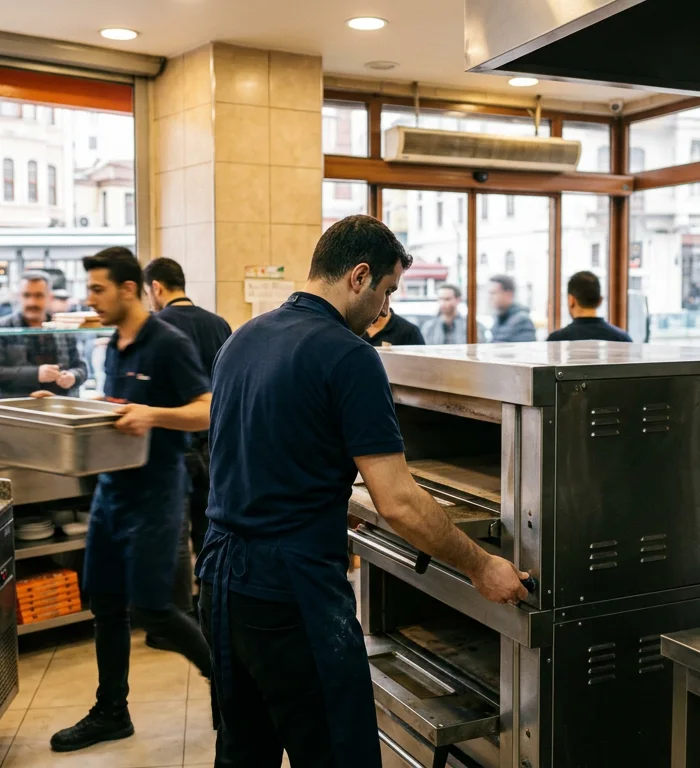
Dinçerler Group took over Little Caesars Pizza’s Turkey operations this week after antitrust clearance, shifting a top-three US pizza brand to a domestic operator, a Turkish news report said.
For Washington, the transaction is a small consumer-market marker against the $100 billion US-Turkey trade objective, which has outlasted defense disputes, sanctions concerns and regional frictions.
Dinçerler Group acquired the master franchise operation, according to the report. That structure lets a local operator run stores and expansion while the US brand owner retains a commercial link through brand rights and franchise economics.
The deal matters less for its size, which was not disclosed, than for what it shows about how American consumer brands can remain active in Turkey without carrying all operating exposure directly. Turkey’s inflation, currency volatility and domestic politics have made local execution more important for foreign retail brands.
The Washington lens is commercial resilience. The White House, State Department and Commerce Department have kept US-Turkey economic dialogue open even as NATO defense issues and sanctions enforcement have complicated the relationship.
Little Caesars’ Turkey handoff fits that pattern
US-origin brands can protect market presence through Turkish partners while broader bilateral talks focus on trade facilitation and private-sector activity. The model may also reduce political visibility for the American parent at a time when US brands in the region have faced consumer scrutiny tied to geopolitics.
The main uncertainty is whether Dinçerler Group can turn the acquisition into store growth in a market where imported inputs, rents and household purchasing power remain pressure points. No purchase price, store count, royalty terms or expansion timetable was provided in the material.
If US-Turkey commercial talks keep civilian investment high on the agenda, franchise and retail operators could become a low-friction part of the $100 billion trade push. If talks instead narrow around defense exports and regional disputes, consumer-brand expansion will depend more heavily on local balance sheets and domestic demand.
The next test is whether official US-Turkey trade readouts by May 15, 2025, emphasize private-sector franchise and retail investment protections, or whether civilian commerce slips behind defense-industrial priorities.
More stories
- Eisenkot secures first coalition deal but lacks majority
- Germans oppose Ukraine aid as poll shows support slipping
- Kim Jong-un receives 10 envoys after constitutional shift
- Ukraine claims Libya strike sinks Russian naval corvette
- COP31 climate talks collapse over fossil fuels and funds
- Russian military faces 1,087 recorded suicides in Ukraine war
- WHO rejects Nigeria outbreak label after 1 imported Ebola case
- Cali Fund collects just $7,085 toward $1bn nature goal
- NATO working group excludes key allies from Poland talks
- Ethiopia Artillery Kills 52 Civilians in Tigray Town
Latest news
- Trump prepares tariffs on China and other major exporters
- New-car buyers pay record average $50,087 in October
- Banks face ECB reserve debate over liquidity and profits
- Investors see Anthropic debut gains fade below $83 a share
- Iraq orders federal control over Kurdish-area oilfields
- Nvidia shares retreat as AI rally cools before PCE data