

Eisenkot secures first coalition deal but lacks majority
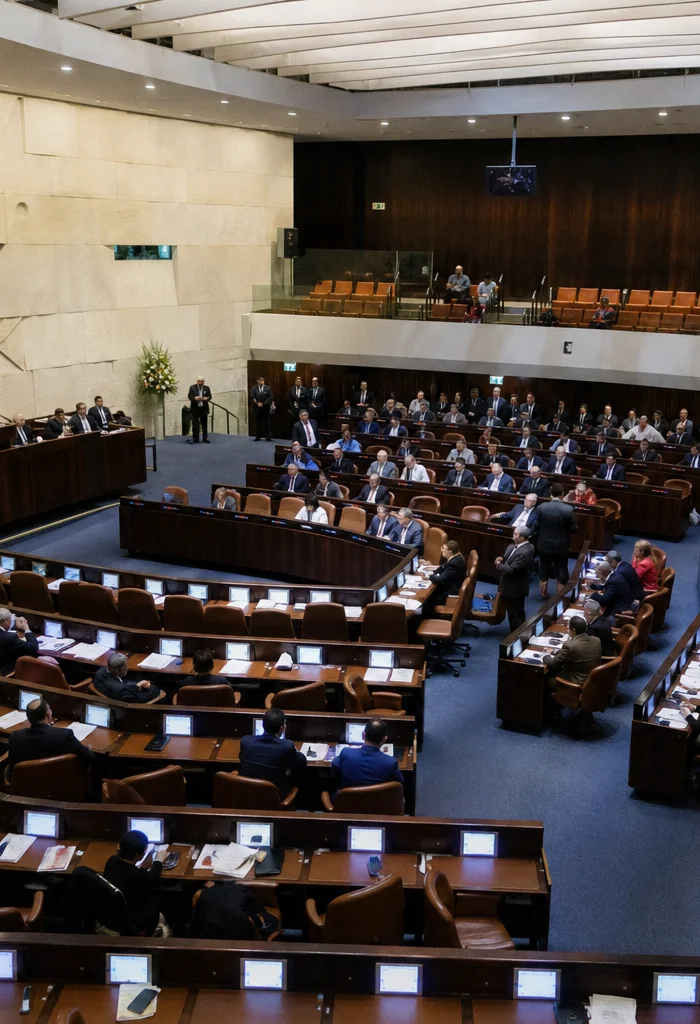
Gadi Eisenkot's Yashar party says it has secured its first coalition agreement, leaving Israel's would-be government short of a majority.
Yashar announced on November 24 that Eisenkot and Avigdor Lieberman, who leads Israel Our Home, had agreed to sign a pact following their meeting that day. The agreement brings together parties holding 28 parliamentary seats, well short of a majority in the 120-member Knesset.
The immediate obstacle extends beyond attracting more partners: Eisenkot's prospective allies disagree over which parties should underpin a government. Lieberman has opposed relying on Arab parties and joining a government alongside Prime Minister Benjamin Netanyahu, although he has also identified Netanyahu's removal as his principal objective.
Arab parties hold pivotal seats
Eisenkot's center-right Yashar won 21 seats, compared with seven for Lieberman's party. Their agreement is the first coalition pact announced since the October election, according to Yashar, but it does not settle the composition of a governing alliance.
The broader grouping around Eisenkot accounts for 48 seats, against 53 for Netanyahu's alliance. Parties representing the Arab minority control the remaining 19, making their position central to any attempt to assemble a majority without Netanyahu's bloc.
Those Arab parties share Eisenkot's opposition to Netanyahu, but that common position does not establish an agreement to govern together. If Eisenkot's grouping secured their support, the combined numbers would exceed half the chamber; Lieberman's stated objections leave that route politically unresolved.
Likud talks divide Eisenkot's partners
A separate negotiating track involves Eisenkot, some prospective partners and Netanyahu's Likud discussing a unity administration. That option puts a different question before Eisenkot's allies: whether participation alongside Likud is acceptable while they are also seeking an alternative to Netanyahu.
The left-wing Democrats, which secured eight seats, said they were halting negotiations with Eisenkot. The party cited progress in his discussions with Likud and an impasse in efforts to assemble an alternative administration.
Democrats leader Yair Golan has expressed a preference for an administration that excludes Netanyahu and includes Arab parties. His position and Lieberman's objections illustrate the competing conditions Eisenkot must reconcile, rather than a dispute that the new bilateral pact alone can resolve.
December 6 sets negotiating deadline
The October 27 election ended the majority held by Netanyahu's alliance of Likud, far-right parties and ultra-Orthodox partners, without producing a clear governing alternative. The newly elected parliament took office on November 10 while Netanyahu continued to lead the caretaker administration.
President Isaac Herzog assigned the government-building task to Eisenkot, a former military chief. His initial 28-day negotiating period expires on December 6, although he can request another 14 days.
If Eisenkot pursues an administration supported by Arab parties, the central test is whether he can retain partners who reject that arrangement. If negotiations with Likud advance instead, the Democrats' suspension shows that progress on one track can coincide with partners withdrawing from another.
Should Eisenkot fail, Netanyahu would receive an opportunity to assemble a government, according to the reported formation process. If neither effort produces an administration, another election would follow next year, leaving the new pact as an opening agreement rather than a settled transfer of power.
More stories
- Germans oppose Ukraine aid as poll shows support slipping
- Kim Jong-un receives 10 envoys after constitutional shift
- Ukraine claims Libya strike sinks Russian naval corvette
- COP31 climate talks collapse over fossil fuels and funds
- Russian military faces 1,087 recorded suicides in Ukraine war
- US faces China, Russia in Africa minerals contest
- Qatar-led mediators press 7-day plan for Iran-US deal
- Häkkänen blames US politics for Ukraine Patriot delay
Latest news
- Trump prepares tariffs on China and other major exporters
- New-car buyers pay record average $50,087 in October
- Banks face ECB reserve debate over liquidity and profits
- Investors see Anthropic debut gains fade below $83 a share
- Iraq orders federal control over Kurdish-area oilfields
- Nvidia shares retreat as AI rally cools before PCE data
- Macy’s parade faces balloon limits as storm winds approach