

Federal Court Limits Medicaid Work Requirement Exemptions for Medically Frail
A federal judge blocked a CMS rule requiring medically frail Medicaid recipients to prove their condition impairs their ability to work, while upholding…
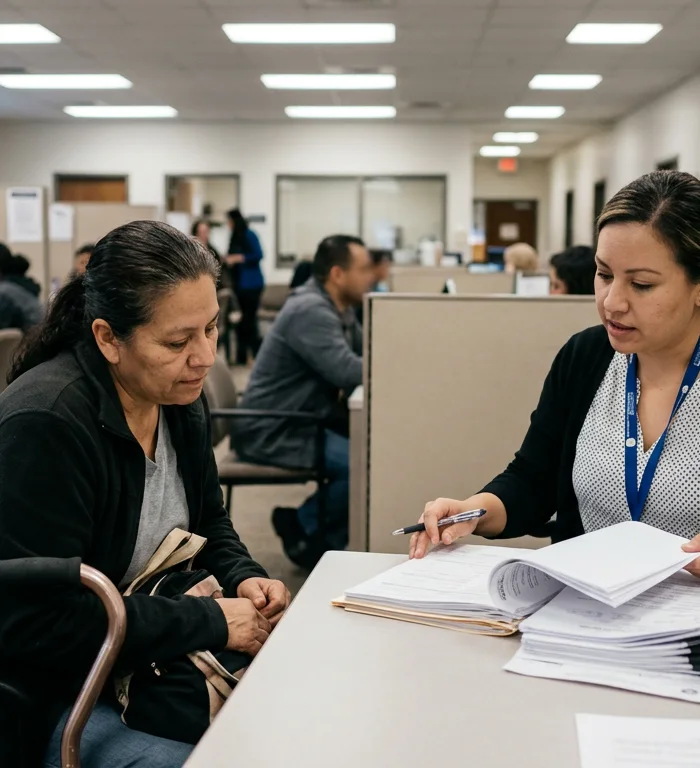
A federal district court has issued a partial ruling regarding the implementation of work requirements for Medicaid expansion enrollees. The court blocked a specific Centers for Medicare and Medicaid Services (CMS) directive that required individuals with qualifying medical conditions to prove that their health status significantly impairs their ability to meet work mandates. Under the 2025 legislative framework, individuals categorized as medically frail—including those with disabilities, substance use disorders, or complex medical conditions—are entitled to exemptions from the 80-hour monthly work or community service requirement.
The court determined that the CMS guidance exceeded the statutory language of the 2025 law by imposing additional evidentiary burdens on vulnerable populations. While the ruling provides relief regarding the definition of medical frailty, the court declined to strike down the underlying work requirements themselves. The decision acknowledges the administrative burden placed on the 25 states and the District of Columbia that challenged the rule, citing the intensive costs associated with modifying eligibility verification systems.
Medicaid Services
Conversely, the court upheld other administrative restrictions imposed by the federal government. Specifically, the ruling permits the enforcement of policies that invalidate medical frailty documentation older than one year and limits recipients to a single self-attestation of their condition per continuous enrollment period. The judge concluded that the government provided sufficient rationales for these verification standards, dismissing concerns regarding potential mass disenrollment.
This ruling maintains the core structure of the 2025 Medicaid work requirements while narrowing the scope of administrative oversight for those seeking medical exemptions. The decision impacts Medicaid expansion enrollees aged 19 to 64, who are scheduled to begin reporting work or educational activity starting January 1, 2027. State agencies must now adjust their verification protocols to comply with the court's interpretation of the "medically frail" exemption criteria.
More stories
- FCC approves prison cellphone jamming despite 2.5-mile warning
- Congress tests Black Democrats' growing policy influence
- Cotton faults Lutnick over AI chips allegedly sent to China
- Vance declines to back Iran strikes as Trump defends war
- Paul seeks 20%-30% federal credit for U.S. film shoots
- Trump targets data centers abroad with tax threat to firms
- T-Mobile agrees to drop 50 GB cap in New York broadband deal
- Iran threats put Bessent security alongside sanctions push
- Senate Republicans block vote on Israeli violence in the West Bank
- Supreme Court lets third-country deportations restart now
Latest news
- Trump prepares tariffs on China and other major exporters
- New-car buyers pay record average $50,087 in October
- Banks face ECB reserve debate over liquidity and profits
- Investors see Anthropic debut gains fade below $83 a share
- Iraq orders federal control over Kurdish-area oilfields
- Germans oppose Ukraine aid as poll shows support slipping
- Kim Jong-un receives 10 envoys after constitutional shift
- Ukraine claims Libya strike sinks Russian naval corvette