

Treasury Secretary Withholds Support for Nvidia CEO Reinstatement Amid Export Investigations
Treasury Secretary Scott Bessent has conditioned his support for Nvidia’s leadership transition on the outcome of investigations into potential…
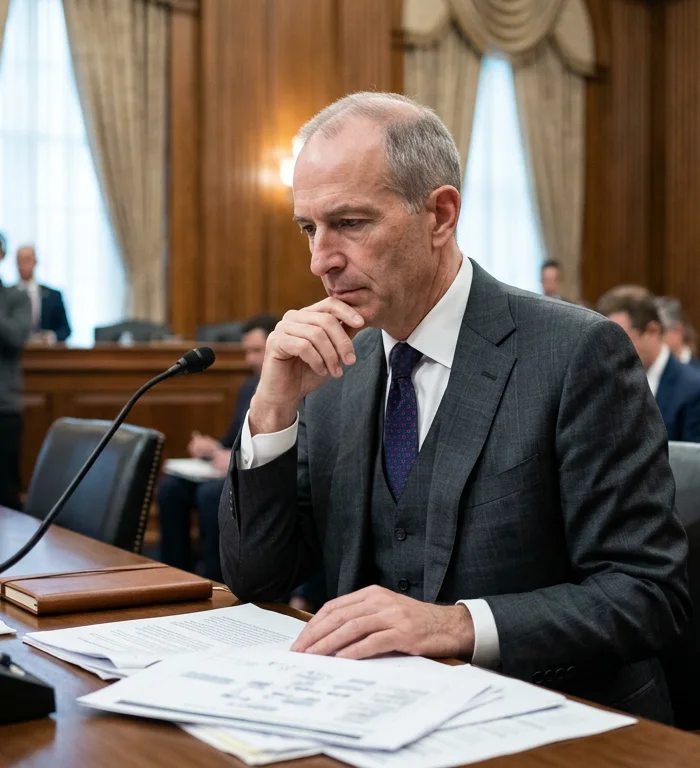
U.S. Treasury Secretary Scott Bessent has declined to endorse the return of Jensen Huang as CEO of Nvidia, citing ongoing investigations into potential violations of export controls regarding advanced AI chip sales to China. The administration is currently seeking to determine the extent of corporate responsibility for these alleged failures, specifically whether non-compliance was isolated to junior staff or extended to senior leadership.
Federal investigators are currently reviewing Nvidia’s compliance culture, with a focus on whether illicit sales were utilized to artificially inflate revenue. Officials are analyzing shipping records and financial transfers to reconstruct transaction histories, noting that large-scale movements of hardware should leave a traceable audit trail regardless of the informality of commercial agreements. The company’s board is conducting a parallel internal investigation into these governance practices.
This regulatory shift is viewed by the Treasury
Beyond direct hardware shipments, the administration is prioritizing the implementation of a remote-access rule. This policy aims to restrict entities in specific jurisdictions—including Singapore, Malaysia, Thailand, Indonesia, and Brazil—from accessing high-end computing capacity through leased infrastructure. This regulatory shift is viewed by the Treasury as potentially more significant than blacklisting individual intermediaries like Megaspeed, which was removed from Nvidia’s sales list in August 2025.
Congressional disclosures have revealed that as of May 2026, federal licenses were approved for the potential transfer of nearly 880,000 advanced chips to entities including Alibaba and Tencent. While these specific entries were marked as not shipped, the oversight process has raised concerns regarding the adequacy of current export thresholds.
Despite these regulatory pressures, the Treasury maintains confidence in Nvidia’s current interim management, specifically citing the oversight of the company’s chief financial officer. The administration remains focused on the potential for circular financing arrangements within the AI sector, where Nvidia’s capital support for data centers could theoretically transmit systemic financial stress. The company is currently under a 10-day deadline to provide a comprehensive account of its transaction history and internal chain of responsibility to federal authorities.
More stories
- FCC approves prison cellphone jamming despite 2.5-mile warning
- Congress tests Black Democrats' growing policy influence
- Cotton faults Lutnick over AI chips allegedly sent to China
- Vance declines to back Iran strikes as Trump defends war
- Paul seeks 20%-30% federal credit for U.S. film shoots
- Trump targets data centers abroad with tax threat to firms
- Trump midterms blitz tests whether his voters transfer now
- Texas Trump campaign blitz opens with Senate stakes ahead
Latest news
- Trump prepares tariffs on China and other major exporters
- New-car buyers pay record average $50,087 in October
- Banks face ECB reserve debate over liquidity and profits
- Investors see Anthropic debut gains fade below $83 a share
- Iraq orders federal control over Kurdish-area oilfields
- Germans oppose Ukraine aid as poll shows support slipping
- Kim Jong-un receives 10 envoys after constitutional shift
- Ukraine claims Libya strike sinks Russian naval corvette