

U.S. Attorney Issues Document Preservation Demands to Democratic Senators
A U.S. Attorney has demanded that Democratic senators preserve records related to potential investigations of Trump-affiliated individuals, citing federal…
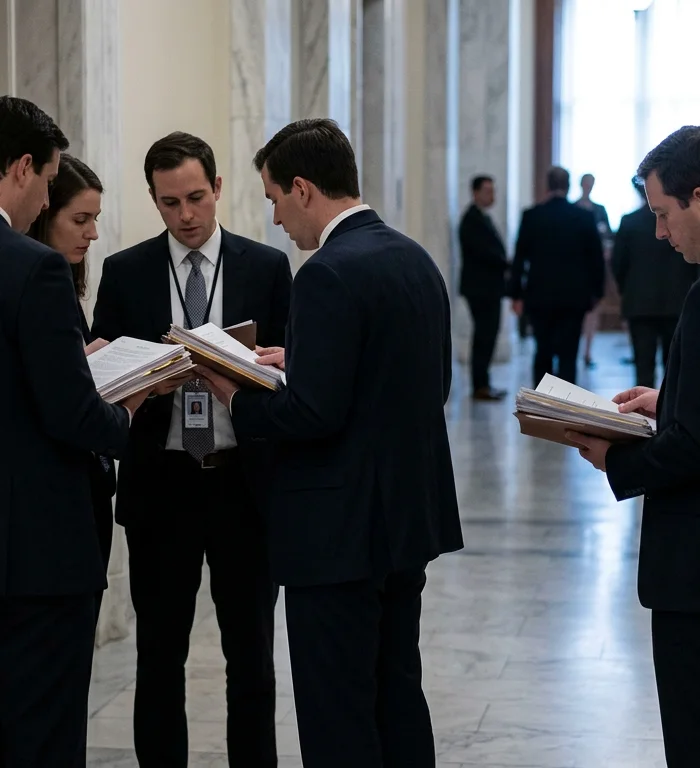
A U.S. Attorney has issued formal demands to several Democratic senators, including the incoming Senate Banking Committee chair, to preserve records related to potential congressional investigations. The correspondence cites federal criminal civil-rights statutes, specifically 18 U.S.C. §§ 241 and 242, which address conspiracies to injure or oppress individuals in the exercise of constitutional rights and the willful deprivation of those rights under color of law.
The legal notices target communications and documents concerning planned oversight of corporate executives and individuals associated with the current administration. The issuing official contends that these planned investigations may constitute an attempt to punish private citizens for exercising First Amendment rights, characterizing the legislative intent as politically motivated.
Senate Banking Committee
In response, affected lawmakers have rejected the demands as baseless, citing constitutional protections afforded to congressional legislative and oversight activities. These legislators have issued reciprocal requests for the preservation of records regarding the decision-making process behind the U.S. Attorney’s warnings, signaling a deepening conflict over the scope of executive and legislative authority.
While a preservation demand does not carry the legal weight of a subpoena or a court order, failure to comply could theoretically lead to future legal challenges or sanctions. The administration has publicly supported the warnings, framing the legislative oversight efforts as a misuse of committee authority. The situation highlights a significant escalation in institutional friction between the executive branch and congressional leadership as the next legislative session approaches.
More stories
- FCC approves prison cellphone jamming despite 2.5-mile warning
- Congress tests Black Democrats' growing policy influence
- Cotton faults Lutnick over AI chips allegedly sent to China
- Vance declines to back Iran strikes as Trump defends war
- Paul seeks 20%-30% federal credit for U.S. film shoots
- Trump targets data centers abroad with tax threat to firms
- Sanders proposes $2,400 Social Security increase
- Trump administration plans vaccine-injury payments for doctors
- Mail ballots ruling blocks Trump postal controls in 2026
- Mitch McConnell returns to Senate after three-month absence
Latest news
- Trump prepares tariffs on China and other major exporters
- New-car buyers pay record average $50,087 in October
- Banks face ECB reserve debate over liquidity and profits
- Investors see Anthropic debut gains fade below $83 a share
- Iraq orders federal control over Kurdish-area oilfields
- Germans oppose Ukraine aid as poll shows support slipping
- Kim Jong-un receives 10 envoys after constitutional shift
- Ukraine claims Libya strike sinks Russian naval corvette