Trump uses press gala to defend Iran war and mock rivals
Trump used a delayed press-freedom dinner to defend the Iran war, attack critics and revive talk of a constitutionally barred 2028 run.
Lauren Collins ·
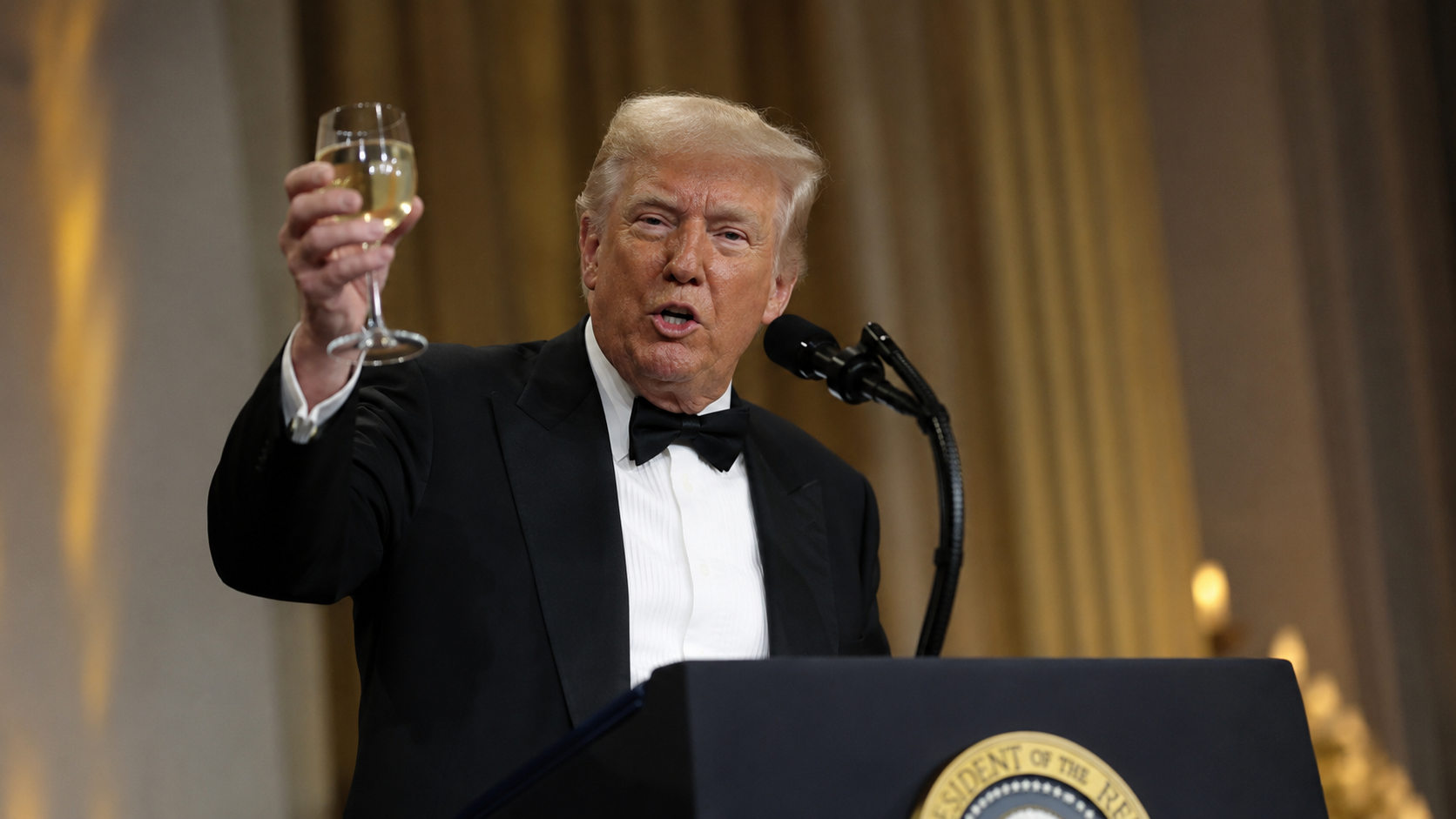
Trump used a rescheduled press-freedom gala in Washington to defend his Iran policy, mock critics and revive talk of 2028. The tone mattered.
The Friday event at the Waldorf Astoria gave the president the stage he had missed three months earlier, when an assassination attempt disrupted his original plan to address the White House Correspondents' Association dinner. Speaking to journalists in the ballroom, he said the country could not "yield to political violence."
A delayed dinner returns
The dinner has long been a Washington ritual in which presidents test jokes on the press and accept some aimed back at them. Trump opened with some self-directed humor, but the account of the night described a speech that soon turned toward opponents, media figures and familiar political grievances.
His remarks ran for more than an hour, making the evening less a conventional roast than a political performance wrapped inside a press-freedom gala. The setting sharpened the contrast: a dinner built around journalism became a platform for attacks on journalists, entertainers and Democratic critics.
Iran claims meet fuel anxiety
Trump used part of the speech to defend the war with Iran, saying the campaign was going "extremely well." He told the audience, "Don’t believe the fake news," while pointing to what he described as recent U.S. military gains.
The political backdrop was less settled. The event account said polling showed voters becoming more worried about the Middle East, while gasoline prices were rising again, linking the foreign-policy message to household costs.
Trump also said Iran would "love to make a deal," placing diplomacy beside claims of battlefield success. If the conflict de-escalates, the immediate political pressure tied to energy prices could ease; if it expands, fuel costs and risk sentiment become harder for the White House to separate from the war.
A red cap signals 2028
The president returned to one of his recurring provocations: the idea of running again. The Constitution bars another presidential term, but Trump raised the subject near the start of the address and came back to it at the end.
He put on a red "Trump 2028" cap and repeated his claim that the 2020 election had been rigged, framing a future bid as an attempt at a fourth victory rather than a third. The moment converted a joke into a constitutional signal, even if no legal path was presented in the remarks.
For the White House Correspondents' Association, the episode underscored how difficult it is to preserve the dinner’s traditional comic tone when the speaker treats political constraints as material for rally-style theater. For Trump, the applause line keeps a loyal audience engaged; for institutions around elections, it keeps term-limit boundaries in public view.
Named critics draw fire
Trump also singled out several well-known critics. He said, "This year the association decided not to have a comedian, so they considered using Jimmy Kimmel," referring to the late-night host he has said should be fired by Disney's ABC.
Bruce Springsteen was another target. Trump said the singer "looks like hell" and mocked his tour with the suggested title "Bored in the U.S.A.," a play on one of Springsteen’s best-known songs.
Sen. Adam Schiff was also among those mentioned, according to the event account. The targets fit a familiar pattern: media figures, entertainers and Democratic opponents were used to keep the speech combative after the opening references to press freedom and political violence.
Scenarios hinge on Iran and norms
If Trump’s Iran message is followed by negotiations, the global macro channel would run through energy markets and reduced geopolitical risk; Trump could claim vindication; and media and political coverage would likely shift from escalation to deal terms. Disney's ABC, as the named company connected to the Kimmel attack, would remain exposed mainly through the politics of late-night television rather than direct policy action.
If the Iran conflict worsens instead, rising fuel costs would carry broader economic consequences through consumers and transport-heavy sectors. Trump would face a harder test of credibility, while the news and entertainment industries would likely become louder arenas for disputes over war coverage, criticism and loyalty.
A separate path concerns the 2028 teasing. If it stays as provocation, it remains a branding tool; if allies try to turn it into an organized campaign, the pressure moves from the ballroom to courts, election officials and Congress.