Trump Links Oil Prices to 'Iran War,' Calls for 'Trump Strait' Renaming
Trump claims an 'Iran war' victory would lower global oil prices, while proposing to rename the Strait of Hormuz to the 'Trump Strait.'
Omar Farouk ·
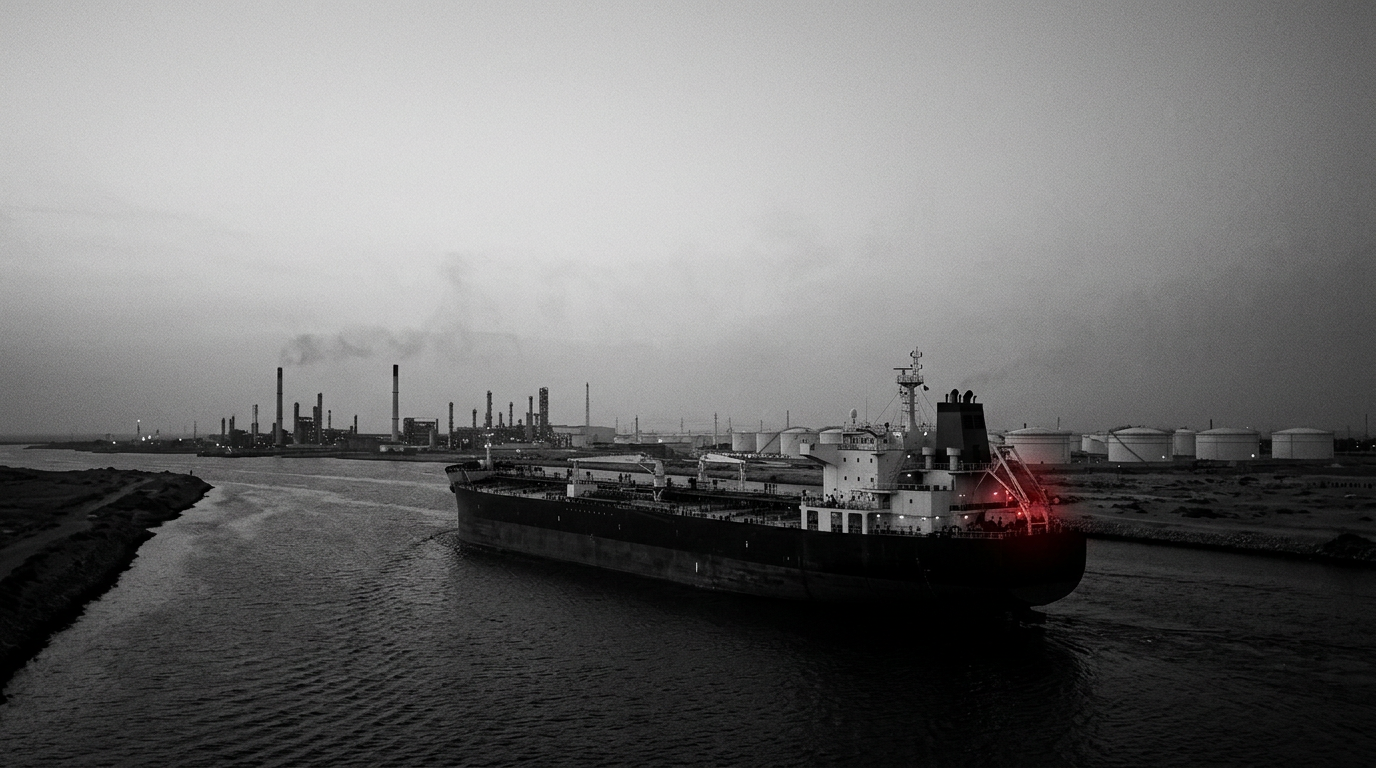
President Donald Trump, speaking at a recent Republican convention in Dallas, Texas, asserted that global oil prices would decline "as soon as we win" a hypothetical conflict with Iran. Trump also claimed that the United States effectively controls the strategic Strait of Hormuz, a critical maritime chokepoint, and suggested renaming it the "Trump Strait."
Rhetoric on Regional Control
Trump’s remarks directly addressed the potential for military action against Iran and its impact on energy markets. His assertion of U.S. control over the Strait of Hormuz, through which approximately one-fifth of the world’s seaborne oil passes, signals a focus on the region's energy infrastructure. This position contrasts with the existing international maritime conventions that govern passage through the strait.
Strait's Strategic Importance
The Strait of Hormuz, a narrow waterway connecting the Persian Gulf with the Gulf of Oman and the Arabian Sea, remains central to global energy security. Its strategic significance stems from its role as the sole maritime passage for oil exports from major producers including Saudi Arabia, Iran, the United Arab Emirates, Kuwait, and Iraq. The Islamic Revolutionary Guard Corps (IRGC), a branch of Iran's armed forces, has frequently conducted naval exercises in the strait, underscoring Tehran's asserted influence over the waterway.
Historically, tensions in the strait have led to significant disruptions in oil shipping. During his previous term, President Trump’s administration withdrew from the Joint Comprehensive Plan of Action (JCPOA), also known as the Iran nuclear deal, and implemented a "maximum pressure" campaign through sanctions. This policy led to heightened tensions, including attacks on oil tankers in the region, attributed by the U.S. to Iran, and Iranian seizures of vessels.
Global Market Dynamics
Trump's comments on oil prices reflect a persistent political concern over energy costs, a key factor in global inflation. The Organization of the Petroleum Exporting Countries and its allies (OPEC+), a group of 23 oil-exporting nations, influences global supply through production quotas. While OPEC+ nations like Saudi Arabia and the UAE hold significant sway, their decisions are influenced by global demand forecasts, geopolitical stability, and major consumer nation policies. Brent crude oil prices, a global benchmark, have fluctuated significantly in recent months, largely driven by supply concerns and geopolitical events.
Potential Regional Responses
President Donald Trump
The suggestion of an "Iran war" could prompt responses from regional actors. Iran's leadership, including its Foreign Ministry, has consistently opposed what it views as external interference in regional security matters. Any escalation of rhetoric or policy from a major power often elicits counter-statements or demonstrative actions from the IRGC, particularly concerning its naval capabilities in the Persian Gulf. Regional powers, including members of the Gulf Cooperation Council (GCC), closely monitor such discourse for implications on trade routes and investment stability. Geopolitical and Economic Implications A direct military conflict in the Persian Gulf region would have immediate and severe global macro implications, primarily through a spike in oil prices and disruptions to shipping lanes. The specific company most directly impacted would be state-owned oil companies within the region, such as Saudi Aramco, due to potential production or export disruptions. Wider industries, particularly global shipping and energy-intensive sectors, would face increased costs and supply chain instability. Geopolitical alliances could also be reshaped as regional states align in response to perceived threats or new security architectures.
Observing Future Statements
The main open question is how President Trump's rhetoric evolves as the U.S. election cycle progresses, and whether it translates into specific policy proposals. Official reactions from Tehran, including statements from the IRGC or the Foreign Ministry, will indicate how seriously these remarks are being interpreted within Iran. Similarly, any public statements from OPEC+ members or Gulf states regarding regional security and energy flows will offer insight into their assessment of potential future U.S. policy.