Serbia elections set for October 25 after parliament ends
Serbia elections will be held on October 25 after President Aleksandar Vucic dissolved parliament and moved a vote previously due next year.
Claire Dubois ·
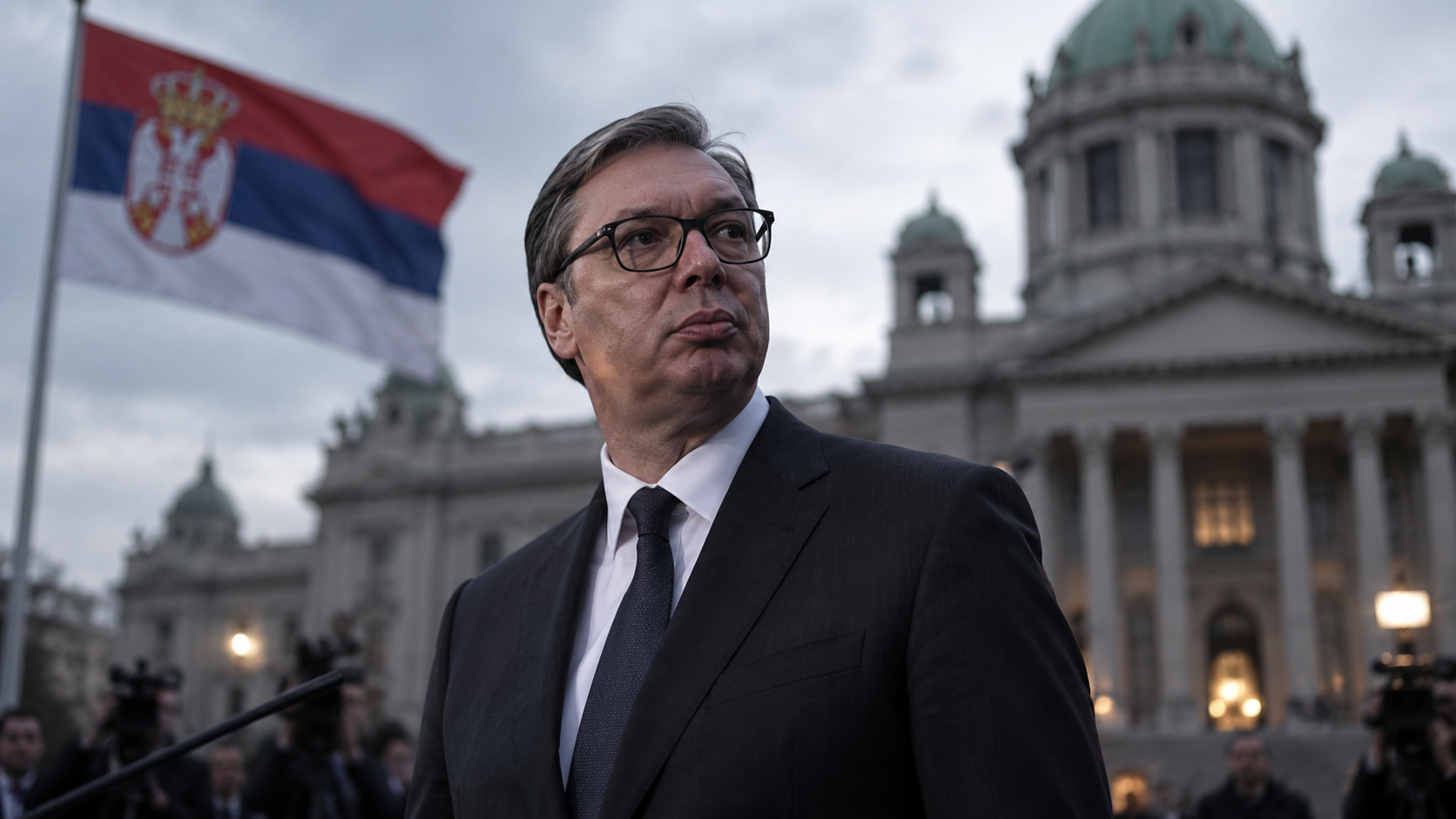
President Aleksandar Vucic called Serbia elections for October 25, moving the parliamentary vote forward by a year to test his mandate.
Vucic dissolved parliament on Wednesday and said the early ballot was needed after sustained political conflict. In a televised statement, he said a delay in voting "would threaten the survival of democracy."
The parliamentary election had previously been scheduled for next year, making the October 25 date an acceleration rather than a routine campaign timetable. The decision puts Vucic, who has led Serbia as president or prime minister since 2014, back at the center of a contest over the country's political direction.
October 25 replaces next year
The ruling Serbian Progressive Party nominated Vucic on Saturday to run for prime minister, according to the party's move described in the source material. It remains unclear whether he will step down as president before the parliamentary vote.
That uncertainty matters because Vucic has exercised power through both offices over the past 12 years. A move from the presidency to the premiership would keep the election focused less on a party list and more on whether voters accept his continued command of government.
Vucic said early elections would not have been necessary without the current level of tension and political dispute. The statement framed the vote as a response to instability, while his critics have treated the ballot as a bid to renew authority after prolonged demonstrations.
Novi Sad deaths changed politics
The protests began after a railway station awning collapsed in Novi Sad in November 2024, killing 16 people. Demonstrators have linked the disaster to broader concerns about corruption, a charge that has helped sustain nearly two years of anti-government mobilization.
The movement has been led in large part by students and has produced some of Serbia's largest demonstrations in decades, according to the source account. It has not yet said whether it will support a candidate or political bloc in the October election.
That leaves the opposition side with a practical problem: translating street pressure into votes across Serbia's parliamentary system. Rasa Nedeljkov of CRTA, a polling organization, said the ballot would measure support for Vucic after the protest period, while adding that his opponents face a difficult campaign.
Ruling party backs Vucic
The Serbian Progressive Party still gives Vucic a large institutional base from which to run. His record combines a period of economic development with persistent criticism from opponents who accuse him of corruption and authoritarian rule.
For the party, nominating Vucic for prime minister makes the election a referendum on his personal leadership as much as on the government's record. It also narrows the campaign's central question: whether voters prioritize continuity after years of growth or accountability after the Novi Sad collapse and the protests that followed.
The immediate political impact falls on Serbia's institutions, opposition groups and the ruling party's parliamentary machine. If the Serbian Progressive Party retains control and Vucic becomes prime minister, the government would likely argue that the vote has renewed its mandate after nearly two years of street mobilization.
Mandate paths shape Serbia
If that continuity scenario holds, the macro effect would be tied to policy predictability in an emerging European economy rather than to a new program. For Vucic and his party, the mechanism would be institutional: a fresh parliamentary majority would convert pressure from protests into another term of executive control.
If opposition groups instead consolidate around a single candidate list or bloc, the election could become a more direct test of anti-corruption sentiment. The macro channel would run through possible policy delay and investor caution; the political sector would face a contest between protest organization and the ruling party's established electoral network.
A third path is a fragmented opposition campaign, with the student-led movement withholding formal support or dividing among blocs. In that case, Vucic's party could benefit from organizational discipline, while the wider political system would carry the same unresolved issue that brought crowds into the streets: whether the Novi Sad deaths produce institutional accountability or another election shaped mainly by the incumbent.