Centcom says Iran oil tankers destroyed after sea clash
US strikes hit five Iran oil tankers as Brent crude moved above $100, widening pressure on shipping, fuel costs and Hormuz energy flows.
Omar Farouk ·
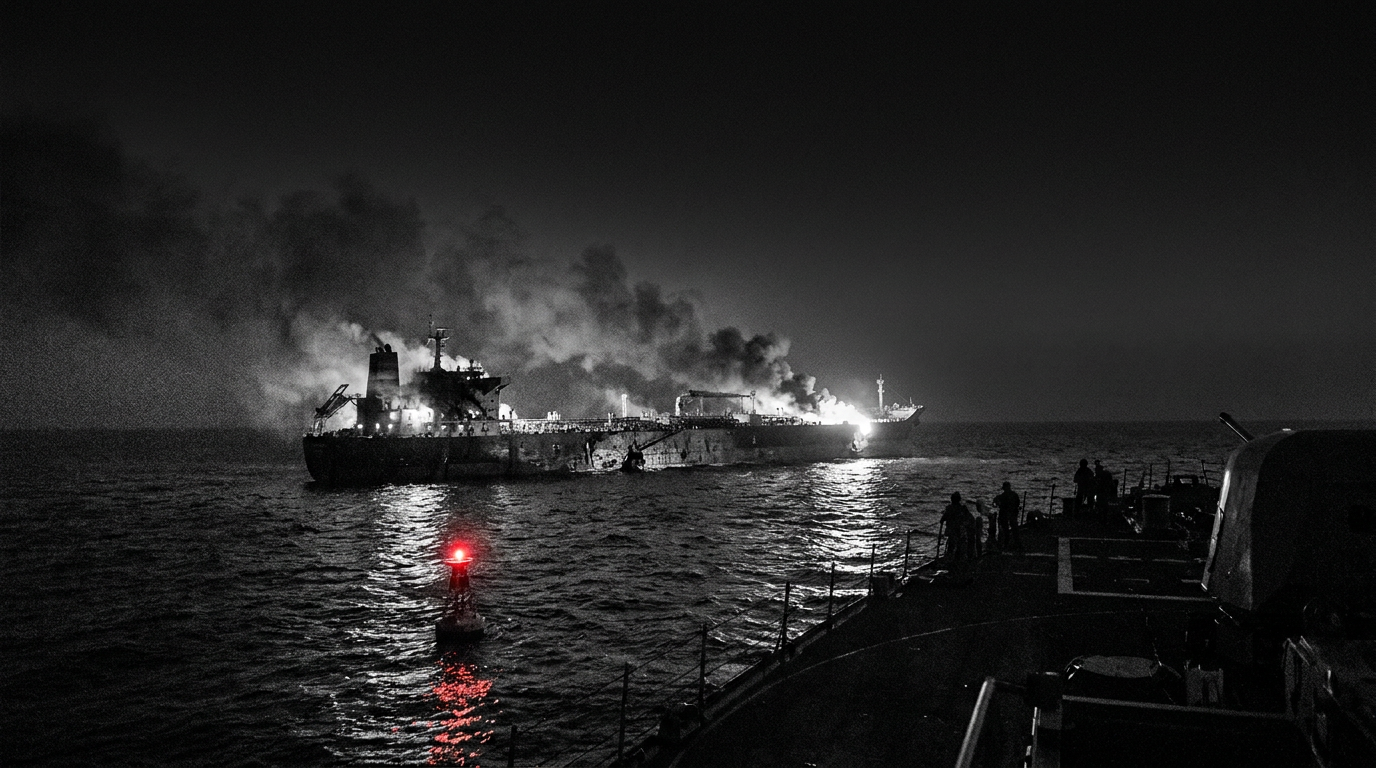
US strikes hit five Iran oil tankers overnight, pushing Brent crude above $100 as Strait of Hormuz tensions widened.
US Central Command said American forces struck four tankers in the Gulf of Oman and one near Kharg Island, Iran's main oil export terminal in the Persian Gulf. The command said the action followed attempts by Iran's Islamic Revolutionary Guard Corps to target a US warship, which it said avoided the attacks without American casualties.
Five vessels struck overnight
Central Command said crews were ordered to leave the ships before US forces hit them and left them unable to operate. The command did not say whether the tankers were loaded with crude, carrying other fuels, or sailing empty.
The latest action brought the number of tankers disabled by US forces since Saturday to at least eight. The share of Iran's overall energy fleet affected could not be determined from the available information.
The vessels were not all equal in scale. One was described as a very large crude carrier, a class that can move about 2 million barrels and is commonly used for long-haul crude shipments to buyers including China.
Two others were Aframax-class tankers, which can carry roughly 750,000 barrels each. The remaining ships were described as smaller vessels used for refined petroleum products and gas, making the immediate effect on crude export capacity less clear.
Kharg Island enters fight
Kharg Island matters because it is Iran's principal crude-loading point, linking the military confrontation to the country's export system rather than only to naval movements in open water. A strike near that terminal increases the operational risk around the infrastructure through which Iran sells oil abroad.
Iranian media said Tehran responded by targeting two additional US warships and eight oil tankers in the Persian Gulf. Those claims had not been confirmed in the information available, and no damage reports were provided.
The Islamic Revolutionary Guard Corps also fired ballistic missiles at Al-Azraq Air Base in Jordan, according to Jordan's government. Jordan said it intercepted 18 missiles, while two others landed in uninhabited areas.
Brent adds election pressure
Brent crude rose 2.5% to more than $100 a barrel on Wednesday, extending its gain for the year to 65%. The move followed the tanker strikes and the continued disruption of shipping through the Strait of Hormuz, a route central to energy flows from the Gulf.
The price move feeds into US domestic politics because fuel costs are already pressing consumers. Diesel pump prices in the US reached a record last week, according to the information provided, adding pressure on President Trump ahead of the November 3 midterm elections.
The strain extends beyond crude. Restrictions on vessels using the Strait of Hormuz are also curbing the movement of energy products and other commodities, including aluminum, which links a regional confrontation to wider supply chains.
Hormuz paths narrow
If shipping through the strait remains constrained, the global effect would run through higher transport risk, tighter delivered energy supply and renewed inflation pressure. For Iran's export system, the mechanism would be fewer usable ships and higher difficulty scheduling cargoes from terminals such as Kharg Island.
If the disruption eases and the damaged vessels represent only a small part of Iran's fleet, the direct hit to Iranian crude shipments may be limited. In that case, the tanker industry would still face higher insurance, rerouting and security costs while owners assess whether Gulf voyages remain commercially workable.
The main open questions are whether further attacks are confirmed, whether loaded cargoes were lost, and how long commercial ships avoid the Hormuz route. Those answers will determine whether the episode remains a naval exchange or becomes a broader supply shock for oil, refined fuels and freight markets.