Nepal Flash Floods: Two Rescued from Hydropower Tunnel
Rescue teams in Nepal successfully extracted two individuals from a debris-filled hydropower tunnel, weeks after flash floods devastated the region.
Lauren Collins ·
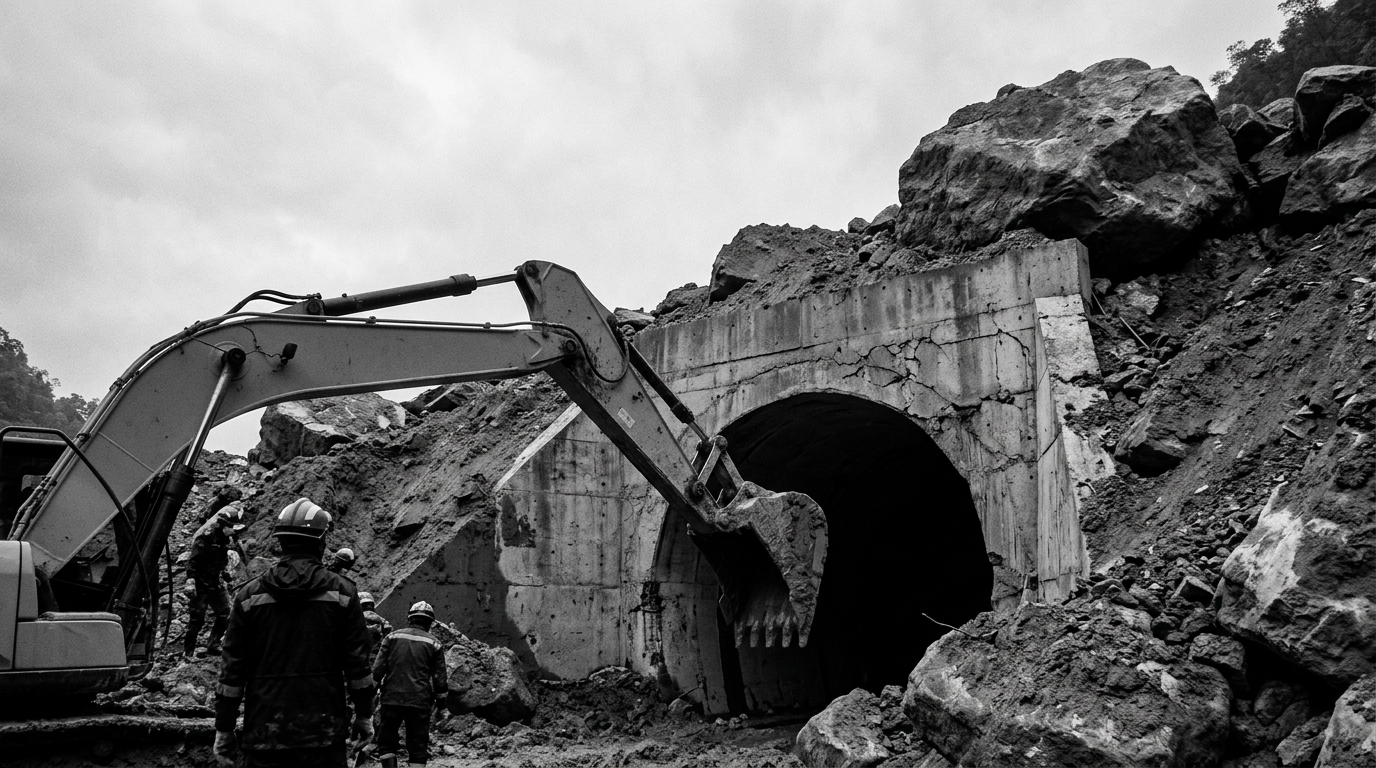
Rescue teams in Nepal successfully extracted two survivors from a debris-choked hydropower tunnel on Friday, weeks after a devastating flash flood. The incident is part of a broader natural disaster that has led to an estimated 1,300 fatalities across the country, primarily due to intense monsoon rains and subsequent flooding.
The intricate operation took place at the Trishuli 3A Hydropower Station. Extensive international engineering expertise was critical to locating the entrance of the tunnel, which had been buried by an avalanche and subsequently blocked by a significant accumulation of mud and boulders. The challenging environment posed substantial risks to the rescue personnel.
Complex Tunnel Recovery Operations
The recovery efforts involved a multi-faceted approach. Rescuers first utilized satellite imagery, detailed topographic maps, and visible surface landmarks to precisely triangulate the tunnel's entrance. This initial phase was crucial for planning the subsequent extraction strategy. Once the exact location was confirmed, controlled explosives were deployed to clear the dense debris that had obstructed the passage.
Simultaneously, teams worked to manage the water levels within the affected area by constructing a series of drainage trenches. The final extraction of the two trapped individuals involved carefully tunneling a narrow passage through the upper section of the debris, which allowed rescuers to reach the workers who had been isolated for an extended period.
Ongoing Search Amid Instability
Despite the success of this initial extraction, the rescue operation remains active. Teams are now focusing their efforts on reaching the main power station, which lies approximately 150 meters beyond the current excavation point. The environment continues to be highly hazardous, with primary risks including the potential for secondary flooding and the severe structural instability of the tunnel itself, which has been significantly compromised by the disaster.
Experts are currently targeting a specific area within the facility that has been identified as a potential refuge zone, hoping to locate additional survivors. The successful extraction of the first two individuals provides a crucial technical framework and vital lessons for the ongoing search efforts, which are continuing under extremely high-risk conditions as the country grapples with the wider aftermath of the floods.