Tesla's 'Cybercab' Tease Rekindles Robotaxi Focus
Tesla's recent 'Cybercab' teaser, hinting at a self-driving vehicle without traditional controls, renews investor focus on its robotaxi monetization strategy…
Atlas Newsdesk ·
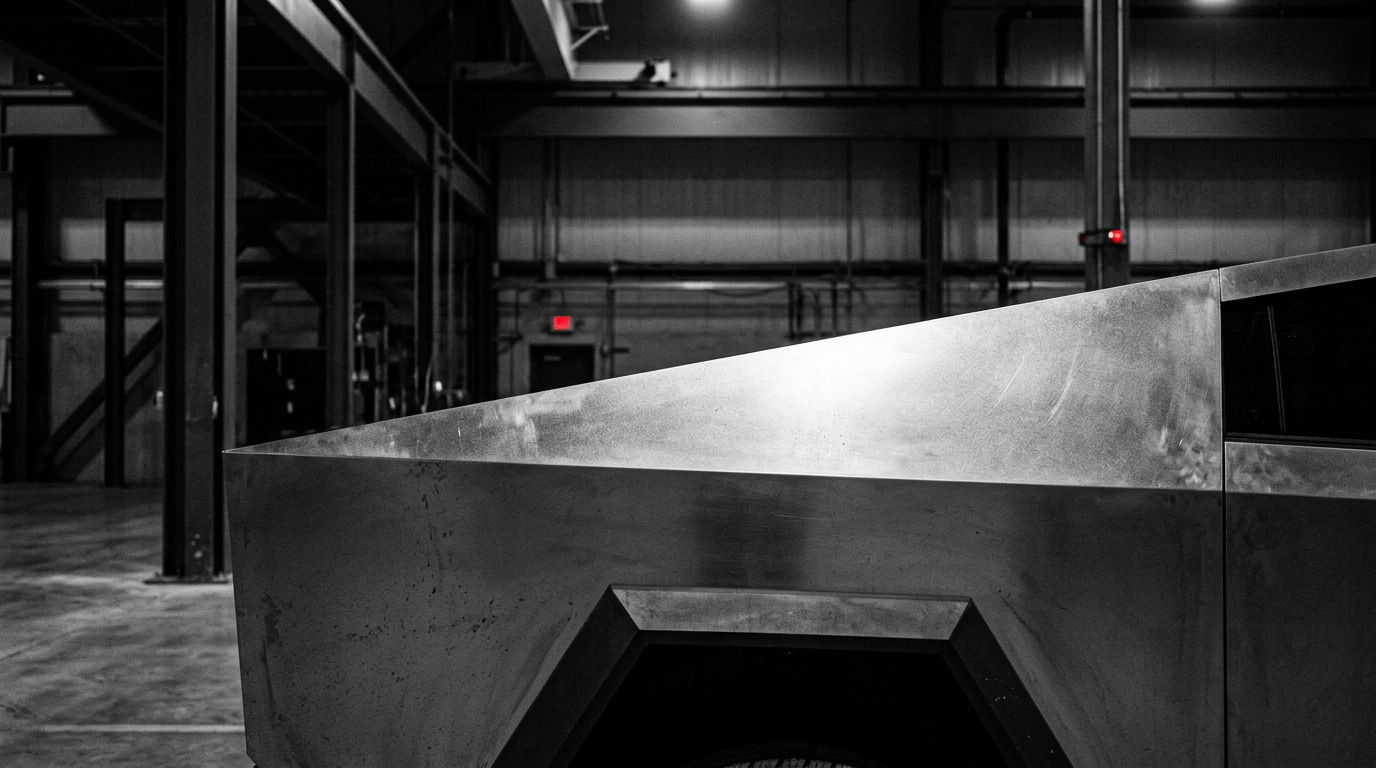
Tesla has reignited discussions about its long-standing robotaxi ambitions with a recent cryptic teaser for its 'Cybercab' project. The announcement, which depicted a vehicle lacking a steering wheel and pedals, has brought the company's execution risks and its premium market valuation under renewed scrutiny, particularly as the core automotive demand appears to be moderating.
The teaser references a concept first introduced almost two years ago, prompting investors to re-evaluate the sustainability of Tesla's valuation. Historically, this valuation has been significantly supported by expectations of high-margin software services, most notably a fully autonomous robotaxi network. The market's current response reflects a broader struggle to reconcile Tesla's evolving position from a rapidly expanding enterprise to a more established automotive manufacturer.
Market Reassessment and Valuation Pressures
Recent price adjustments for Tesla vehicles have impacted automotive gross margins, a critical indicator of profitability. This trend is compelling investors to question the financial underpinnings of the company's lofty valuation multiple, which traditionally incorporates future growth projections. Autonomy has long been a pivotal component in these growth calculations for Tesla.
The company has previously made ambitious pledges regarding autonomous technology. Its Full Self-Driving (FSD) software suite has experienced multiple delays and has yet to achieve complete, Level 5 autonomy. In contrast, competitors such as Alphabet's Waymo and General Motors' Cruise have accumulated millions of driverless miles within defined geographical areas, navigating intricate state and federal regulatory frameworks. The 'Cybercab' teaser now directly invites comparisons between Tesla's developmental approach and that of its more experienced rivals in the autonomous vehicle sector.
Implications for Investors and the AV Sector
This latest development challenges the conviction of investors who have valued Tesla primarily as a technology and artificial intelligence firm, rather than solely as an automobile producer. A credible strategy for establishing a robotaxi network would introduce a significant, high-margin revenue stream, potentially offsetting the deceleration in electric vehicle sales growth. Conversely, a failure to present a concrete plan would reinforce arguments made by short sellers who contend that the company's valuation is disconnected from its fundamental manufacturing operations.
The ramifications extend across the entire autonomous vehicle industry. Should Tesla introduce a scalable robotaxi solution, it could drastically accelerate commercialization timelines and reshape the competitive landscape for companies like Waymo, Cruise, and Mobileye. This would place traditional automakers at a disadvantage if Tesla demonstrates a distinct technological, data, or manufacturing cost superiority that they cannot replicate. The market is now keenly anticipating a formal unveiling or detailed guidance on the 'Cybercab' timeline and its proposed business model by August 31, 2024.
Future Outlook and Investor Response
A specific plan outlining a near-term pathway to scalability and regulatory approval could validate the technology premium embedded in Tesla's stock price. Conversely, another presentation that is rich in promises but deficient in a clear, monetizable product or timeline would likely lead to negative investor reactions, signaling a further erosion of the long-term growth narrative surrounding the company.