Dangote refinery IPO opens $1.6 billion retail offer
Dangote refinery IPO seeks at least $1.6 billion from retail investors, pricing shares at 525 naira and valuing the business at $49 billion.
Amina Diallo ·
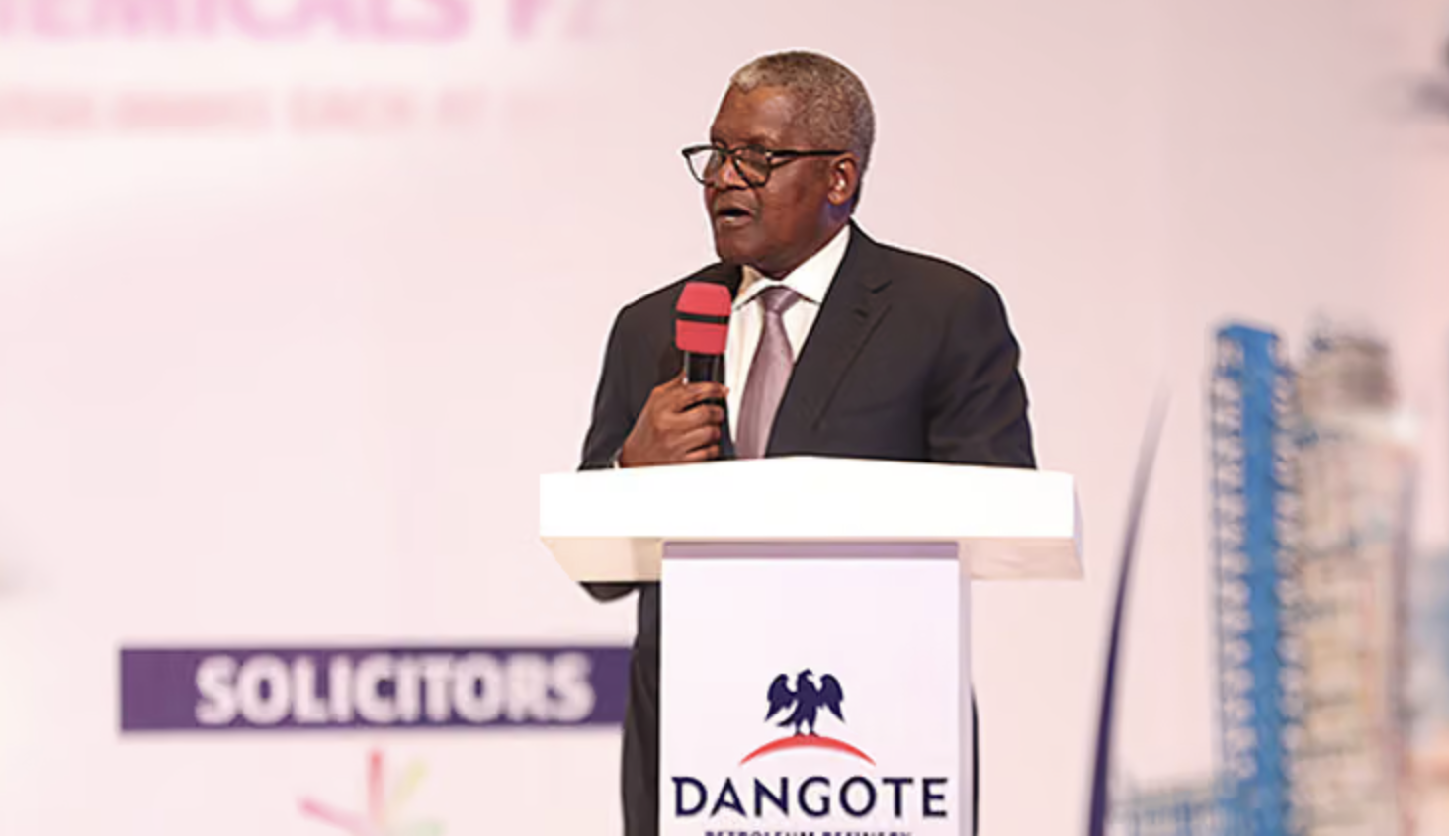
Dangote refinery IPO seeks at least $1.6 billion from retail investors, valuing the Lagos fuel business at $49 billion ahead of a planned listing.
Dangote Petroleum Refinery and Petrochemicals is offering 4.1 billion shares at 525 naira ($0.40) each, with a minimum order of 10 shares, company executives said. At that price, the flotation would value the business at $49 billion, about 2.5 times the roughly $20 billion cost of building the plant.
Retail pitch at 10 shares
Aliko Dangote, Africa’s wealthiest businessman, cast the offer as a mass-market transaction rather than a placement reserved for institutions. “If you can afford 10 shares, you buy 10. If you can afford one million, you buy one million,” he said Monday at the Nigerian stock exchange.
The company is aiming for 10 million shareholders across Africa and potentially beyond the continent, according to Dangote. Executives also plan to grant qualifying retail buyers two bonus shares if they keep their holdings for the required period, an incentive they compared with the 1986 British Gas privatization that widened share ownership in the UK.
A refinery built over a decade
The Lagos refinery started operations in 2024 after more than 10 years of construction on land outside Nigeria’s commercial capital. Company executives said the plant reached capacity shortly before US and Israeli attacks on Iran unsettled oil markets and coincided with wider margins for diesel and jet fuel.
The 700,000-barrel-a-day complex is described by the company as the largest refinery of its type. Its ramp-up has changed Nigeria’s fuel position, according to the company’s account, by reducing reliance on imported refined products and creating export capacity from a country long associated with crude shipments rather than fuel processing.
Valuation rests on July placement
David Bird, a former Shell executive who now heads Dangote’s refinery and petrochemicals division, said investors were buying into a “growth journey,” with refining capacity expected to double by the end of the decade. That would take the business beyond its current 700,000-barrel-a-day base, while the company is also pursuing higher output of petrochemicals including a detergent precursor.
Bird tied the $49 billion valuation to a $2.5 billion private placement that was completed in July and was oversubscribed, according to the company. He rejected the suggestion that the valuation had been lifted by temporary margins on diesel and jet fuel, saying, “We’ll let them [the private placement investors] do the talking because they’re the ones with the cheque books.”
Dangote also said the business case was not built on crisis-level fuel margins. He said the company uses a normal-cycle view of margins, with any additional gains treated as upside rather than the basis for the valuation.
Two paths from Lagos
For Nigeria’s fuel market, a refinery operating near capacity changes the balance between imported products and domestic supply. For other African importers, sustained output from Lagos adds a regional source of diesel, jet fuel and other refined products, with pricing effects tied to freight costs, crude availability and refinery utilization.
If margins remain near recent levels, higher cash generation would support Dangote’s expansion plan, add supply to the global refined-products market and increase pressure on import-dependent fuel distributors across the region. If margins narrow instead, the September 14 prospectus will carry more weight for investors assessing whether the July private-placement benchmark can support a public valuation of $49 billion.