

US Navy blockades Iran near Hormuz
U.S. naval blockade begins Sunday near Hormuz, targeting Iran-linked shipping and petrochemical exports as markets watch oil flows and prices.
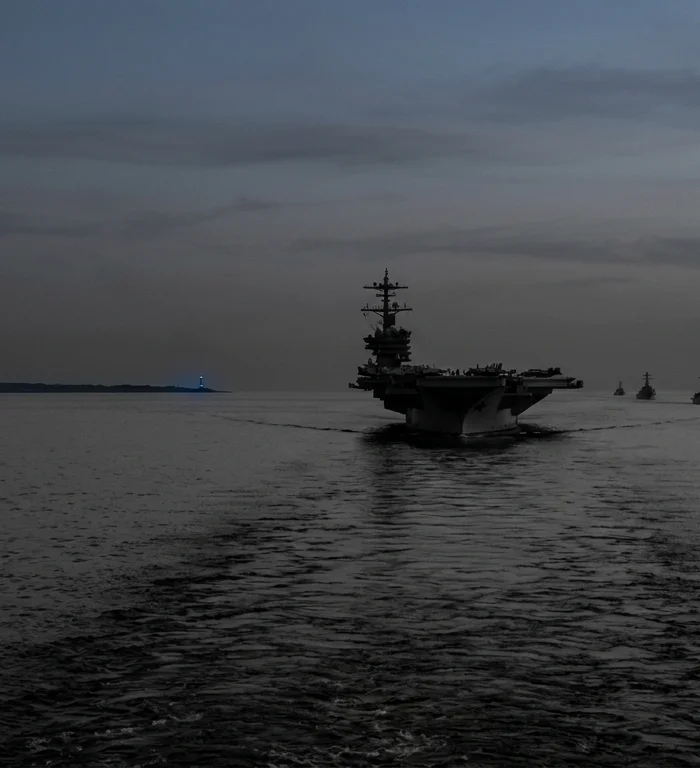
The United States has begun a naval blockade aimed at ships moving into or out of Iranian ports and coastal areas, with the measure taking effect Sunday near the Strait of Hormuz. Officials said the objective is to interrupt Iran’s petrochemical exports, which have continued during the ongoing conflict and are described as a source of revenue for the Iranian regime.
U.S. Central Command (Centcom) said the blockade will be applied without favor to vessels from any country. Centcom also said humanitarian cargo will be permitted but will be subject to inspection, setting out a framework that distinguishes between commercial trade flows and relief shipments while still allowing enforcement actions at sea.
Retired U.S. Rear Admiral Mark Montgomery said a blockade can be a lower-risk option than direct military engagement in the narrow waters of the Strait of Hormuz. He said U.S. naval forces can remain farther from the most confined areas by operating in the Gulf of Oman, where they can monitor maritime traffic and interdict vessels as needed.
Officials and analysts pointed to U.S. capabilities that could support such an operation, including special forces, helicopters, and fast boats. The approach was compared to recent blockades involving Venezuela and Cuba, as well as the seizure of the Russian oil tanker Marinera , which was cited as an example of interdiction activity tied to energy shipments.
Market attention is focused on energy flows and how the blockade may affect Iranian oil exports and global oil prices. Analysts said the policy is intended to apply economic pressure on Iran, but some experts cautioned that Iran’s ability to endure pressure, alongside the possibility of higher oil prices, could create added strain for the United States and Gulf states.
China was highlighted as a key stakeholder because it is described as a major importer of Iranian oil. Observers said the blockade could shape China’s calculations and may contribute to additional diplomatic engagement linked to the conflict, depending on how enforcement unfolds and how trade routes respond.
More stories
- Bardella denies antisemitism claims over teenage messages
- Washington targets China in new tariff push on trade ties
- Eisenkot secures first coalition deal but lacks majority
- Germans oppose Ukraine aid as poll shows support slipping
- Kim Jong-un receives 10 envoys after constitutional shift
- Ukraine claims Libya strike sinks Russian naval corvette
- Turkish Foreign Minister Accuses Israel of Strategically Framing Ankara as a Regional Enemy
- United States Initiates Naval Blockade of Iranian Ports Following Collapse of Peace Talks
Latest news
- Retailers rethink Black Friday as discount fatigue grows
- Japan data centers face lawsuits over residential sites
- S&P puts Nvidia credit rating on watch over board concerns
- Musk pledges two SpaceX shares per child in new US giveaway
- Morocco targets 2030 World Cup final with new stadium bid
- Barclays puts AI bust risk at center of US growth debate
- US inflation reaches 3.8% before December Fed rate meeting
- Türkiye Desk: GTA 6 drains UK mobile spend as Turkish studios feel pressure