Turkish Foreign Minister Accuses Israel of Strategically Framing Ankara as a Regional Enemy
Turkey's FM accuses Israel of framing Ankara as a regional enemy for political gain, warning of expansionism and broader conflicts. Turkey seeks de-escalation.
Lauren Collins ·
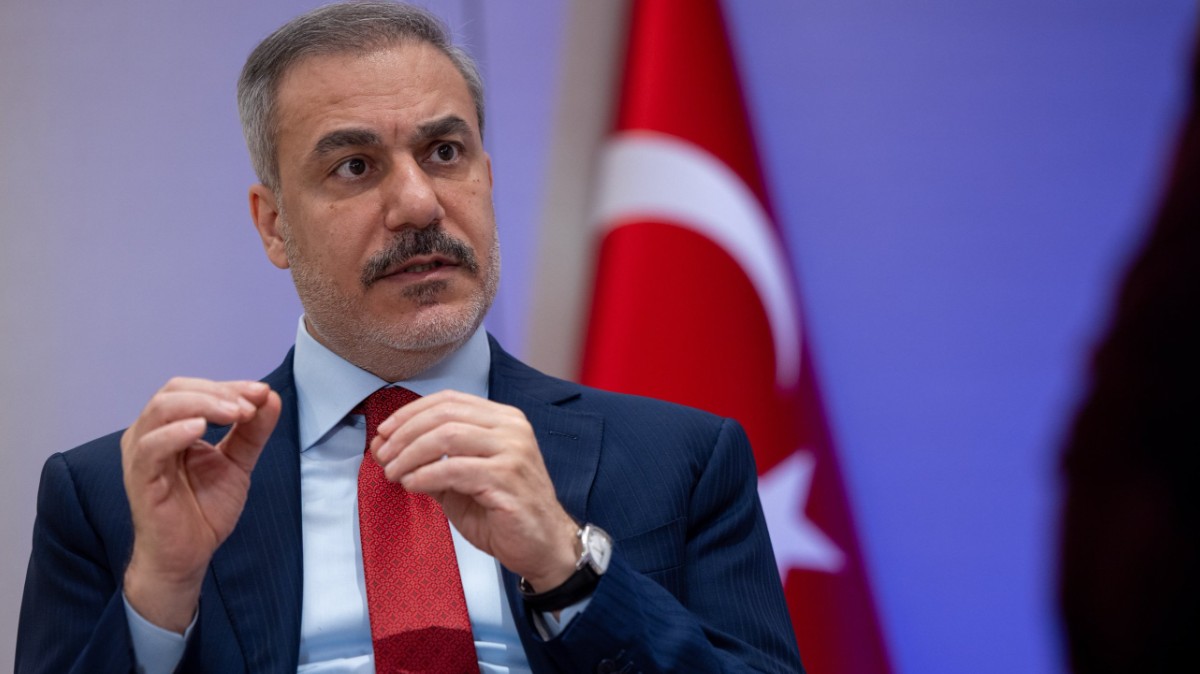
Turkey's foreign minister has accused Israel of attempting to cast Ankara as a new regional adversary, signaling a potential reconfiguration of alliances amidst ongoing tensions in Gaza, Lebanon, and with Iran.
In an interview with Anadolu Agency, Foreign Minister Hakan Fidan stated that current rhetoric emanating from Israel extends beyond Prime Minister Benjamin Netanyahu, reflecting a broader political current. Mr. Fidan observed, "It’s not just Netanyahu. We see that some figures in the opposition are also trying to declare Turkey as a new enemy."
Mr. Fidan characterized this shift as an intrinsic political requirement within Israel to maintain a confrontational narrative in the Middle East. He elaborated, "After Iran, Israel cannot survive without an enemy," noting an increasing trend in Israeli political discourse to position Turkey in this role.
These statements coincide with Israel's military operations in Gaza and Lebanon, alongside persistent tensions involving Iran that continue to define the regional security landscape. Turkish officials have intensified their criticism of Israeli actions, particularly concerning Gaza, where Ankara has alleged that Israel is pursuing policies designed to permanently alter the territory.
Mr. Fidan described Israel's overarching strategy as expansionist. He asserted, "Israel is not pursuing security—it is pursuing more territory," arguing that security concerns are being utilized to legitimize a wider geopolitical agenda. He cited Israeli operations in Lebanon as part of this pattern, highlighting extensive displacement and infrastructure destruction. Mr. Fidan remarked, "What we see is a familiar scenario," detailing sustained bombardment and the displacement of over one million people.
The Turkish minister cautioned that such actions risk exacerbating regional instability and could precipitate broader conflict, stating, "Larger and more permanent conflicts are possible." In a particularly pointed comment, Mr. Fidan connected Israel's regional stance to U.S. support, suggesting that any confrontation with Israel carries wider geopolitical ramifications. He noted, "When you confront Israel, you are not only confronting Israel—you are facing the United States."
Despite his sharp critique, Mr. Fidan underscored that Turkey's policy remains centered on de-escalation. He affirmed that Ankara is actively engaged in diplomatic endeavors to support cease-fire negotiations and avert further escalation. "The war must turn into a permanent ceasefire as soon as possible," he emphasized.
Turkey has consistently sought to serve as a regional mediator in various conflicts, maintaining communication channels with Western allies, Middle Eastern actors, and Russia. Mr. Fidan reiterated Ankara’s primary objective to avoid direct involvement in conflict while working to stabilize the region. He stated, "Our position is to keep Turkey out of war."
His comments highlight escalating strains in Turkey-Israel relations and indicate a widening geopolitical rift at a time when regional conflicts are becoming increasingly interconnected.