United States Initiates Naval Blockade of Iranian Ports Following Collapse of Peace Talks
US naval blockade began Monday at 10 a.m. ET, restricting access tied to Iranian ports and Hormuz routes; oil rose and US stocks fell.
Lauren Collins ·
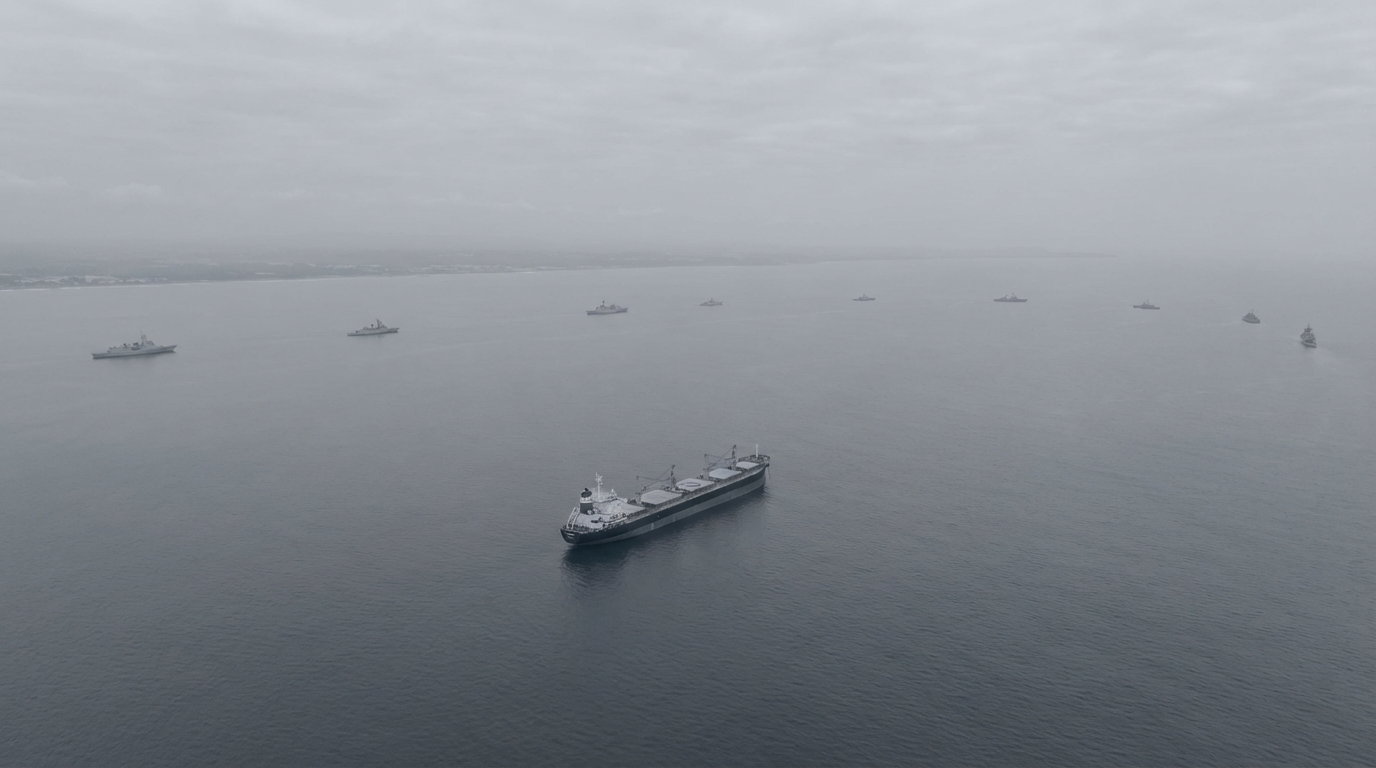
The United States military began a naval blockade affecting Iranian ports and key maritime routes, including the Strait of Hormuz, at 10 a.m. ET on Monday, according to official statements and maritime advisories. The move followed the collapse of peace talks between Washington and Tehran, and it is aimed at restricting ships seeking to enter Iranian ports.
An advisory from U.K. Maritime Trade Operations (UKMTO) confirmed that maritime access limits had been imposed. UKMTO, which is affiliated with the British Royal Navy, said the measures are being enforced against vessels of any flag that engage with Iranian oil terminals, ports, or coastal facilities located in the Persian Gulf and the Gulf of Oman. The advisory described the restrictions as active and relevant for commercial shipping that is considering calls linked to Iran.
U.S. Central Command said the blockade would be applied without regard to a vessel’s country of origin. Officials described the enforcement as uniform rather than dependent on flag state, and as covering attempts to access Iranian maritime infrastructure and related coastal locations. The stated scope, as described by officials and the advisory, centers on access to Iranian facilities rather than a selective approach to particular national fleets.
Tehran responded with a warning that if its facilities are targeted, no port in the region would remain secure. The statement pointed to the risk of wider disruption beyond Iran’s coastline and raised concerns for shipping activity along nearby routes that connect the Persian Gulf and the Gulf of Oman. The warning added to uncertainty for operators weighing whether to maintain port calls and routing plans in waters tied to Iranian terminals and coastal sites.
European allies signaled a split over the operation. Officials said the United Kingdom and France would not take part in the military action, indicating the escalation is not being presented as a joint effort with those partners. The absence of participation by these European allies may shape how commercial shipping and regional stakeholders interpret the level of international alignment behind the enforcement posture described by U.S. officials.
Markets moved quickly after the blockade began. Oil prices jumped, while U.S. stocks opened lower, reflecting investor sensitivity to developments affecting the Strait of Hormuz and surrounding waterways. The immediate reaction underscored how disruptions or perceived risks around major energy transit routes can transmit rapidly into commodity pricing and broader risk sentiment.
Key unknowns remain, including how long the restrictions will stay in place and how strictly enforcement will affect commercial traffic near Iranian oil terminals, ports, and coastal facilities. Another open question is how regional actors and shipping companies will adjust routing and port calls in response to the measures and Tehran’s warning. Officials’ statements and maritime advisories are expected to be watched closely for any change in scope or enforcement.