

Japan data centers face lawsuits over residential sites
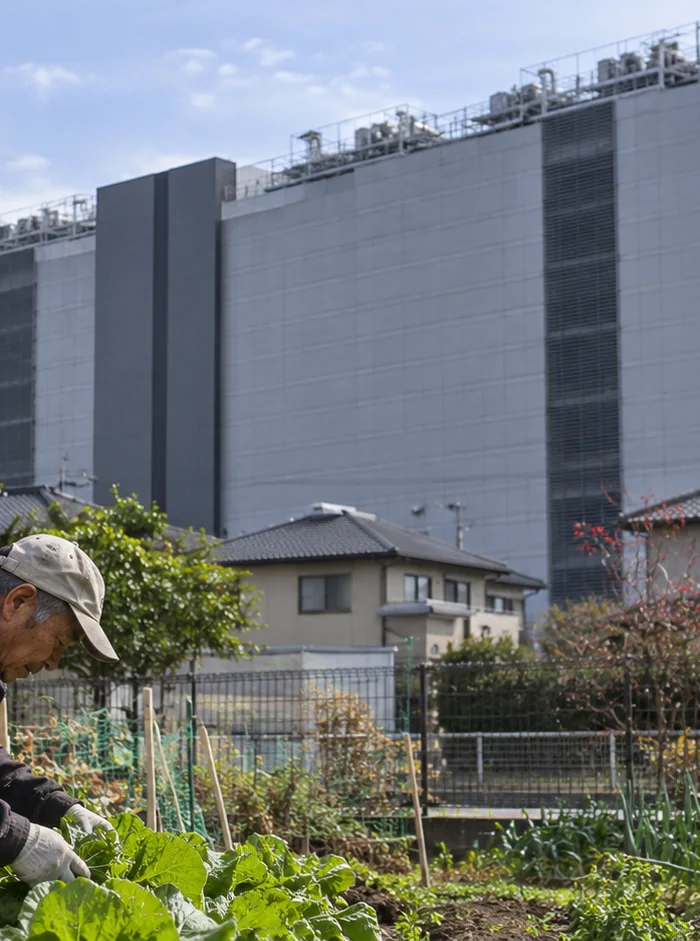
Japan faces legal challenges over data centers near homes as residents seek binding safeguards and officials prepare a year-end action plan.
The disputes reach beyond complaints about obstructed views: residents are challenging building classifications and seeking enforceable limits on generator noise and fuel storage. They put development rules under scrutiny as the government looks to the industry to support economic growth.
Consultancy JLL projects Japanese data center revenue will reach $33.4 billion in 2030, compared with $23.4 billion in 2024. That forecast provides a measure of the commercial stakes, but does not establish how residential opposition might affect individual projects.
Inzai residents contest office classification
In Inzai, between Tokyo and Narita airport, Junichi Takeda and other residents have sued the municipal government and Japan ERI, an authorized building-certification company. Their challenge concerns a facility that Britain’s Colt Data Centre Services started building this year.
The plaintiffs argue that approving the development as an office was improper and that treating it as a factory or warehouse would have prevented construction at that location. This is their legal contention, not a court finding; both defendants declined to discuss the ongoing litigation.
Takeda’s apartment is 11 meters from the planned building, which will stand in front of his balcony. Campaigners say the litigation could influence how courts address office classifications for data centers elsewhere; that potential consequence remains their assessment.
Kashiwa generator tests draw complaints
In Kashiwa, northeast of Tokyo, retired mechanic Susumu Goto lives opposite two facilities owned by Hong Kong asset manager PAG. Each stands 31 meters high, roughly equivalent to an apartment building with 10 floors, on land previously used for neighborhood sports.
Goto says generator testing forces him to shut his windows or go elsewhere, and that exhaust reaches his drying clothes. He also sought to have buried fuel tanks placed farther inside the site, away from neighboring homes, but his appeal to the city did not secure that change.
PAG said its site-selection process weighs environmental and neighborhood effects and involves consultation before construction. The company said it holds monthly discussions with residents and has installed noise barriers and reduced testing hours to address their complaints.
Koto petitions seek binding safeguards
In Tokyo’s Koto ward, residents have petitioned metropolitan authorities for enforceable requirements covering heat, sound, fuel safety and facility locations. Their appeals await consideration by the metropolitan assembly, while industry and local-government guidance issued this year offers a separate response to neighborhood disputes.
One contested project is Singapore-based Empyrion Digital’s planned facility, scheduled to open in 2029. Nurse Ayano Sasaki’s apartment building is just 3.7 meters from the development site, which lies in an area designated as vulnerable to flooding and earthquake risk.
Empyrion directed inquiries to consultant USI Engineering, which said the location was selected following checks on compliance, infrastructure and environmental effects. That explanation addresses the selection process, but does not settle residents’ demands for additional safeguards.
The action plan, expected before year-end, is intended partly to prevent such disputes. Its contents remain an open question, alongside the outcome of the Inzai litigation and the metropolitan assembly’s response to the Koto petitions.
If those processes produce binding restrictions, developers including PAG and Empyrion could face different siting or operating requirements, depending on their scope. If the response remains advisory, the distinction between voluntary mitigation and enforceable protection would remain central to residents’ objections.
More stories
- Türkiye Desk: GTA 6 drains UK mobile spend as Turkish studios feel pressure
- Europe faces attribution gap after 16 cyber, physical incidents
- PIF backs Grand Theft Auto as Saudi players embrace game
- Signal limits screenshots to curb AI access to messages
- Cognition runs Devin Mac workspaces on EC2 in 6 AWS regions
- Salesforce engineers cut 600-failure triage to 90 minutes
- Kimi K3 subscription pause tests Moonshot AI capacity
- BlackRock debt sale targets $12 billion for Meta El Paso
Latest news
- Retailers rethink Black Friday as discount fatigue grows
- S&P puts Nvidia credit rating on watch over board concerns
- Musk pledges two SpaceX shares per child in new US giveaway
- Washington targets China in new tariff push on trade ties
- Morocco targets 2030 World Cup final with new stadium bid
- Barclays puts AI bust risk at center of US growth debate
- US inflation reaches 3.8% before December Fed rate meeting
- Global stocks fall 0.4% as tariffs and US inflation loom