

S&P puts Nvidia credit rating on watch over board concerns
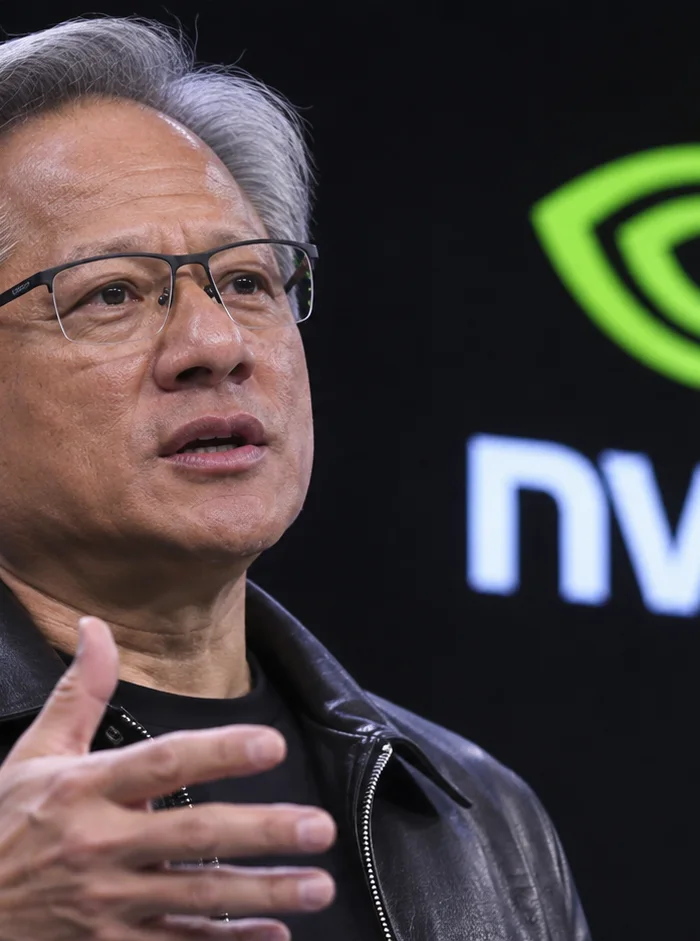
S&P Global Ratings placed Nvidia on downgrade watch, citing board oversight concerns after Jensen Huang’s reinstatement as CEO.
The agency said on November 25 that it could lower Nvidia’s AA rating within 90 days. Its current assessment points to a reduction of one notch, unless investigations or subsequent disclosures damage the chipmaker’s standing or commercial prospects.
Moody’s reached a different conclusion about the immediate leadership risk, leaving its Aa1 rating and stable outlook unchanged. It said Huang’s return reduces uncertainty over business execution, while cautioning that questions about governance and regulation remain unresolved.
Huang’s return tests board independence
S&P attributed its review to weaknesses in management and board supervision exposed by Huang’s departure and reinstatement. The agency questioned whether directors with lengthy service retained sufficient independence and whether Nvidia’s governance arrangements had developed alongside the company’s expansion.
S&P Global Ratings, the credit-rating agency, said extended service by certain directors “may have compromised their independence.” That is the agency’s assessment, rather than a finding that individual directors violated their obligations.
Nvidia’s board brought Huang back earlier in the week, reversing his departure days before. The company said the decision was “based on US government input,” a characterization that does not itself explain how directors evaluated the governance concerns.
The distinction between leadership continuity and independent supervision runs through the agencies’ assessments. Moody’s emphasized the disruption avoided by retaining Huang; S&P focused on what the reversal indicated about the institutions responsible for overseeing him.
Two agencies weigh different credit risks
Nvidia’s AA assessment from S&P denotes a very strong ability to honor financial obligations, below the agency’s highest grade, AAA. Placement on watch leaves the existing rating intact while signaling that the agency is considering a change.
Moody’s said reinstating Huang removes the execution risk associated with selecting a replacement. Its unchanged rating therefore should not be read as an endorsement of every aspect of Nvidia’s governance: the agency explicitly retained its caution about regulatory and oversight uncertainty.
S&P’s stated one-notch expectation also has a qualification. The agency said a more adverse assessment would depend on whether investigations and additional information impair Nvidia’s reputation or business prospects, making the commercial consequences of subsequent disclosures relevant to the review.
Nvidia financing connects the wider sector
The supplied account describes Nvidia as a financier of artificial intelligence startups, cloud businesses and data-center developments. Those businesses also purchase its graphics processing units and other AI chips, connecting its financing activity with demand for its products.
If leadership continuity supports execution without further business damage, the mechanism identified by Moody’s would favor fewer management disruptions at Nvidia. For customers and the wider technology sector, that scenario would leave commercial delivery, rather than a CEO succession process, as the immediate operational focus.
If governance concerns instead weaken Nvidia’s commercial prospects, S&P’s stated condition for a larger downgrade would become relevant. A simultaneous retreat in financing and customer spending could also constrain AI infrastructure investment, although the material provides no basis for estimating an economy-wide effect.
The next concrete marker is S&P’s review window. Its eventual decision will indicate whether the agency maintains its current assessment or translates its governance concerns into a lower credit rating.
More stories
- Retailers rethink Black Friday as discount fatigue grows
- Barclays puts AI bust risk at center of US growth debate
- Deal Sheet: Fortis shutdown costs over 400 jobs
- The Week in Games: GTA 6 turns attention into cash
- US data centres emit 25.7m tonnes of CO2, Harvard says
- German founders need 3,942 hours to open small business
- EU AI Act buyers get executable tests as governance turns to code
- UK auto industry faces EU threat on Chinese tariff row
Latest news
- Japan data centers face lawsuits over residential sites
- Musk pledges two SpaceX shares per child in new US giveaway
- Washington targets China in new tariff push on trade ties
- Morocco targets 2030 World Cup final with new stadium bid
- US inflation reaches 3.8% before December Fed rate meeting
- Türkiye Desk: GTA 6 drains UK mobile spend as Turkish studios feel pressure
- Global stocks fall 0.4% as tariffs and US inflation loom
- CIA hack affects unclassified data; scope remains unclear