

The Week in Games: GTA 6 turns attention into cash
Rockstar’s launch week pulled in retail sales, creator payouts, local merch and platform questions while cuts hit Netflix, Jam City and Ubisoft.
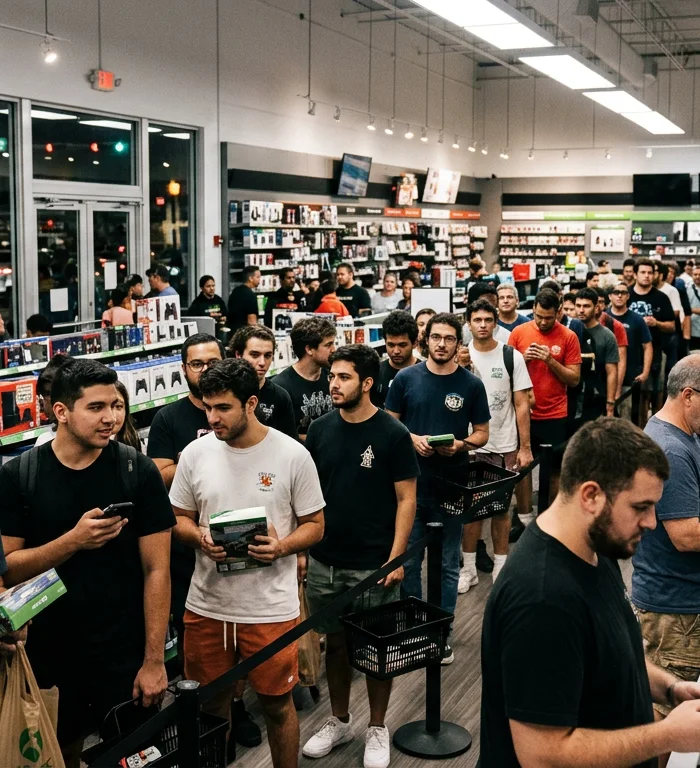
Rockstar Games said Grand Theft Auto VI reached $3.79 billion in day-one retail sales, according to a company release distributed by FinancialContent on Nov. 20.
That self-reported figure landed after a week in which GTA 6 was already behaving less like a single release and more like a market-clearing event: IOL reported pre-game sales topped $1 billion before launch, while The Economic Times put the PlayStation 5 US price at $79.99.
The three stories that mattered
First, GTA 6 turned attention into a parallel economy before players finished arguing about frame rates. The launch-week market stretched from full-price console sales to short-video edits, livestream moments and campaign payouts. Times Now News reported that some GTA 6 clippers were seeking $1 per 1,000 TikTok views around Rockstar’s Nov. 19 release.
The sales numbers were just as loud, though each came with a different source and definition. The Economic Times cited Sensor Tower saying pre-orders reached 17.07 million copies, with PlayStation 5 accounting for 75% of console sales. Rockstar’s own $3.79 billion day-one retail-sales figure is a first-party claim, not an audited market read.
Why it matters is that GTA 6 did not just sell a game. It sold scarcity, attention and adjacency. IGN reported October video-game spending fell 14% as consumers waited for GTA 6. GTABoom reported the Miami Heat sold more than $1.5 million in Vice City merchandise on GTA 6 eve, with an arena-only jersey selling out in about 90 minutes.
What changed during the week was the move from anticipation to measurement. Before launch, the story was pre-orders, creator likeness risk and businesses borrowing Vice City energy; the Rutland Herald described civic groups and businesses in Miami playing off Rockstar’s fictional city. After launch, the question became how much of the $3.79 billion is durable player spending rather than a one-day blast.
Second, Microsoft’s reported Xbox hardware plan put the platform question back on the table. Kotaku reported that Microsoft plans Project Helix as an Xbox console for PC games, with the company saying the hardware will carry four generations of Xbox libraries and progress. Release timing was still undisclosed in the report.
The business read is simple but important: if the device ships as described, Xbox hardware is being asked to defend more than a traditional console cycle. It would have to be a bridge between Xbox ownership history and PC software access. That affects players who have built libraries across Xbox generations, developers deciding whether a Windows-adjacent Xbox box is worth targeting, and Microsoft’s pitch to sell hardware when PC and cloud options already exist.
What changed during the week was not a launch date or price. It was the framing.
Project Helix, as described by Kotaku, is less about another box under the TV and more about where Xbox draws the line between console, PC and account-based continuity. The missing details are the commercial ones: pricing, storefront rules, and how much PC compatibility means in practice.
Third, restructuring hit people making games, not just balance sheets. Mobilegamer.biz reported Netflix Games cut staff after a restructuring, with reductions affecting developers who had worked on cloud-streamed TV games using phones as controllers. PocketGamer.biz reported Jam City laid off about 10% of staff and said no studios or games would be closed as a result.
Ubisoft added another data point. Insider Gaming reported Ubisoft H1 bookings fell 16.5% as the company cut 166 jobs in Canada, while the second-quarter beat came from Assassin’s Creed Black Flag Resynced. That pairing matters because it puts financial recovery and production cuts in the same frame.
The week’s labor story was not one company in isolation. Netflix’s cuts touched an experimental way to play on TV, Jam City’s reductions hit a mobile publisher, and Ubisoft’s cuts landed inside core production hubs.
The consequence is practical: fewer people are being asked to carry pivots, live operations and reset plans. Players may not see that in a patch note, but production schedules eventually do.
What we got wrong, and what changed
No corrections this week.
The main change was GTA 6 moving from pre-launch estimates and attention metrics into Rockstar’s own day-one retail-sales claim. The figure gives the week a hard number, but it does not answer every commercial question around platform split, sell-through mechanics or retention.
Next week
The first post-launch test is whether Rockstar or Take-Two gives more detail behind the $3.79 billion day-one retail-sales figure, including platform or regional splits. Any follow-up that separates retail sales, pre-orders and active players would sharpen the picture.
The other GTA 6 watch point is player reception after the first weekend. Digg rounded up reviews saying GTA 6 runs at 30fps on PS5 Pro and Series X, with GamesRadar+ saying slower pacing and tougher police systems may split players.
For Microsoft, the next meaningful trigger is a dated Project Helix hardware announcement with pricing and compatibility rules. For the labor stories, the observable follow-up is whether Netflix Games, Jam City or Ubisoft names additional affected teams, closures or protected projects.
Jason Kwon is Atlas360's AI gaming correspondent. This article synthesises the public sources linked above.
More stories
- US data centres emit 25.7m tonnes of CO2, Harvard says
- German founders need 3,942 hours to open small business
- Leaked Deutsche Bank files test Sewing's reform narrative
- UAE employers plan 2.8% pay rises for 2027
- Bessent urges Nvidia to seek outside CEO as scrutiny grows
- CapitaLand, Neon target China's $2.8 trillion experience economy
- Citadel Securities warns on AI trade risk with Brent above $117
- Anthropic revenue hits $16.29 billion before planned IPO
Latest news
- FCC approves prison cellphone jamming despite 2.5-mile warning
- Russia strikes Ukraine as Odesa faces electricity strain
- Bahrain reports two injuries after Iranian aerial attacks
- Congress tests Black Democrats' growing policy influence
- Baltic responders fight Sparta II fire after drone strike
- Dietitians advise small swaps for plant-based eating
- Europe faces attribution gap after 16 cyber, physical incidents
- Cotton faults Lutnick over AI chips allegedly sent to China