Nablus Village Vandalized in Suspected 'Price Tag' Attack
Israeli police are investigating an alleged "price tag" attack in a Palestinian village near Nablus, involving vandalism and nationalist graffiti.
Omar Farouk ·
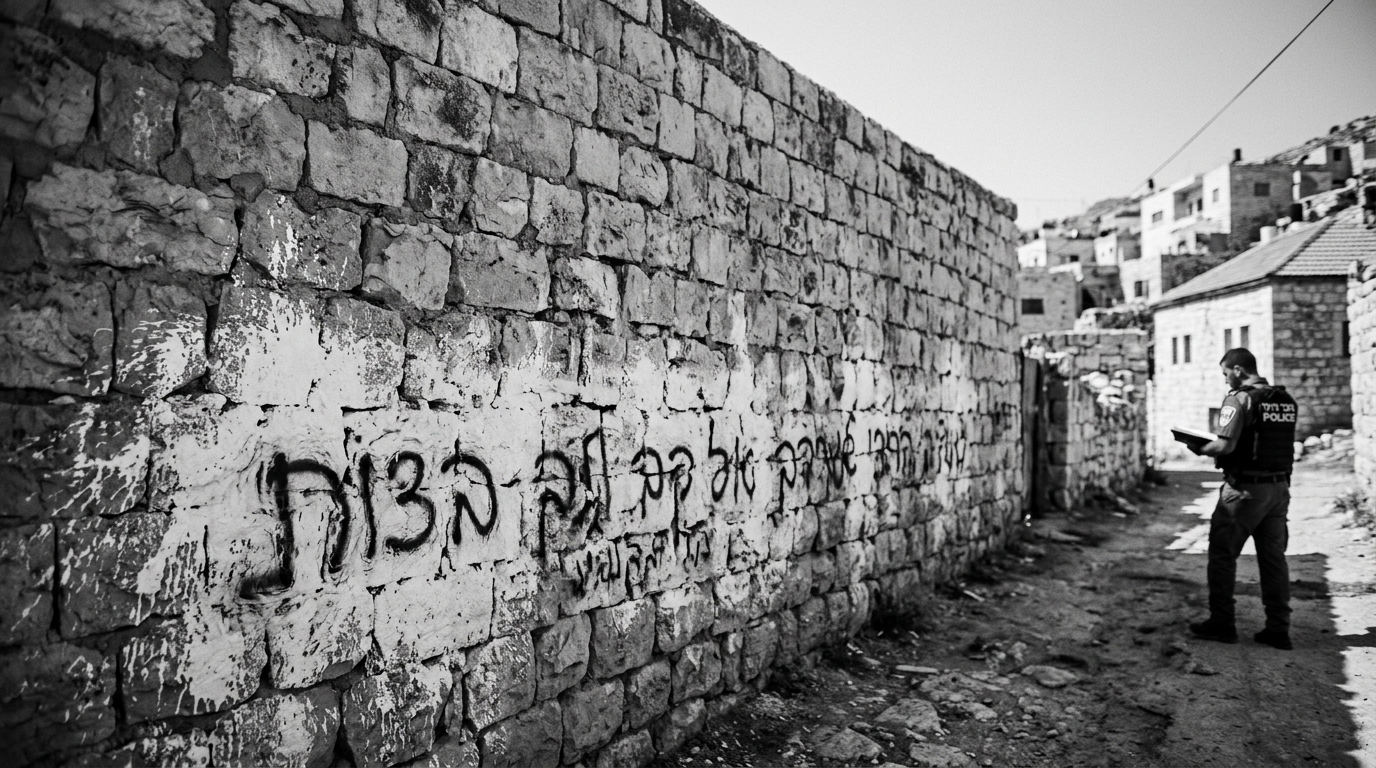
Israeli police have launched an inquiry into a suspected "price tag" incident that occurred in a Palestinian village situated close to Nablus in the West Bank. The event, reported on Tuesday, involved acts of vandalism and the spraying of nationalist slogans on local property. Authorities are treating the incident as a retaliatory action, reportedly linked to the recent passing of Sergeant First Class Benayahu Hason.
These "price tag" attacks are a documented phenomenon, typically carried out by Jewish extremists who target Palestinian property and communities within the West Bank. The term encompasses acts of violence and vandalism, often framed by perpetrators as retribution for Palestinian actions or Israeli government decisions perceived as detrimental to the settlement movement. Such incidents are frequently observed in West Bank areas where Israeli settlements and Palestinian communities coexist.
Alleged Motivation and Broader Conflict
The alleged motive for this particular incident, expressed as "revenge for Benayahu" in graffiti, directly references Sergeant First Class Benayahu Hason. Hason, a soldier in the Givati reconnaissance unit, recently died during military operations conducted in northern Gaza. This direct linkage connects the West Bank incident to the broader ongoing conflict, suggesting that retaliatory actions could extend beyond immediate operational zones, potentially intensifying tensions across different regions.
The reported attack is consistent with an observable rise in such "price tag" incidents. These actions are a recurring concern for stability in the region, particularly when explicitly presented as retaliation. They tend to deepen mistrust between Israeli and Palestinian populations, complicating efforts by both international organizations and local authorities to de-escalate conflicts.
Risks to Regional Stability
The ongoing occurrence of settler violence, especially those explicitly framed as acts of retribution, poses a significant risk of further instability throughout the West Bank. These actions have the potential to weaken the Palestinian Authority's already challenging control in certain areas. Moreover, they could provide additional impetus for broader regional spillover, potentially affecting diplomatic initiatives, security postures, and overall stability across the wider Levant region.
The immediate situation in the Nablus area remains highly sensitive to potential escalation or de-escalation dynamics. While Israeli authorities, including the Israel Defense Forces, typically respond by securing affected areas and initiating investigations, the rate of indictments for settler violence remains a frequent point of contention highlighted by human rights organizations. A key question moving forward is whether Israeli authorities will promptly and effectively prosecute those responsible for this alleged attack. Additionally, monitoring for further retaliatory actions from either settlers or Palestinians in the aftermath of this incident will be critical.