Tokyo earthquake shakes Kanto; Kawasaki reports two injured
A 5.9 earthquake shook Tokyo and eastern Kanto before dawn Sunday, with two injuries reported in Kawasaki and no tsunami threat.
Mei Lin ·
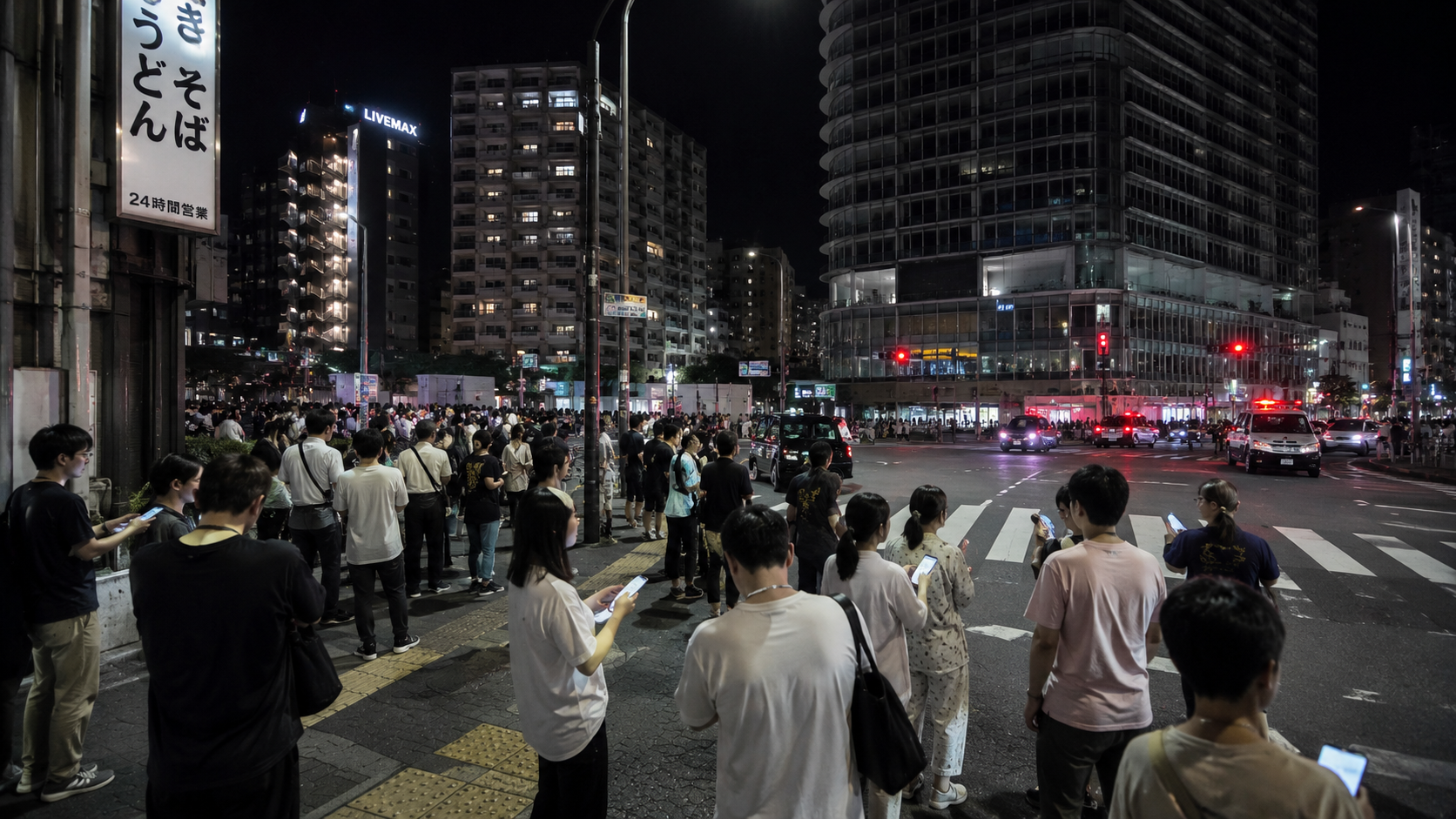
A 5.9 earthquake shook Tokyo and eastern Kanto before dawn Sunday, with two injuries reported in Kawasaki and no tsunami threat.
The quake was centered in southern Ibaraki Prefecture at about 2 a.m. and struck 70 kilometers below the surface, according to seismic authorities. Shaking reached lower 5 on Japan’s seven-point shindo scale in parts of Tokyo, Ibaraki, Saitama and Chiba.
Lower-5 shaking reaches Tokyo
Tokyo’s Adachi Ward recorded lower-5 intensity, a level the Japan Meteorological Agency says can knock objects from shelves and force people to hold onto stable fixtures. Other districts in Tokyo, along with areas of Tochigi, Gunma and Kanagawa prefectures, recorded Level 4 shaking, one step below lower 5 on the shindo scale.
The agency reported no tsunami risk after the inland quake, removing the immediate coastal danger that can follow stronger offshore events. Residents felt shaking for as long as about one minute in some areas after mobile-phone earthquake alerts sounded shortly before the tremor arrived.
High-rises face slow swaying
Long-period ground motion reached Level 2 in Kawaguchi in Saitama Prefecture, Urayasu in Chiba Prefecture, and Tokyo’s Koto and Edogawa wards, according to public broadcaster reports citing monitoring data. That type of motion involves slower shaking that can travel through taller buildings and make upper floors sway more than low-rise structures.
At Level 2, people may struggle to remain standing, and furniture or unsecured items can shift or fall. The measurement matters in the Tokyo metropolitan area because dense rail, office and residential networks include many high-rise buildings across bayfront and river-adjacent districts.
Japan’s shindo scale measures the strength of shaking at specific locations, rather than the energy released at the quake’s source. That is why a magnitude 5.9 event can produce different reported intensities across nearby prefectures, depending on depth, soil conditions and distance from the epicenter.
Kawasaki checks injury reports
Kawasaki reported two injuries as of 3 a.m., while authorities across the affected region were still checking for damage. The early injury count may change as local governments, police and emergency services complete inspections after daylight and after transport operators assess tracks, stations and roads.
The immediate operational risk is disruption rather than tsunami damage, based on the information released after the quake. If inspections find no structural problems, rail and road networks would be expected to normalize more quickly; if aftershocks or building damage are confirmed, local authorities may keep safety checks in place longer.
For households and businesses, the main test is whether power, elevators, water systems and communications remain stable after the early-morning shaking. For transport and property operators, the focus shifts to equipment checks in high-rise buildings and along routes that crossed areas with Level 4 or lower-5 intensity.
Kanto prepares for aftershocks
The quake fits Japan’s standing seismic risk profile: frequent tremors, dense urban exposure and a warning system designed to provide seconds of notice before strong shaking. The phone alerts before Sunday’s tremor show how early warning can reduce surprise, even when it cannot prevent damage or injuries.
If no further strong shaking follows, the macro effect should remain limited to short-term local checks across the capital region. If additional tremors occur near the same fault zone, the pressure would fall first on municipal response teams, building managers and transport operators serving Tokyo and surrounding prefectures.
The open questions are narrow but important: whether the two reported injuries remain the full human toll, whether any buildings or infrastructure sustained damage, and whether aftershocks affect the morning travel period. Authorities had not reported a tsunami threat, leaving land-based safety checks as the immediate priority.