NATO summit dispute: Czech president sues government
A NATO summit delegation fight in Czechia is heading to the Constitutional Court after President Petr Pavel challenged the government’s decision to exclude…
Jason Kwon ·
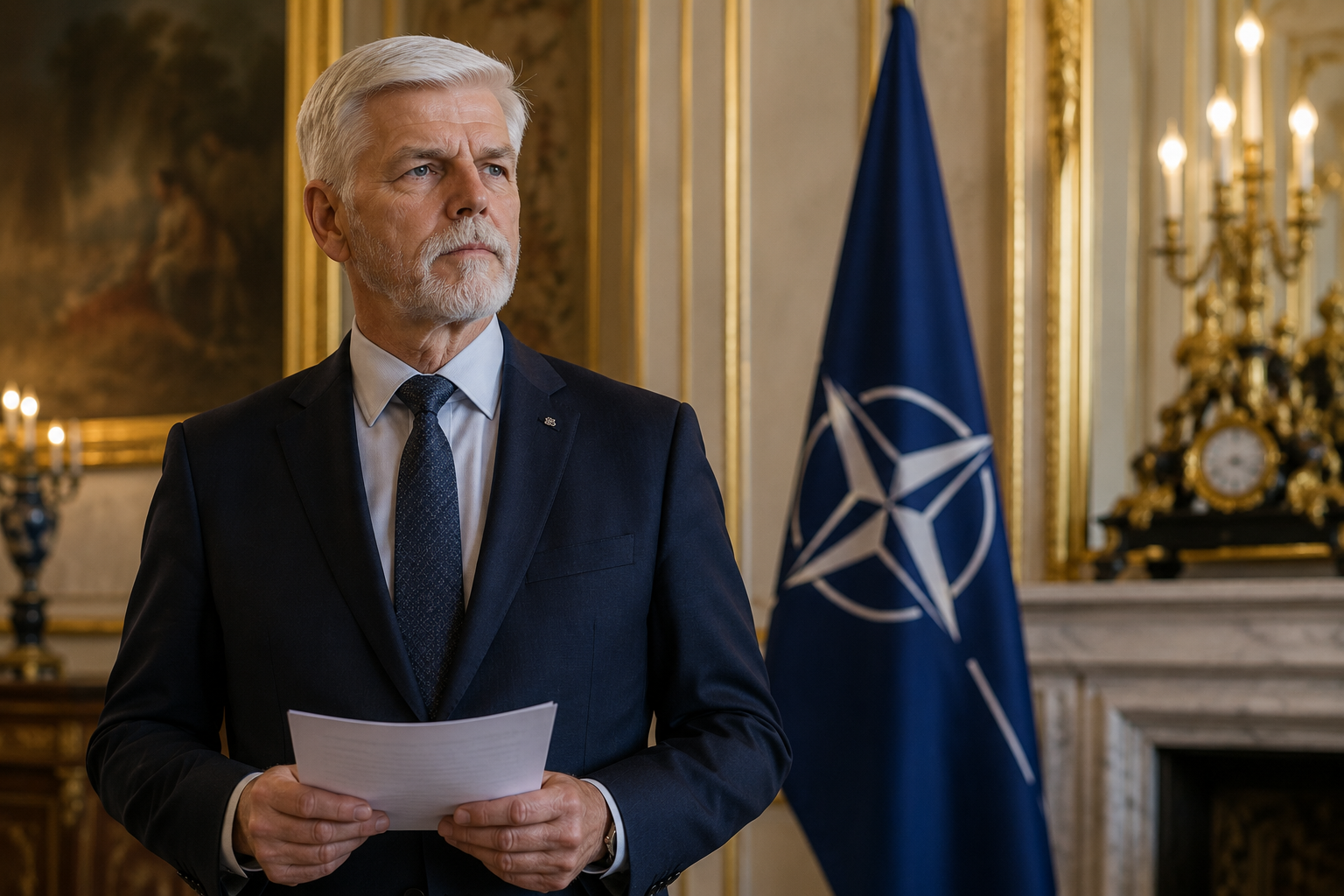
A NATO summit delegation fight in Czechia is now in the hands of the Constitutional Court after President Petr Pavel challenged the government’s move to leave him out.
Pavel said Tuesday he has asked the top Czech court to review the cabinet decision concerning the delegation scheduled to represent the country at next month’s NATO summit in Turkey.
The dispute lands at a sensitive moment for Prague: domestic leaders have been arguing for months about who should attend the alliance gathering, while the government is also facing criticism for not meeting NATO defense spending targets.
President asks court to weigh government’s exclusion
According to Pavel’s statement, the government opted to exclude the head of state from the official delegation. Pavel framed the change as a break from longstanding practice rather than a routine staffing choice.
He pointed to historical precedent: the Czech president has led the country’s delegation at 20 NATO summits held during its time as a member of the alliance. In his view, shifting that role cannot be done unilaterally by the cabinet.
“If this practice should change for any reason, it must again occur through negotiation and agreement, not a unilateral decision by the government,” Pavel said in the statement.
Pavel added that he will accept whatever conclusion the Constitutional Court reaches. That commitment matters because it signals the dispute is being channeled into institutional process rather than escalated through parallel political pressure.
A proxy battle over authority and representation
At the surface, the issue is who sits at the table in Turkey and under what title. Underneath, it is a question about how the Czech state divides responsibilities between the presidency and the government when representing the country in high-stakes international forums.
NATO summits are not ceremonial events. They are where allies coordinate commitments and messaging on deterrence, force posture, and burden-sharing—topics that can quickly become domestic political flashpoints.
That context helps explain why this delegation decision has become a legal issue rather than a quiet bureaucratic adjustment. When a president says a practice has been consistent across 20 summits, he is effectively arguing for an established norm that the government must justify if it wants to overturn.
Defense spending targets sharpen the political stakes
The timing is also important. Czech leaders have been clashing for months over attendance plans for the summit at a time when the government is not meeting NATO’s defense spending targets, according to the report.
Even without specific budget figures cited in Pavel’s statement, the deficit against alliance targets creates additional political pressure. It can influence which officials want to carry the message to NATO partners and which institutions want to own the narrative at home.
For allies, the immediate question is straightforward: who will formally speak for the Czech Republic at the Turkey summit. For the Czech public, the question is more structural: whether an established practice around presidential leadership at NATO summits can be reversed by cabinet decision alone.
The Constitutional Court’s ruling will effectively define the boundaries of that practice and set a precedent for future summits. Until then, the delegation question remains unresolved, and the next step is the court’s review.