Ceasefire on the Brink: Israel Strikes Lebanon, Testing US–Iran Truce
Lauren Collins ·
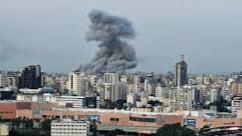
A recently brokered ceasefire between the United States and Iran is under severe strain following extensive Israeli military actions in Lebanon, marking the most significant strikes since the current conflict began. These events underscore the delicate nature of regional stability, particularly when key actors operate outside established agreements.
The ceasefire, established after weeks of heightened tensions in the Gulf and a series of retaliatory exchanges between Iran and U.S.-aligned forces, aimed to prevent direct military confrontation between Washington and Tehran. Its primary focus was maritime security and ensuring the uninterrupted flow of energy resources. A notable ambiguity within the agreement concerned the status of Iran's regional proxy groups, such as Hezbollah in Lebanon, an issue now being critically tested.
On Wednesday, Israel launched widespread airstrikes across Lebanon, stating that the operations targeted infrastructure and personnel associated with Hezbollah. Lebanese authorities have reported hundreds of casualties, including both fatalities and injuries. This escalation represents one of the deadliest periods on Lebanese territory since cross-border hostilities resumed in the aftermath of the Gaza conflict. International condemnation swiftly followed the strikes, with numerous governments and humanitarian organizations expressing deep concern over the potential for a broader regional conflict.
At the heart of the current dispute lies a fundamental disagreement regarding the geographical and political scope of the ceasefire. Iran and Pakistan, both instrumental in facilitating ongoing diplomatic efforts, maintain that Lebanon should be implicitly covered by the agreement, given Hezbollah’s strategic alignment with Tehran. Conversely, the United States and Israel reject this interpretation, asserting that the agreement is strictly limited to direct U.S.-Iran interactions and vital shipping lanes, and does not extend to Israel’s separate conflict with Hezbollah.
Iran reacted strongly to these developments. The Islamic Revolutionary Guard Corps (IRGC) claimed that maritime traffic through the Strait of Hormuz, a crucial waterway through which approximately one-fifth of the world’s oil supply transits, had effectively ceased following the Israeli strikes. The IRGC characterized the Israeli attack as a violation of the ceasefire. While independent confirmation of a complete shutdown remains elusive, even a partial disruption could have significant consequences for global energy markets, echoing previous crises in the Strait, including the 2019 tanker attacks and the earlier Iran-Iraq "Tanker War" episodes of the 1980s.
Washington is actively working to de-escalate the situation while striving to maintain diplomatic momentum. President Donald Trump stated that U.S. forces would remain "in place" throughout the region until a comprehensive agreement with Iran is finalized. He expressed cautious optimism, suggesting a deal is "highly likely," but issued a stark warning that failure could lead to renewed hostilities, stating that "the shootin’ starts."
Senior U.S. officials, including Vice President JD Vance, special envoy Steve Witkoff, and Jared Kushner, are scheduled to travel to Islamabad for discussions commencing on Saturday. Pakistan’s role as host underscores its increasing importance as an intermediary, possessing working relationships across Washington, Tehran, and various Gulf capitals, in addition to its historical involvement in backchannel diplomacy.
Meanwhile, Israel has indicated its intent to persist with its campaign against Hezbollah’s leadership. The Israel Defense Forces announced that they had killed the personal secretary and nephew of Hezbollah deputy leader Naim Qassem, identifying him as a close advisor and a member of the group’s inner circle. Targeted killings of senior operatives have historically been a cornerstone of Israel’s strategy against Hezbollah, dating back to the 1990s and intensifying after the 2006 Lebanon War, though such actions have also historically triggered cycles of retaliation.
The current situation reflects a recurrent yet perilous pattern in Middle Eastern geopolitics: formal ceasefires between state actors that fail to adequately address the involvement of powerful non-state allies. Similar dynamics have complicated previous de-escalation efforts, including U.S.-Iran tensions following the killing of Qassem Soleimani in 2020 and repeated flare-ups related to Gaza involving Hezbollah.
This particular episode is especially sensitive due to the convergence of three critical pressure points: an incomplete U.S.-Iran détente, an active conflict between Israel and Hezbollah, and the strategic vulnerability of global energy flows through the Strait of Hormuz. Should these trajectories continue to intersect, the risk extends beyond localized escalation in Lebanon to a broader breakdown that could plunge the region—and potentially global markets—back into crisis.