NATO Fractures Deepen: Trump Weighs Military Retaliation Against ‘Disloyal’ Allies After Iran War
Lauren Collins ·
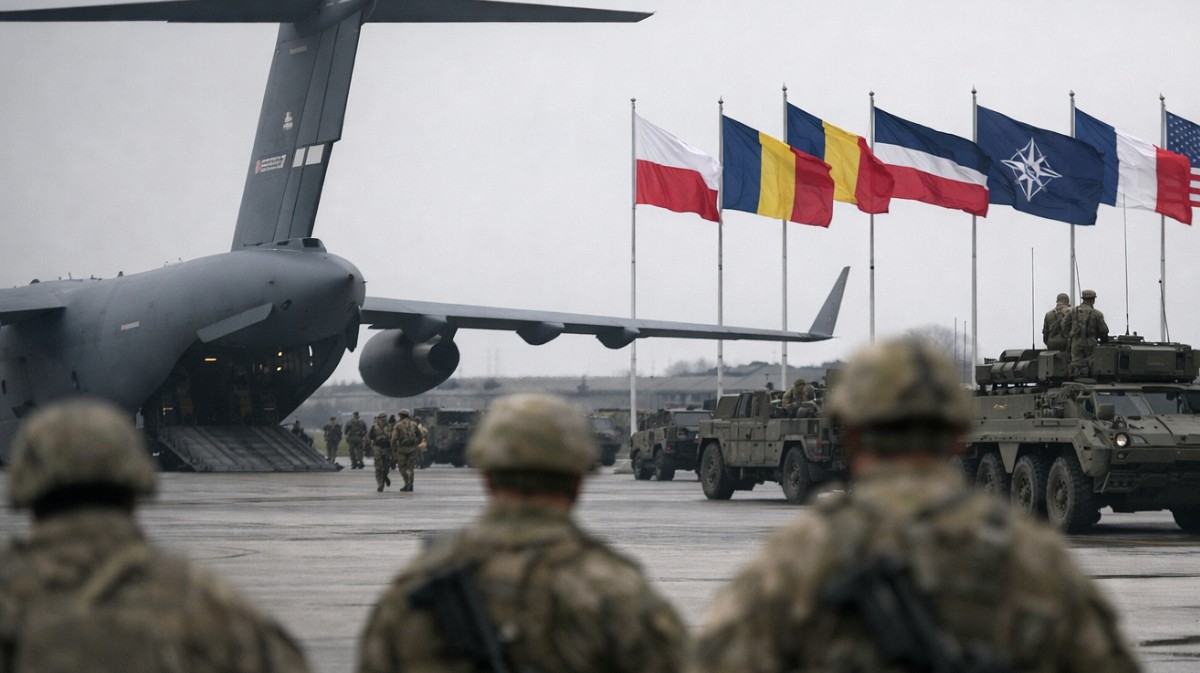
The Trump administration is actively exploring a plan to recalibrate U.S. military deployments across Europe, targeting NATO allies perceived as insufficiently supportive during the recent conflict with Iran. According to senior officials, the proposal would relocate American troops away from countries that resisted or limited cooperation, while reinforcing deployments in more aligned Eastern European states.
Though still in its early stages, the initiative reflects a broader deterioration in U.S.-European relations following Washington’s unilateral decision to engage militarily with Iran. While the plan stops short of a full U.S. withdrawal from NATO—something constrained by congressional oversight—it underscores a growing willingness within the administration to use military posture as leverage against allies.
The debate comes amid heightened rhetoric from President Trump, who has publicly criticized NATO’s lack of support during the conflict, framing it as a fundamental breach of alliance solidarity. Administration officials have echoed this sentiment, arguing that European partners have benefited disproportionately from U.S. security guarantees while failing to reciprocate in moments of crisis.
Countries such as Spain and Germany have drawn particular scrutiny. Spain reportedly restricted U.S. military access to its airspace during operations related to Iran, while German officials openly criticized the intervention. Italy and France also imposed limitations on U.S. base usage, further fueling frustration in Washington.
In contrast, Eastern European states—including Poland, Romania, and the Baltic countries—have emerged as potential beneficiaries of the proposed shift. These nations not only meet higher defense spending thresholds but also signaled early support for U.S. operations and broader maritime security initiatives in the Middle East.
A redistribution of U.S. forces eastward would carry significant geopolitical implications. While it may strengthen deterrence against Russia, it also risks escalating tensions with Moscow and further fragmenting NATO’s internal cohesion. European officials, for their part, have pushed back against Washington’s criticism, noting they were not consulted ahead of the Iran operation—complicating any coordinated response.
Ultimately, the proposal highlights a deeper strategic question: whether NATO remains a mutual defense pact grounded in shared decision-making—or is evolving into a more transactional alliance shaped by political alignment with Washington’s priorities.