

Saudi and Pakistani officials to meet Iranian leaders in Tehran
The visit seeks to leverage existing diplomatic channels to temper regional tensions following recent escalations involving Israel.
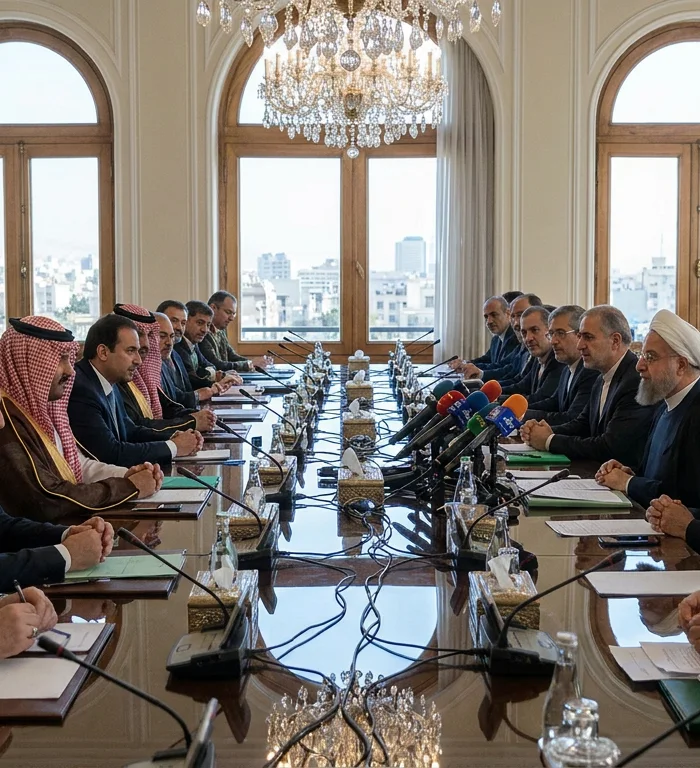
Diplomatic summit in Tehran
Senior officials from Saudi Arabia and Pakistan are scheduled to meet with Iranian leadership in Tehran this week. The gathering aims to facilitate regional communication as tensions remain elevated across the Middle East, according to two people familiar with the arrangements.
Saudi Arabia will be represented by Defence Minister Prince Khalid bin Salman, while Pakistan’s delegation will be led by army chief Field Marshal Asim Munir. Both sources requested anonymity due to the sensitivity of ongoing regional security negotiations.
Establishing diplomatic channels This meeting builds on the 2023 Beijing-brokered rapprochement This meeting builds on the 2023 Beijing-brokered rapprochement, which re-established formal diplomatic ties between Riyadh and Tehran after years of regional rivalry. That agreement created a recurring mechanism for direct dialogue that has allowed both states to manage flashpoints in Yemen, Iraq, and beyond. Pakistan maintains a distinct role as a security interlocutor in the region, often serving as a bridge between the Saudi military establishment and the Iranian Revolutionary Guard Corps. Analysts suggest this position allows Islamabad to relay specific de-escalation signals that might otherwise be misinterpreted during periods of high kinetic activity. Regional stability stakes The urgency of the meeting follows a period of intense speculation regarding potential military responses between Iran and Israel. Saudi Arabia has expressed clear interest in insulating its national infrastructure and airspace from the spillover of a broader conflict, as a regional war would threaten the stability of vital energy transit routes through the Red Sea and the Strait of Hormuz.
Tehran Senior
For Iran, the meeting offers an opportunity to gauge the regional appetite for containment while it navigates indirect talks with the US. A successful engagement could reinforce the current boundaries of proxy warfare, preventing a shift toward direct, state-on-state confrontation that would force regional actors to abandon their stance of neutrality.
Indicators for success
The primary metric to watch is whether the participants issue a formal statement or, more critically, see a measurable decline in the frequency of proxy operations in the Levant and Red Sea by November 30. If direct communication channels between Riyadh and Tehran hold despite ongoing spikes in activity, the diplomatic effort will be considered successful. The strategy faces a total collapse if Iran initiates a direct, large-scale strike on Israel that forces Saudi Arabia to abandon its current mediation posture to safeguard its own security alliances.
More stories
- Germans oppose Ukraine aid as poll shows support slipping
- Kim Jong-un receives 10 envoys after constitutional shift
- Ukraine claims Libya strike sinks Russian naval corvette
- COP31 climate talks collapse over fossil fuels and funds
- Russian military faces 1,087 recorded suicides in Ukraine war
- US faces China, Russia in Africa minerals contest
- Singapore studies geothermal power after 60-times resource estimate
- Singapore sets five-year power buildout for up to 13GW demand
- Xi brings trade truce test to Trump's red-carpet summit
- Tigray conflict flares after forces seize three airports
Latest news
- Trump prepares tariffs on China and other major exporters
- New-car buyers pay record average $50,087 in October
- Banks face ECB reserve debate over liquidity and profits
- Investors see Anthropic debut gains fade below $83 a share
- Iraq orders federal control over Kurdish-area oilfields
- Nvidia shares retreat as AI rally cools before PCE data
- Macy’s parade faces balloon limits as storm winds approach