Xi brings trade truce test to Trump's red-carpet summit
President Trump welcomed Xi Jinping as officials extended the trade truce to January 10, setting up talks on tariffs, technology and Taiwan.
Lauren Collins ·
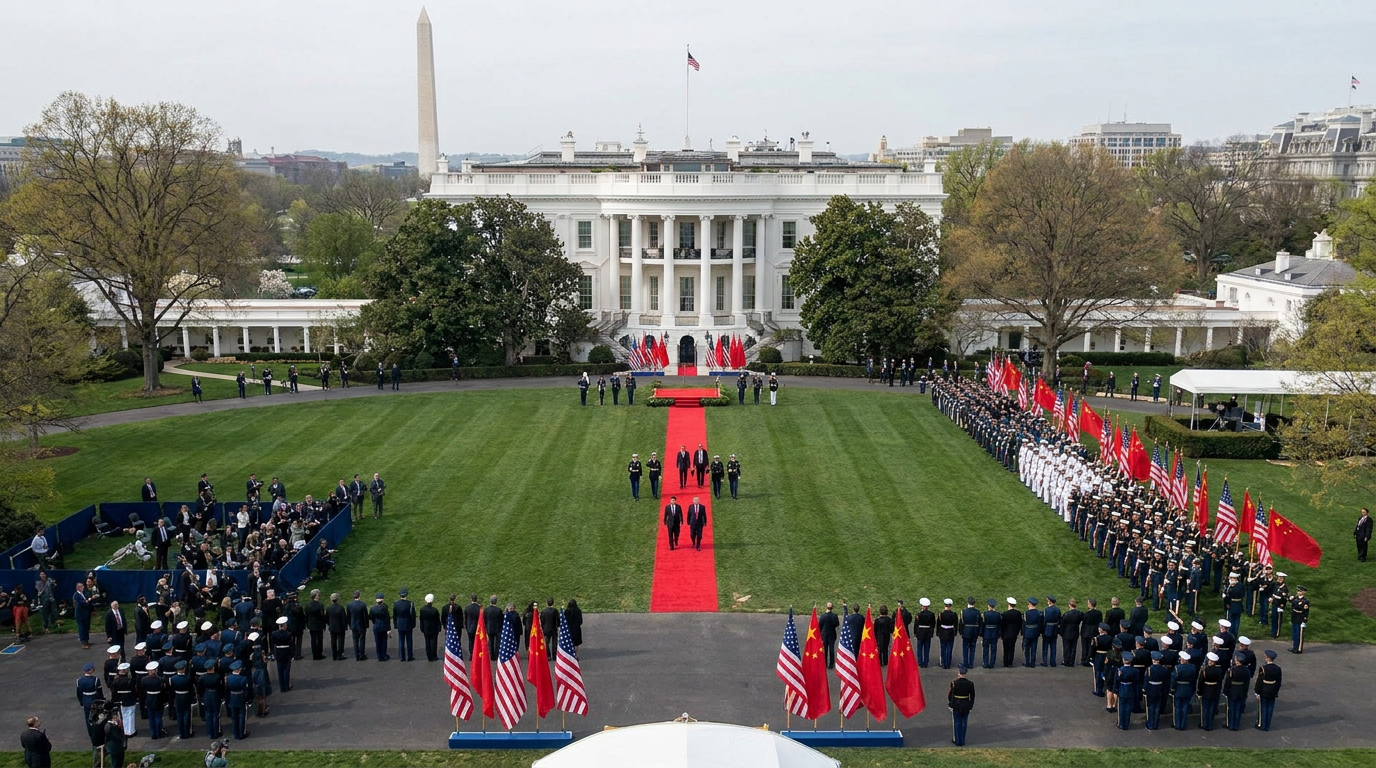
The trade truce will run to January 10 after President Trump welcomed Xi Jinping in Washington, keeping tariff fights off the table for now.
Xi arrived on September 23, 2026, for a three-day state visit that began with President Trump greeting him at Joint Base Andrews rather than waiting at the White House. Treasury Secretary Scott Bessent announced the extension as the ceremony unfolded, moving the deadline from November 10 to January 10.
January 10 truce deadline
The truce has had a narrow purpose: both governments agreed to reduce tariffs and hold off on new trade restrictions while negotiations continue. Bessent said the added time could allow Trump and Xi to address unresolved issues at international summits scheduled for China in November and Florida in December.
"I don't know whether a bigger deal can be done. I don't know whether we will just roll the current deal," Bessent said in a television interview. The wording left open whether the January deadline becomes a bridge to a broader agreement or another short extension.
China had sought a longer pause, according to Wendy Cutler, a former U.S. trade negotiator now at the Asia Society Policy Institute. She said the shorter extension showed Washington was still watching whether Beijing carries out commitments tied to critical mineral exports and U.S. agricultural purchases.
Craig Singleton, a senior fellow at the Foundation for Defense of Democracies, described the deadline as a test of compliance rather than a diplomatic favor. "This is less about buying two months of calm than making China earn the next extension," he said.
Red carpet tests Republicans
The welcome was built around ceremony as much as diplomacy. A 100-foot (30-meter) red carpet was placed below Xi's aircraft stairs, with an honor guard, flags, anthems and a flyover by two B-1 bombers adding military imagery to the arrival.
Xi used his arrival statement to frame the relationship in cooperative terms. China and the U.S. "should be partners, not rivals," he wrote, adding that Chinese national rejuvenation and Trump's political slogan could "go hand in hand."
The optics drew objections from parts of Trump's own party. Sen. Roger Wicker, the Mississippi Republican who chairs the Senate Armed Services Committee, criticized the "lavish welcome" and said Trump should not have invited Xi given disputes with the Chinese leader and the Chinese Communist Party.
Secretary of State Marco Rubio defended high-level contact by pointing to the size and power of both countries. He said the U.S. and China are the world's two largest economies and likely its two most powerful militaries, a formulation that underscored why even critics of engagement cannot easily avoid it.
Danny Russel, a former U.S. diplomat in the Obama administration, said the reception gave Beijing material for domestic and international audiences. "Such extreme deference is valuable evidence that China's leader is now held in extraordinarily high esteem by the President of the United States," said Russel, now at the Asia Society Policy Institute.
Tech dinner and Taiwan risks
Trade is only one pressure point in the relationship. The agenda also sits alongside artificial intelligence competition, Trump's war with Iran and China's position on Taiwan, all of which carry security and economic consequences beyond the tariff file.
The leaders are expected to turn to more substantive talks on Thursday after a White House arrival ceremony and troop review. A black-tie dinner is set to include technology executives such as Nvidia's Jensen Huang and SpaceX's Elon Musk, placing industry leaders near a policy conversation shaped by export controls, supply chains and national security rules.
Xi and Peng Liyuan are also scheduled to return to the White House on Friday for private tea with President Trump and first lady Melania Trump before a tour of the National Archives. The White House said the visit will include documents meant to highlight the history of U.S.-China relations.
If the pause holds through January 10, the immediate effect is to keep the world's two largest economies in negotiation rather than tariff escalation, with farm exporters, mineral buyers and technology companies watching compliance. If talks stall before then, tariffs can again become the enforcement tool, shortening planning cycles for sectors exposed to both markets.