Tigray conflict flares after forces seize three airports
Tigray conflict flared after regional forces took three airports, threatening Ethiopia’s peace deal and widening risks across the Horn of Africa.
Amina Diallo ·
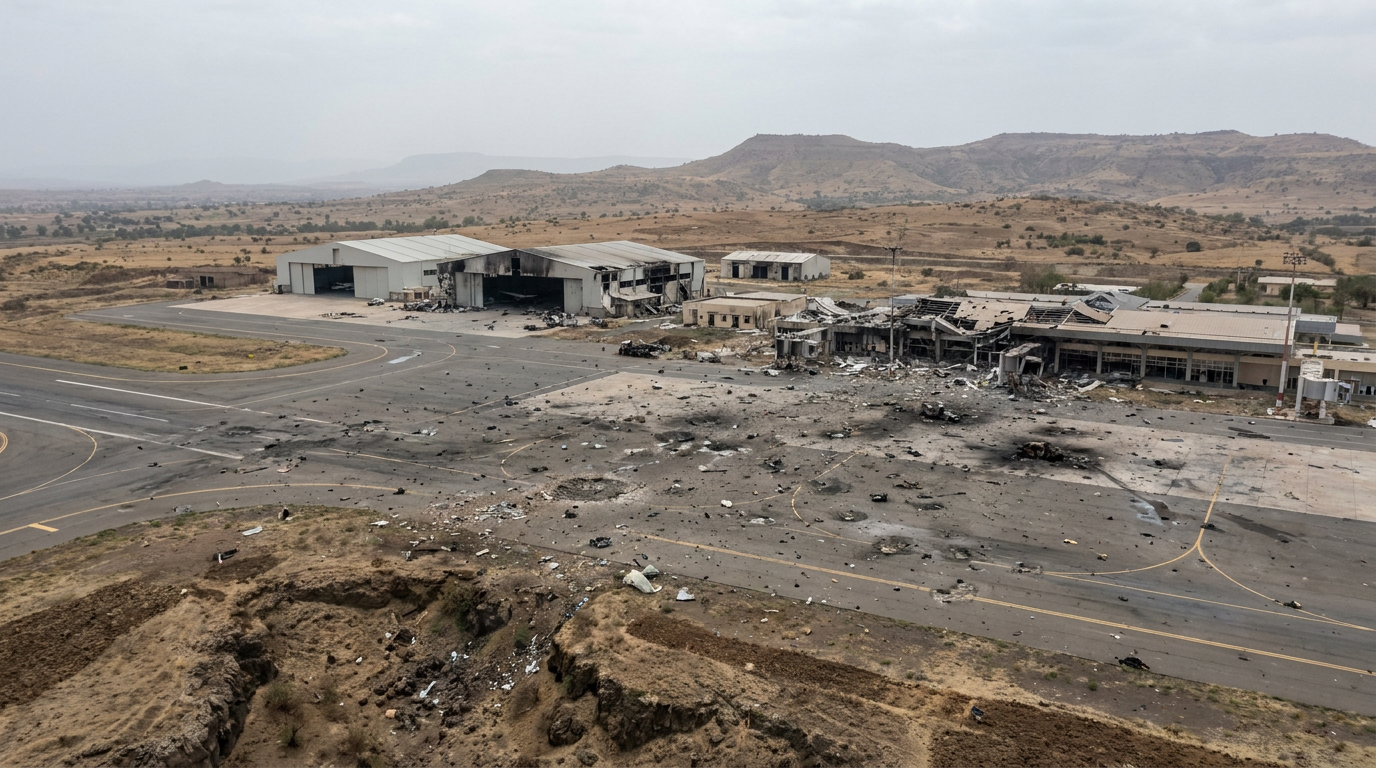
Tigray conflict flared as regional forces seized three airports and fought federal troops, threatening Ethiopia’s peace deal and Horn of Africa security.
The seizures on Wednesday marked the clearest break in months of tension between regional forces in northern Ethiopia and the federal government. Clashes were reported in several locations, indicating that the airport operation was part of a broader military push rather than an isolated local action.
The airfields matter because they can shape troop movement, supply routes and the federal government’s ability to project force into Tigray. They also test the Pretoria Agreement, the 2022 accord that stopped the 2020-2022 war between federal forces and the Tigray People’s Liberation Front (TPLF).
Pretoria deal under strain
The Pretoria Agreement has faced pressure for months, with each side accusing the other of breaking its terms. The deal was designed to end organized fighting and create space for a transitional administration in Tigray, but its political foundations have weakened.
Strains widened after divisions inside the TPLF changed the balance of power in the region. A harder-line faction pushed out the interim administration and retook control locally, according to the supplied account of the conflict.
The party then formed an alliance with six other armed groups from across Ethiopia, including some that had fought against it during the previous war. The coalition has targeted Prime Minister Abiy Ahmed’s government, raising the risk that a Tigray fight could draw in armed actors beyond the region.
Eritrea’s Assab dispute returns
Eritrea sits near the center of the next risk calculation. Its relationship with Addis Ababa has swung between hostility and tactical alignment since Eritrea became independent in 1993, leaving Ethiopia without a coastline.
Abiy won the Nobel Peace Prize in 2019 after ending two decades of confrontation with Eritrea. When war broke out in Tigray the following year, Eritrean forces backed Ethiopia’s federal army, but Eritrea was not included in the Pretoria settlement that ended the fighting.
Access to the Red Sea now adds another fault line. Ethiopia has said access to the port of Assab is important for long-term security and economic development, while Asmara has said it fears Addis Ababa may try to take the port by force.
The White House lifted sanctions earlier this month on the Eritrean Defense Forces and other entities. The immediate military effect of that step is unclear, but Eritrea’s coastline opposite Saudi Arabia gives the dispute a strategic setting that extends beyond Ethiopia’s internal politics.
Sudan war widens the field
A renewed Tigray war would unfold in a more unstable region than the one that surrounded the 2020-2022 conflict. Sudan is in civil war, Somalia remains fragile, Nile water disputes remain unresolved and Middle East rivalries are pushing deeper into the Horn of Africa.
Ethiopia has been accused of supporting the Rapid Support Forces, the Sudanese paramilitary group fighting Sudan’s army, an allegation Addis Ababa denies. United Nations experts have said the United Arab Emirates is also supporting the RSF, which the UAE denies.
Eritrea has cultivated closer ties with Sudan and Egypt, both of which view Ethiopia’s Grand Ethiopian Renaissance Dam as a threat to vital water supplies. That alignment gives any escalation in Tigray a pathway into Nile politics, Red Sea access and Gulf influence.
Airport seizures set the tests
If the fighting stays largely inside Tigray, the main effect would fall on Abiy’s government, the TPLF and Ethiopia’s already stretched security apparatus. The macro channel would be confidence: prolonged uncertainty could weigh on investment, foreign exchange access and donor engagement, while aviation and logistics operators would face higher security costs in the north.
If Eritrea or allied armed groups become more directly involved, the conflict would move toward a regional security crisis. That path would raise risks around the Red Sea corridor, increase pressure on Ethiopia’s federal forces and force port operators, insurers and Gulf governments to reassess exposure near one of the region’s most contested coastlines.
The immediate tests are whether federal troops can regain control of the airports, whether the TPLF-led alliance expands the fight, and whether Eritrea stays outside the battlefield. Those answers will determine whether the Pretoria Agreement bends further or becomes another failed ceasefire in the Horn of Africa.