King Harald V dies at 89 as Norway installs Haakon VIII
King Harald V died at 89 in Oslo, triggering Norway’s royal succession after a 33-year reign shaped by modernization and economic expansion.
Claire Dubois ·
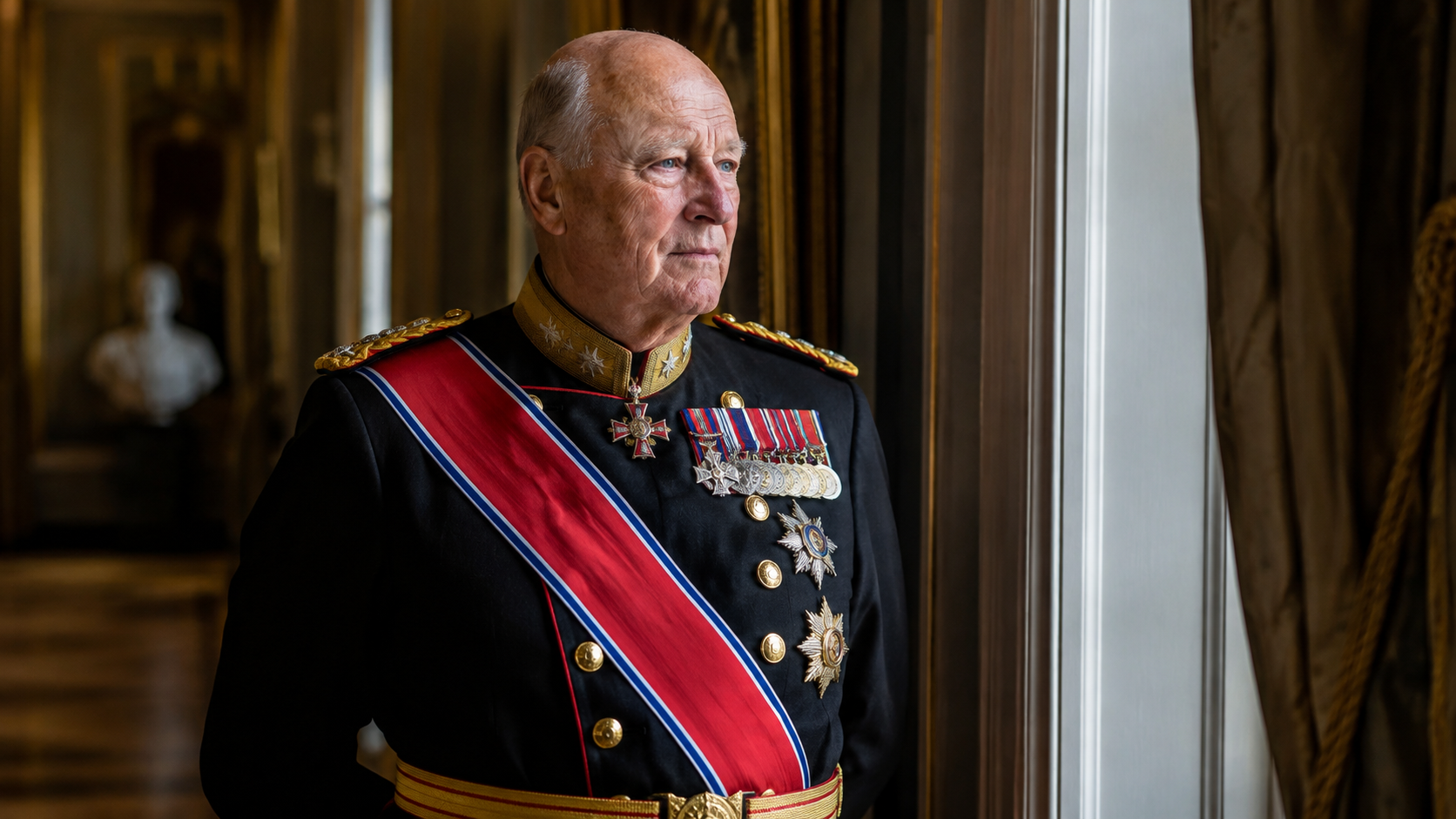
King Harald V died at 89 in Oslo, ending a 33-year reign that gave Norway continuity through an oil-led boom and royal transition.
Palace confirms Oslo death
The royal palace said Harald died Friday at the National Hospital in Oslo at 6:35 a.m. His son immediately became King Haakon VIII, placing the succession inside the monarchy’s established constitutional order.
Prime Minister Jonas Gahr Støre framed the death as a national moment rather than a political rupture. “A whole nation is in mourning and the people of Norway are left with a deep sense of gratitude for a long life in the service of Norway,” Støre said in a statement.
Harald had been Europe’s oldest monarch, a status that sharpened attention on succession across royal houses with aging heads of state. Unlike some other European sovereigns, he stayed on the throne rather than stepping aside before his death.
A childhood shaped by occupation
Harald’s life carried a wartime biography that long distinguished him from later generations of European royals. As a child, he went into exile in the United States during the Nazi occupation of Norway, a formative episode in a monarchy closely tied to national survival.
He later broke with dynastic expectations in his personal life by rejecting a series of possible matches from European nobility. He chose instead to marry his school sweetheart, a decision that helped define a less distant public image for the royal house.
Harald became king in January 1991 after the death of his British-born father, King Olav V. His reign stretched across more than three decades, long enough to span several political cycles, social changes and the expansion of Norway’s oil-and-gas wealth.
Symbolic throne, elected power
Norway’s monarch serves a largely ceremonial role, while governing authority rests with the elected parliament in a democracy of about 5.5 million people. That division limited Harald’s direct policy influence but made his public conduct central to the monarchy’s legitimacy.
The institution’s value has depended less on executive power than on continuity, ritual and public recognition. Harald’s modernization of the royal house sat inside that model: incremental enough to protect tradition, visible enough to keep the monarchy connected to contemporary Norway.
His reign also coincided with an economic period shaped by oil and gas, sectors that gave Norway fiscal capacity and international weight beyond its population size. The monarchy did not drive that boom, but it provided a stable national symbol as the country became richer and more globally exposed.
Haakon VIII inherits expectations
If the transition under Haakon VIII remains orderly, the global macro effect is likely to be limited: Norway’s institutions are designed to separate symbolic succession from elected government. For the royal house, a calm handover would preserve the continuity that supported Harald’s standing; for European monarchies, it would reinforce the case for gradual generational renewal.
If public debate shifts toward the cost, relevance or modern function of the monarchy, the pressure would run through politics and opinion rather than markets. In that scenario, Norway’s macro position would still rest on parliament and energy policy, while the royal house would face a test of public trust and other constitutional monarchies would watch the tone of the debate.
The main open question is how Haakon VIII defines his reign after a predecessor associated with wartime memory, personal independence and institutional steadiness. His first months will show whether the monarchy keeps Harald’s restrained style or moves more visibly to match a society that has changed since 1991.