

Brazil AI avatars reshape influencer politics in 2026 race
Brazil AI avatars have entered the presidential campaign, exposing enforcement gaps as voters rely heavily on influencers for political news.
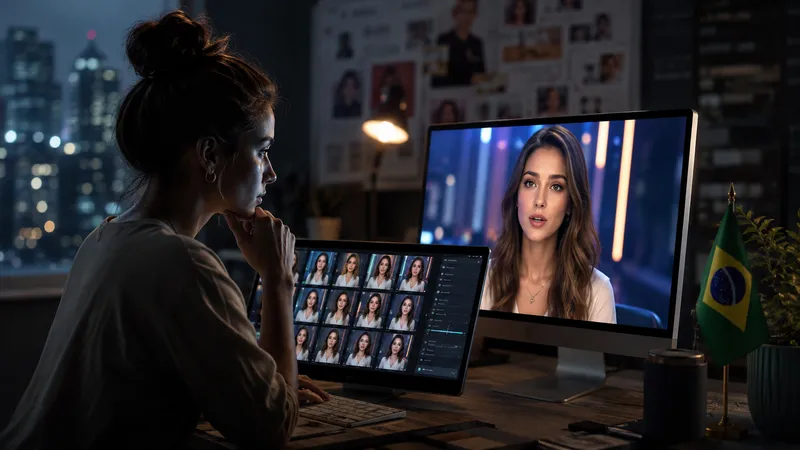
Brazil AI avatars are testing election rules as 18 synthetic political profiles enter a campaign followed by 150 million internet users.
Dona Maria, an AI-generated persona shown as an elderly Black woman, criticizes President Luiz Inácio Lula da Silva in videos on TikTok and Instagram. Her clips have drawn millions of views and thousands of likes while presenting attacks on supermarket bills, foreign policy and the October election as the views of a human political commentator.
Dona Maria masks Santos
The person behind Dona Maria is Daniel Santos, a 38-year-old app-based driver from Rio de Janeiro. The character gives Santos a public face different from his own in a country where online political identity has become central to campaign persuasion.
Researchers at Observatório IA nas Eleições identified 18 AI-generated avatars taking part in Brazil’s political debate this year. Eleven of those 18 carried no disclosure that artificial intelligence was used to create the character or its content, according to the researchers.
Joscimar Silva, a political science professor at Universidade de Brasilia, said: "Artificial intelligence is pushing politics into uncharted territory." He added: "It’s making campaigns more artificial than ever while blurring the line between reality and fiction."
Influencers dominate political feeds
The synthetic profiles have entered an online campaign culture already shaped by creators. More than 150 million Brazilians are online, and yüzde 63 follow influencers for news and politics, according to LatAm Pulse, a July AtlasIntel survey of 5,021 respondents.
The same survey, conducted July 22–27, 2026, found that more than 70% of respondents believe digital creators can influence how people vote. That gives political avatars a route into voter attention without the costs, schedules or public accountability attached to human campaign surrogates.
The accounts range from everyday voter personas to finance experts and conservative commentators. Their posts address crime, the economy and the candidates themselves, with some praising allies and others attacking Lula or his right-wing rival Flávio Bolsonaro.
Election court expands removal rules
Brazil’s electoral court requires AI-generated or manipulated election content to be clearly labeled. It has also widened the categories that platforms must remove without a court order, including false claims about electronic voting, attacks on democracy and political violence against women.
The rules were built for a campaign environment where paid human endorsements could be banned or punished. An avatar cannot be fined, prosecuted or confronted publicly, which shifts enforcement toward the people who created, financed or distributed the content.
Replication makes that task harder. A single synthetic character can be copied across accounts, altered within minutes and used to send variations of the same message into different online communities.
Platforms face replicated accounts
On the Instagram account that carries Dona Maria’s videos, Santos also advertises AI-generated videos for companies and offers lessons on how to make them. The account presents the avatar as a political voice while also marketing the production method behind it.
Dona Maria acknowledged the tension in one video, saying: "I may be a character, but the feelings are real." The line captures the enforcement problem for regulators: a false identity can carry a political message that a real operator wants voters to believe.
If labeling rules are enforced consistently before October, voters may get clearer information about which voices are synthetic. The near-term macro effect would be limited, but lower election-dispute risk in Latin America’s largest economy would matter for global investors, while TikTok, Instagram and creator agencies would face higher compliance demands.
If unlabeled avatars spread faster than platforms can remove them, disputes may shift to takedown battles and court orders. That path would weaken message control for Lula, Bolsonaro and other campaigns, raise moderation costs for platforms and make human influencers prove more clearly when they are speaking for themselves.
A third path is a disclosure norm that leaves AI production legal but visible. The main open question is whether authorities can trace replicated avatars to operators quickly enough for rules to matter during a short election campaign.
More stories
- Russian strikes hit Ukraine plants after Trump ceasefire statement
- Saudi flights divert after Dammam airport targeted
- US said to threaten Ukraine weapons, intelligence aid
- Riyadh airport hit again as Trump weighs US role
- Houthis hit Riyadh airport after 12 killed
- Yemen Cabinet backs Houthi terrorist label after 12 deaths
- Russia Reports Overnight Strikes Across Nine Ukrainian Cities
- NATO Warns of Potential Russian Hybrid War Escalation
- Pakistan Iran talks advance June 17 MoU in Tehran visit
- Ali Shaath Appointed to Lead Gaza Interim Administrative Body