Pakistan Iran talks advance June 17 MoU in Tehran visit
Pakistan Iran talks advanced a June 17 framework to end the US-Iran conflict and reopen the Strait of Hormuz, Pakistani officials said.
Omar Farouk ·
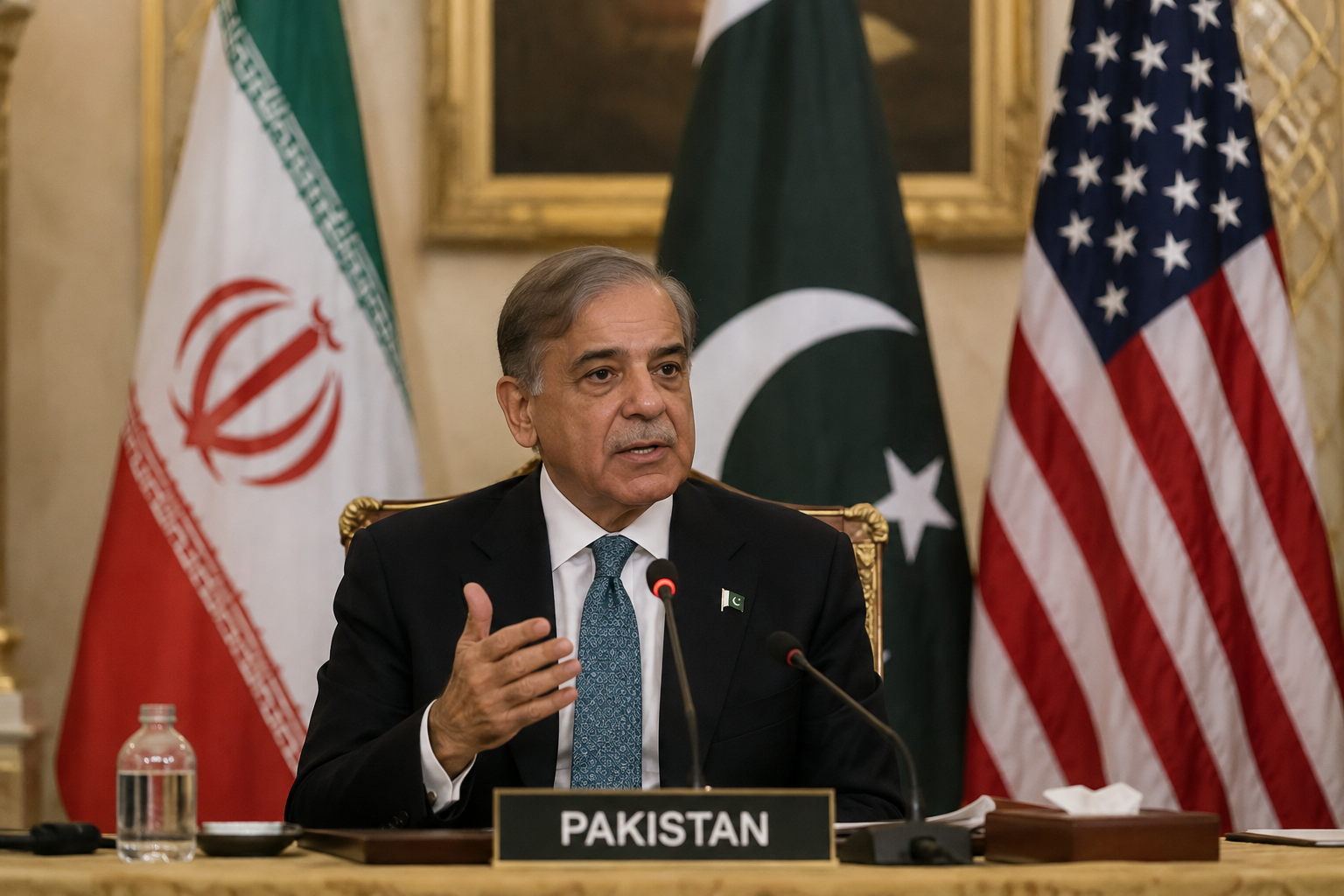
Pakistan Iran talks in Tehran advanced a June 17 framework to end the US-Iran conflict and reopen the Strait of Hormuz, officials said.
Munir’s Tehran shuttle
Pakistan’s army chief, Field Marshal Syed Asim Munir, and Interior Minister Mohsin Naqvi spent Monday in Tehran on a daylong diplomatic mission. Pakistani officials described the visit as part of an effort to end the conflict involving the United States, Israel and Iran.
The Pakistani military said Tuesday that the trip was intended to break the stalemate and seek a durable end to regional instability. Its statement said the discussions covered de-escalation, reopening the Strait of Hormuz and speeding an end to the fighting.
Munir met Iranian President Masoud Pezeshkian, Foreign Minister Abbas Araghchi and Supreme National Security Council Secretary Mohsen Rezaei, according to the military. The Pakistani account did not say whether the meetings produced a signed document or a new public timetable.
Hormuz stays central
Naqvi said on X that the two sides reviewed steps needed to restore the Islamabad MoU, an interim framework mediated by Pakistan. He said Pezeshkian shared Iran’s concerns directly and that the talks covered all outstanding issues in a constructive way.
The Strait of Hormuz remained at the center of the discussions because Pakistan’s military identified reopening it as one of the mission’s core topics. The waterway’s status links the negotiations to Gulf shipping and energy flows, even without a new agreement announced in Tehran.
The MoU was signed by Washington and Tehran on June 17, according to the Pakistani account. It faltered after renewed ship seizures and strikes in the Gulf, then expired last week, leaving Pakistan trying to restart a process that had already lost operational effect.
Islamabad MoU faces tests
The talks place Pakistan in an unusual mediator role between Tehran and Washington at a point when military and maritime incidents have already damaged the interim framework. The Pakistani military framed the mission as diplomacy aimed at ending instability rather than managing a single battlefield exchange.
For Iran, the immediate question is whether any restored framework would address both security assurances and pressure from Washington. Pakistan’s account said Pezeshkian set out Iran’s concerns, but it did not say whether Tehran accepted new obligations or gave a reopening date for Hormuz.
For Washington and Tehran, a revived MoU would offer a route from reciprocal military and maritime actions toward negotiation over sequencing and compliance. If the framework remains expired, each new ship seizure or Gulf strike would leave diplomacy reacting to incidents rather than bargaining over terms.
Three paths from Tehran
If the June 17 framework is restored with enforceable steps on Hormuz, global macro pressure tied to Gulf energy risk would be expected to ease under that scenario. Pakistan’s diplomatic channel would gain credibility, while shipping and energy firms would face fewer disruption signals from the Gulf.
If the MoU is revived only as a political text, macro uncertainty would remain tied to the waterway’s security. Pakistan would carry the reputational risk of a mediation effort with limited traction, and insurers, port operators and tanker owners would still price risk around Gulf movements.
If talks stall, the diplomatic burden shifts back to conflict management. The open questions are whether Washington and Tehran accept Pakistan’s channel, whether Hormuz can be reopened durably, and whether new Gulf incidents outpace another negotiating round.