
Iran sanctions draw Tehran threat as oil routes tighten
Iran sanctions added 60 targets and put dollar access at risk for trading partners, drawing retaliation threats from Tehran.
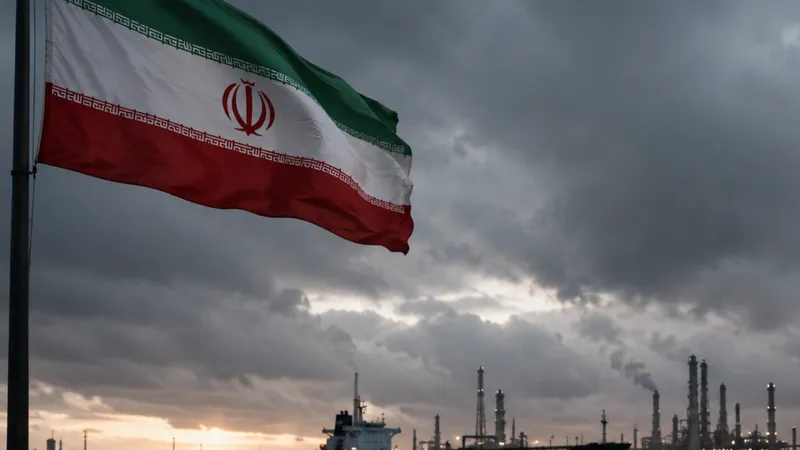
Iran sanctions drew a retaliation threat from Tehran after Washington added 60 targets and warned trading partners that dollar access could be at risk. Oil routes are central.
U.S. Treasury Secretary Scott Bessent announced the measures on Monday, saying countries that keep trading with Iran could face exclusion from the dollar-based financial system. The Treasury Department listed 60 individuals, entities and vessels, but did not name Chinese financial institutions accused by U.S. officials of helping Iran’s oil trade.
Treasury leaves banks unnamed
Bessent declined to identify which countries may be penalized or when penalties could begin. He said the administration wanted to give governments and companies time to comply with the directive, a sequencing that keeps the threat active without triggering the widest available penalties immediately.
Asked why the United States had not moved directly against all suspected facilitators, Bessent said, "Why would I want to blow up the global financial system?" He also said no participant was beyond the reach of U.S. sanctions, a warning aimed at counterparties still handling Iranian trade.
Iranian Economy Minister Ali Madanizadeh told state television that Tehran was prepared for the measures and had its own tools to respond. He said China and Russia had not accepted the U.S. steps, and predicted other countries would resist Washington’s demands.
Hormuz traffic shrinks
The sanctions arrived as the conflict that began with U.S. and Israeli strikes on Iran approached the six-month mark. Thousands of people have died, most of them in Iran and Lebanon, according to the source account, while the exact condition of Iran’s nuclear program remains unclear.
Shipping data cited in the source showed just two commodity vessels crossed the Strait of Hormuz on Monday, the lowest daily tally since early May. Before the war, the strait carried about a fifth of global crude oil and liquefied natural gas flows, making any disruption relevant for fuel costs beyond the Gulf.
Oil prices steadied on Tuesday after falling more than $2 a barrel a day earlier. The price move followed the sanctions announcement and renewed statements from Tehran, but the source did not provide a benchmark level or an official explanation for the trading pattern.
Pakistan presses Tehran talks
Pakistan, which has acted as a mediator, said its latest talks in Tehran made progress on steps to prevent further escalation and reopen the Strait of Hormuz. Interior Minister Mohsin Naqvi, who accompanied army chief Asim Munir, wrote on X that the Iranian president had shared Tehran’s position and that the exchange was constructive.
The White House and State Department did not immediately comment outside business hours, and Iran had not commented on the latest Pakistani talks. The interim deal signed in June by Iran and the United States, known as the Islamabad memorandum, faltered soon after it was reached.
Before the latest sanctions were announced, Iran had threatened a possible military response and a further reduction in Gulf oil exports if Washington tightened economic measures. A spokesperson for Iran’s Islamic Revolutionary Guard Corps also threatened blows to U.S. interests and energy chokepoints if Iranian infrastructure is hit.
China trade shapes pressure
China remains central to the sanctions design because it has been the largest buyer of Iranian oil for several years, according to the source material. A renewed U.S. blockade of Iranian ports in mid-July had already reduced Iranian oil flows to China before Monday’s announcement.
The Chinese Foreign Ministry said sanctions and pressure tactics were not useful and that Beijing would take steps needed to protect Chinese interests. The absence of Chinese banks from Monday’s list leaves Washington with room to escalate before expected talks next month between President Trump and Chinese President Xi Jinping.
If countries comply with the U.S. directive, the immediate mechanism would be fewer financial channels for Iranian oil and shipping, which could tighten Gulf supply logistics and raise costs for traders and insurers. That path would pressure Iran’s export revenue while giving the energy industry a clearer compliance line.
If China, Russia and other buyers resist, the sanctions could shift toward banks, ports and intermediaries, increasing the risk of retaliation in minerals, shipping or finance. If Pakistan’s mediation instead holds, the macro effect would likely come through lower transport risk, while Iran would preserve more export flexibility and Gulf shipping firms would face fewer routing disruptions.
More stories
- Putin relays Iran view to President Trump
- Red Cross says Gaza hostage access involved Haniyeh talks
- Trump urges Zelensky replacement over refinery strikes
- Saudi Arabia suspends Riyadh airport operations after attack
- Kyiv playground blast puts Ukraine air-defense stocks back on Washington’s agenda
- Rubio’s Athens speech hardens Washington’s public line on Iran
- State Cyber Operations Threaten Critical Infrastructure Worldwide
- Lockerbie Bombing Trial Delayed to 2027 by US Court
- Kazakhstan's Adilet Party Dominates Parliamentary Election
- Syria and Israel Hold Security Talks in Jordan Under US Mediation