Ukraine strikes Crimea targets, widening drone campaign
Ukraine strikes in Crimea hit a railway bridge and power infrastructure, Kyiv said, as drone raids intensify pressure on Russian supply lines.
Sofia Reyes ·
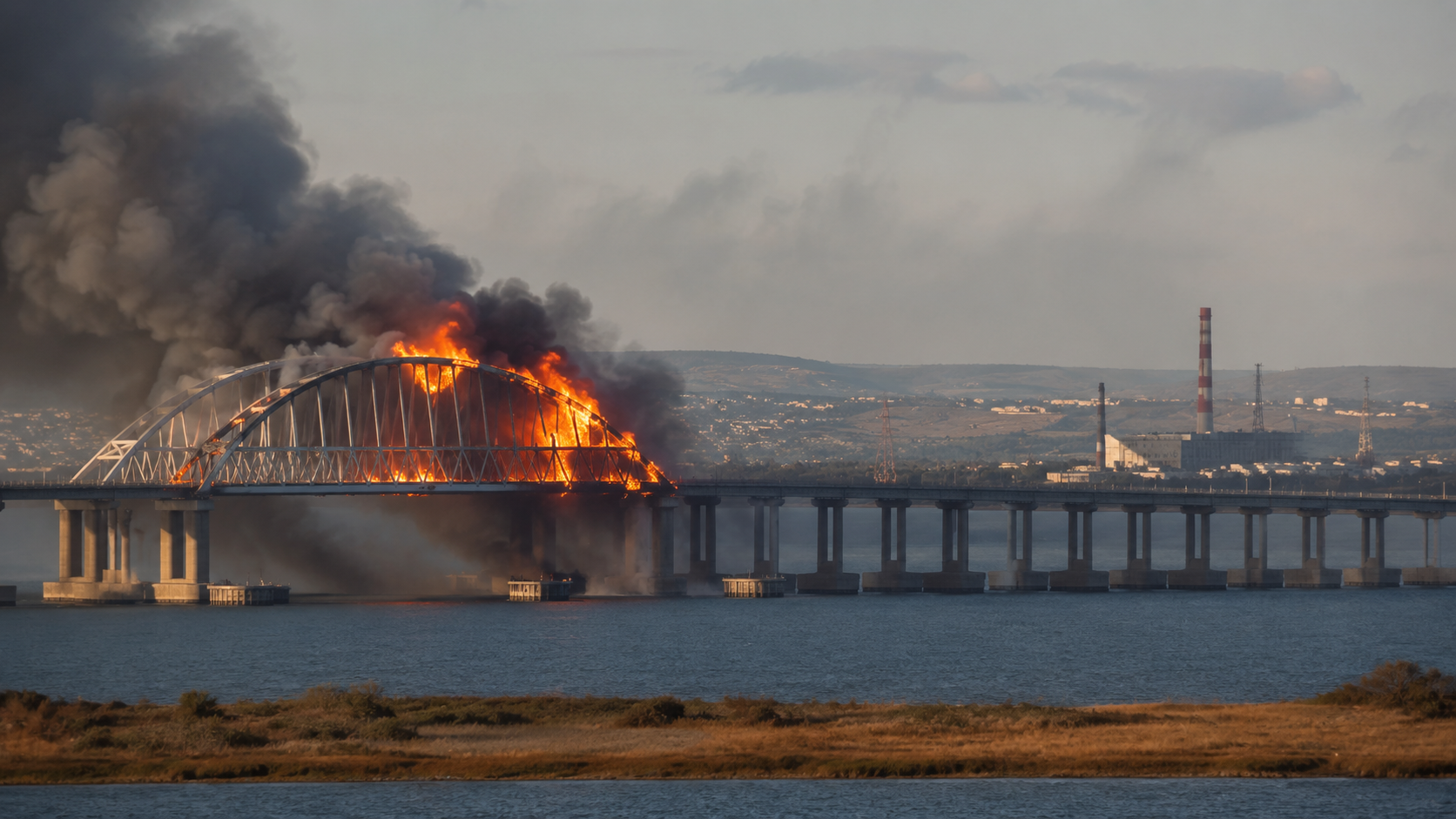
Ukraine strikes on infrastructure in Russian-held Crimea targeted a railway bridge, a power plant and other sites, Kyiv said Tuesday, escalating its long-range drone campaign.
The latest attacks come as Russian-installed authorities on the peninsula have restricted gasoline sales to civilians, underscoring strain on logistics and basic services during peak summer travel.
Drone attacks target transport and energy nodes
Ukrainian officials said their forces hit a railway bridge and energy facilities in Crimea, aiming to disrupt the systems that keep the peninsula supplied and connected. Kyiv has increasingly framed these operations as part of a strategy to complicate Russia’s military resupply and movement across the Black Sea region.
While independent verification of specific damage was not provided in the available statements, the claims fit a pattern of repeated strikes on infrastructure that supports transport, fuel distribution and electricity. The focus on rail and power assets reflects their central role in moving troops and materiel and sustaining day-to-day operations.
Russian authorities in Crimea have also faced practical knock-on effects. Officials there have had to suspend or limit gasoline sales to civilians, a measure that suggests supply disruptions and an effort to preserve fuel for essential services and security forces.
Crimea’s strategic role and the pressure campaign
Crimea is a pivotal hub for Russia’s military posture in southern Ukraine and for control of the Black Sea. Russia seized the peninsula in 2014 and later claimed annexation, a move widely rejected internationally and considered illegal by Ukraine and many governments.
Kyiv has increasingly relied on longer-range capabilities, including drones, to reach targets that were previously harder to strike. Western analysts and officials have noted that these attacks demonstrate Ukraine’s ability to impose costs on Russia well beyond the front line, even as Russia’s recent advances have slowed in some areas.
The current phase of operations also coincides with the summer tourist season in Crimea. Disruptions to the power grid, transport corridors and fuel availability can amplify pressure on local administration, emergency services and civilian life, while also complicating Russia’s efforts to portray stability and normalcy under its control.
Officials describe an effort to “isolate” the peninsula
Ukraine’s Defense Minister Mykhailo Fedorov said last week that Ukrainian forces are working to “isolate” Crimea using drones. Speaking on a blogger’s YouTube channel, he suggested the campaign could make the peninsula functionally harder to access and support.
“It looks like in the nearest time, Crimea will become an island,” Fedorov said. He added that such a shift could produce “unexpected consequences” for Russia, signaling that Kyiv views sustained pressure on infrastructure and supply lines as a way to shape the broader battlefield.
For Ukraine, isolating Crimea would mean reducing Russia’s ability to move supplies by land and rail and increasing the burden on alternative routes. For Russia, maintaining fuel stocks, electricity reliability and uninterrupted transport links would remain essential to military logistics and to sustaining governance on the peninsula.
Next steps to watch include whether gasoline restrictions persist or expand, whether further transport or energy sites are struck, and how Russia adjusts air defenses and logistics to keep Crimea connected. The intensity and frequency of Ukraine strikes will be a key indicator of how far Kyiv can sustain this campaign while the wider war continues.