

Netanyahu’s Rival Gadi Eisenkot Tasked With Forming New Israeli Government After Inconclusive Election
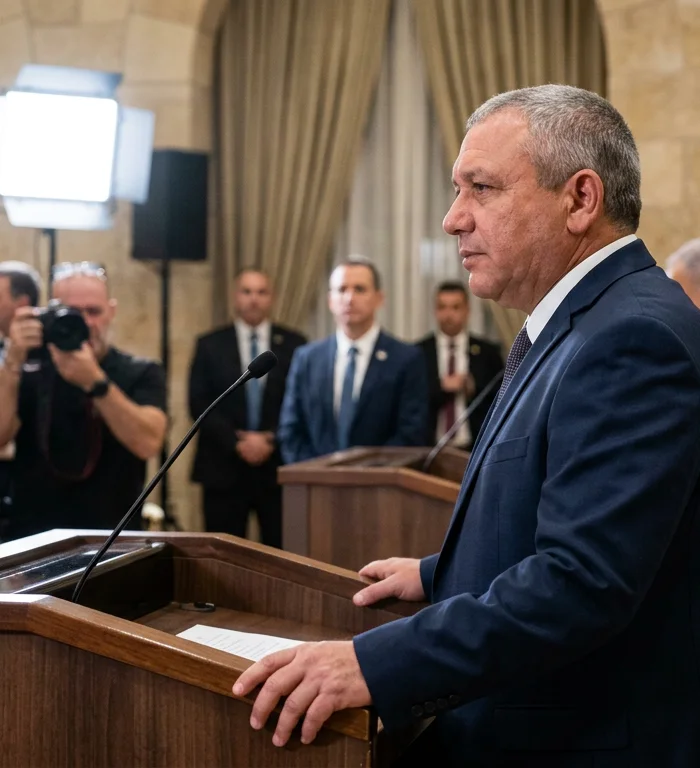
Isaac Herzog gave Gadi Eisenkot 28 days to assemble Israel's next government, opening coalition talks without a clear parliamentary majority.
The Israeli president handed the opposition politician the mandate on Sunday evening in Jerusalem. Benjamin Netanyahu remains prime minister while Eisenkot attempts to turn support for his nomination into an agreement among parties divided over military service and cooperation with Arab-led groups.
Neither camp secured an outright parliamentary majority in the October 27 vote. Herzog said his consultations showed that most legislators favored assigning Eisenkot the negotiations, but that endorsement does not itself establish a governing alliance.
Arab-led parties hold negotiating leverage
Eisenkot's immediate problem is finding partners willing to support the same government. Ra’am has pledged its backing, but its parliamentary representation is insufficient to provide the majority he needs.
The Joint List has offered parliamentary support without taking cabinet positions, a different arrangement from joining the coalition. That distinction matters: Ra’am entered government in 2021, becoming the only Arab party to have done so.
Yisrael Beytenu, a conservative party aligned with Eisenkot, has ruled out governing alongside Arab-led parties. Its stated objection concerns coalition membership; whether an external-support arrangement would prove acceptable remains unresolved.
Eisenkot has set four requirements for prospective partners, including recognition of Israel's Jewish and democratic character and acceptance of its founding declaration. He also requires support for universal military or civilian service and recognition of Hamas as a terrorist organization; the Arab-led parties' acceptance of those terms remains uncertain.
Military exemptions complicate alternative alliances
An agreement with ultra-Orthodox parties offers another possible route, but it runs against a central opposition campaign commitment. Eisenkot and his allies sought to end longstanding military-service exemptions, while the religious parties seek to retain them.
United Torah Judaism has not excluded cooperation with Eisenkot, leaving room for negotiations with a member of Netanyahu's outgoing alliance. The religious parties describe the exemptions as necessary to preserve their community's religious way of life.
If Eisenkot pursues that route, the service dispute would require a negotiated compromise or a retreat from existing positions. A power-sharing arrangement with Netanyahu is another possible configuration, although no agreement on either alternative is established in the supplied account.
A deadline under wartime pressure
Herzog can add two weeks to Eisenkot's initial negotiating period, taking the maximum to six weeks. If Eisenkot fails, Netanyahu could receive an opportunity to negotiate; failure by both could lead to another election early next spring.
Incoming Knesset members are scheduled to take their seats on Tuesday evening. Until a successor government takes office, Netanyahu's cabinet continues in a caretaker role with restricted authority.
The negotiations follow the Hamas-led assault of October 7, 2023, and subsequent conflicts across several fronts. Herzog and Eisenkot both identified security challenges as responsibilities awaiting the next administration, alongside the task of addressing divisions within Israeli society.
A coalition dependent on outside parliamentary backing would require cooperation beyond its cabinet membership to sustain a majority. An alliance with religious parties would instead place the military-service dispute at the center of negotiations; either route leaves Eisenkot needing commitments that a presidential mandate alone cannot deliver.
More stories
- Syria rejects Yemen role after 600-troop Saudi border report
- Pangilinan questions Davao assessor on 379 sqm SALN lot
- Ruling-family cases leave reform uncertain in 6 African states
- Aigner nears German presidency before Jan. 30 vote
- Iran secures Chinese oil sites for sanctioned crude, letter says
- French police officers face up to 15 years over 2020 beating
- Democrats tie Iran war to $4.27 gasoline in midterm races
- Biya faces Cameroon succession pressure after 74-day absence
Latest news
- Massie revives Hegseth impeachment bid over war authority
- Deal Sheet: Unity talks put $25 billion on game-tools table
- ECB advances climate and nature risk integration after five years
- Lecornu lifts French minimum wage by 1.6% from Dec. 1
- Russell Brand complainant reports threats after 4-count conviction