

US pauses Iran military action after 8 months of war
The remarks point to a pause in large-scale US action while Washington keeps pressure on Tehran over nuclear and maritime issues.
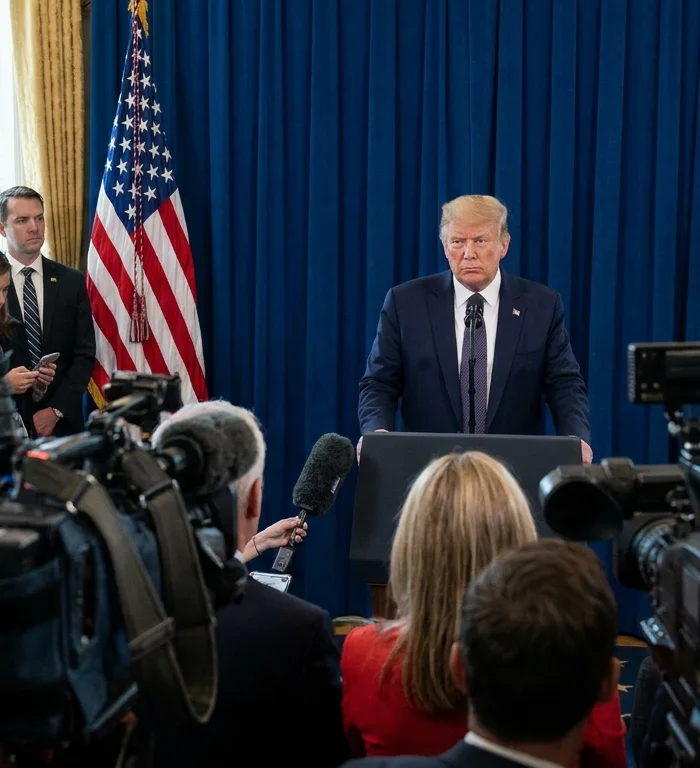
US President Donald Trump said Nov. 9 that the US war in Iran was “militarily, effectively over,” after eight months of conflict, Business Standard reported Nov. 10, citing Associated Press.
The declaration matters for Gulf security and energy markets because the fighting lasted far beyond the two-week ceasefire Trump announced on April 7 and repeatedly affected the Strait of Hormuz.
Trump spoke at the White House after meeting Qatar’s Prime Minister Sheikh Mohammed. He said Iran had been “decapitated” and that Washington was maintaining the status quo.
The US president also warned that American forces remained “locked and loaded” if conditions changed. He said his administration was still pursuing a long-term arrangement to dismantle Iran’s nuclear programme.
The conflict began on Feb. 28 with Operation Epic Fury, when US and Israeli forces launched nearly 900 airstrikes against Iranian military infrastructure, air defences and leadership. The report said the strikes killed Iran’s Supreme Leader Ayatollah Ali Khamenei and dozens of officials.
The scale of the opening campaign was about nine times the more than 100 airstrikes Israel launched against Hezbollah targets on April 8, according to Atlas360 calculations based on the figures in the Business Standard timeline.
Trump said at the time that US objectives included destroying Iran’s missile arsenal, eliminating its navy and preventing Tehran from acquiring nuclear weapons. Iran responded by targeting Israel and US bases in Qatar, Kuwait and the United Arab Emirates.
By March, the fighting had spread across West Asia. Iranian drone and missile attacks hit US and Gulf installations, including a base in Kuwait where the first American service members were killed. The report also described attacks on commercial shipping in the Strait of Hormuz that disrupted traffic and pushed oil prices higher.
Several ceasefire efforts followed. Trump announced a two-week US-Iran truce on April 7, while Pakistan-brokered talks in Islamabad ended on April 12 without agreement over Iran’s uranium stockpile and the reopening of the Strait of Hormuz. A June 14 memorandum later sought to end hostilities, reopen the waterway and lift the US naval blockade on Iranian ports.
Those efforts did not produce a permanent settlement. Business Standard, citing the New York Times, said about 1,700 Iranian civilians had been reported killed by July 28. The US reinstated a naval blockade on Iranian ports on July 13 after renewed attacks in the Strait of Hormuz.
Atlas360 reported Nov. 10 that the White House was maintaining the Hormuz blockade even as Trump paused further strikes, while Gulf allies including Saudi Arabia and Qatar favoured a diplomatic resolution with Tehran.
The latest phase combined military pressure with efforts to control trade routes. On Nov. 7, US Central Command established Task Force Iron Gate, a unit of about 20 civilian and military personnel based in Tampa, Florida, to target Iranian smuggling networks through the Caspian Sea and overland routes.
More stories
- Philippine DOJ revives Hontiveros cyber libel case against six people
- Bulakan residents face floods despite 12 DPWH projects
- Netanyahu’s Rival Gadi Eisenkot Tasked With Forming New Israeli Government After Inconclusive Election
- Syria rejects Yemen role after 600-troop Saudi border report
- Pangilinan questions Davao assessor on 379 sqm SALN lot
- Ruling-family cases leave reform uncertain in 6 African states
- EU faces Vietnam rights pressure over $57.9bn trade gap
- Makura cites 50 AfCFTA ratifications in Africa image challenge