

Makura cites 50 AfCFTA ratifications in Africa image challenge
The Guardian opinion article links finance, energy and trade examples to a perception gap Makura says affects how outsiders engage with African markets.
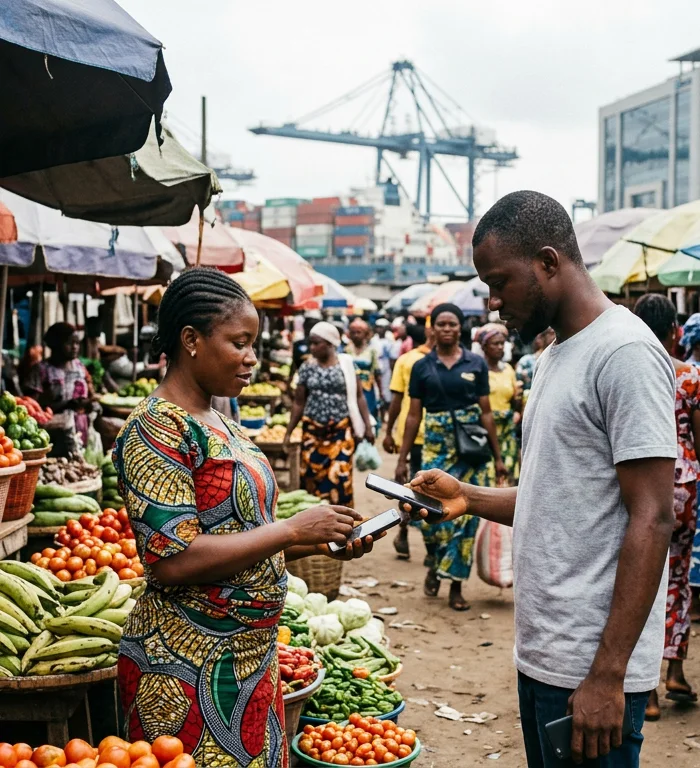
Moky Makura cited 50 African Continental Free Trade Area ratifications by Oct. 24 in a Guardian opinion article, saying Africa’s business progress is obscured by an external “visibility gap.”
The perception gap has commercial stakes. Makura cited Nigeria’s third-place ranking in a 2026 cryptocurrency adoption table, compared with Britain’s 17th, and said perceptions affect visits, purchases and cultural engagement.
Makura, who wrote that she moved from London to Johannesburg about 30 years ago, used finance as one measure of the mismatch. South Africa had ATMs after apartheid, she wrote, and its banking system compared favourably with the British system she had left.
Africa also developed mobile money, a phone-based way to store, send and receive funds without relying on a conventional bank branch network. Makura wrote that Kenya showed how millions of users could bypass parts of traditional banking and that sub-Saharan Africa remains central to mobile-money growth.
Makura said a commissioned study by University of Bath social psychologist Dr Adam Hahn found that people in Britain and the U.S. disproportionately associate Africa with economic and political dysfunction, harsh environments and a lack of modernity and culture. The article did not give the study’s sample size or fieldwork dates.
That framing, Makura wrote, means Africa is still seen by some outsiders as “broken, dependent, lacking in agency and apparently in ATMs, too.” She identified the problem as “not the absence of progress, but the lack of visibility.”
The essay named several Nigerian financial-technology companies valued at more than $1 billion: Flutterwave, OPay, Moniepoint and Interswitch. A privately held startup above that valuation is commonly called a unicorn, a threshold used by venture investors to mark rare scale in private markets.
Makura also cited Aliko Dangote’s refinery in Nigeria as evidence of industrial ambition. The $20 billion project is about 20 times the $1 billion unicorn threshold, according to Atlas360 calculations, and Makura described it as the world’s largest single-train refinery.
The refinery was built in Africa’s biggest oil-producing country, which Makura wrote had for decades exported crude while importing much of its refined fuel. Dangote has received global attention, but Makura said smaller entrepreneurs are also filling domestic market gaps.
Those examples included Siny Samba, who launched the Senegalese infant-food brand Le Lionceau in 2018 after questioning why baby food in Senegal was largely imported. Makura wrote that the company created markets for local farmers and women’s cooperatives.
In Tanzania, Makura cited Diana Orembe’s NovFeed, which turns discarded fruit and vegetables into fish feed and has worked with at least 200 farmers. In Maiduguri, northern Nigeria, she cited Mustapha Abubakar Gajibo’s African Motor Works, which produces about 200 electric vehicles a month.
Makura also pointed to policy and infrastructure changes. She wrote that Kenya generates up to 91% of its electricity from renewable sources, 38 countries have joined the single African air transport market, and the aviation initiative has helped create 108 new intra-African routes since 2022.
Source: opinion article, The Guardian, Oct. 24
More stories
- Indonesia cuts Singapore gas exports by 31m cubic feet a day
- Taiz hospital cuts dialysis sessions to 2.5 hours
- Lebanese doubt Oct. 27 Israel vote ends south Lebanon presence
- Kenya records second Ebola death in first outbreak
- Taiz's Republican Hospital warns 270 dialysis patients face shutdown
- Singapore regulator finds 65 harmful apps, 24 wrongly rated
- Police arrest former German spy chief August Hanning
- France school protests prompt October education deadline