France school protests prompt October education deadline
French police fire tear gas during school protests as ministers face an October deadline to address demands over classroom conditions.
Claire Dubois ·
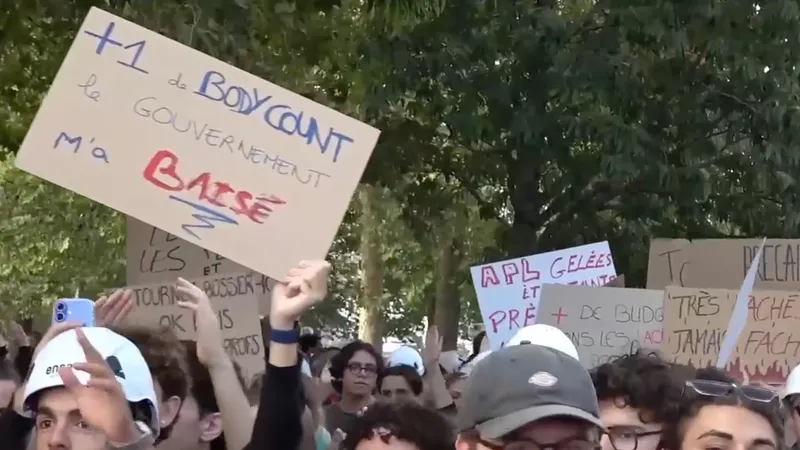
French police fire tear gas during school protests as ministers face an October deadline to address demands over classroom conditions.
Students, parents and teachers demonstrated across France on October 6, with confrontations reported in Paris, Strasbourg, Lyon and Rennes. The movement started in disadvantaged communities around Paris during September, then expanded across the country.
Prime Minister Sebastien Lecornu told parliament that injuries had affected at least 215 teenagers and 85 education workers during the unrest. His office separately reported injuries to more than 700 police officers; these are official accounts rather than independently established totals.
Lecornu sets deadline for school proposals
The High School Students Union estimated that blockades or planned closures would affect over half the country's high schools that day. Education authorities in some areas have attempted to shift teaching online, while the participation of parents and teachers extends the demonstrations beyond students.
Students describe buildings with leaking water and rats, alongside complaints about crowded classrooms and missing teachers. Their demands combine immediate questions about daily lessons with repairs that require decisions on funding and implementation.
Lecornu instructed ministers to prepare initial proposals before November, including arrangements for covering teacher absences and examining building repairs. He also requested a review of the school timetable, which runs from 8 a.m. until 6 p.m., and demands for more time to eat lunch.
Minors dominate arrests and prosecutions
The interior ministry reported 6,100 arrests over the course of the protests, saying minors accounted for most of them. Separately, the justice ministry said prosecutions involved more than 1,800 people, of whom 1,483 were minors; it did not specify the offenses.
Student organizations, parent groups and rights advocates accuse the authorities of excessive force against children. The government disputes that framing, saying outside participants have taken over parts of the movement and that some demonstrations have become episodes of violence in urban areas.
Paris police attributed confrontations in the capital to approximately 300 people who sought to challenge officers, while describing other parts of the demonstration as largely orderly. By late afternoon, police said encounters with a smaller group were continuing and reported damage to three shopfronts.
The government and Marine Le Pen's National Rally also accused lawmakers and mayors associated with France Unbowed (LFI) of encouraging the unrest. LFI rejected the allegation, adding a partisan dispute to the confrontation over education and policing.
School repairs meet budget constraints
The education demands reach a government already struggling to manage public finances under weak economic growth. President Emmanuel Macron's political allies lost their parliamentary majority in 2024, and subsequent difficulties securing budget approval have complicated decisions about spending.
Lecornu's instructions establish a deadline for proposals, not a funded program or a schedule for completing repairs. The distinction matters for demands ranging from replacement teachers to building work: an administrative commitment does not establish when classroom conditions will change.
If ministers propose additional spending, the government will need to reconcile those plans with its efforts to restrain borrowing. If they instead emphasize changes to timetables and staffing arrangements, the separate question of financing building repairs will remain.
The next concrete test is the package ministers submit before November. Its funding, delivery dates and coverage will provide a basis for assessing how far the response addresses the students' stated demands.