French student protests escalate as government faces budget strain
Widespread student demonstrations over school resources and staffing have led to thousands of arrests, challenging the administration's fiscal planning.
Atlas Newsdesk ·
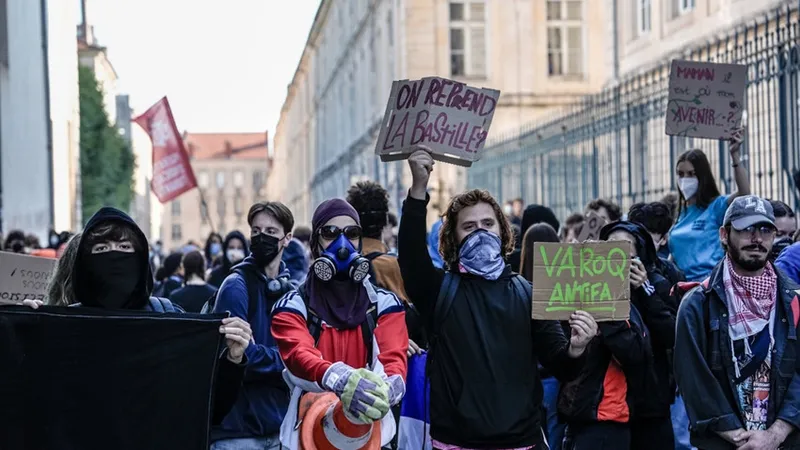
Escalating unrest in French secondary schools
A wave of student-led demonstrations has swept across France, resulting in over 5,000 detentions and widespread school closures. What began as localized grievances regarding staffing shortages and insufficient educational resources has rapidly evolved into a national crisis within three weeks.
Protest organizers have issued calls for further mobilization across major urban centers, including the capital region. Estimates suggest that between 20,000 and 40,000 individuals are participating in the movement, which has disrupted operations at hundreds of institutions.
From local grievances to national movement
The initial spark occurred in late September at a secondary school in Créteil, where students protested against canceled classes and overcrowded classrooms. These localized blockades quickly gained momentum, spreading to major cities such as Marseille, Lyon, Bordeaux, and Strasbourg.
Official data indicates that more than 500 schools have sustained damage during the unrest. A significant portion of those detained are minors, highlighting the intensity of the youth-led movement. While students remain at the forefront, they have received backing from various labor unions and student organizations, including groups representing parents concerned about educational equity.
Political friction and fiscal constraints
The administration of Prime Minister Sébastien Lecornu has faced criticism regarding its handling of the situation. Officials have accused opposition political factions of exploiting student frustrations for partisan gain, a claim that has further polarized the legislative environment. Meanwhile, the government is attempting to finalize its 2027 budget while under pressure to reduce public deficits.
Economic indicators reflect the growing instability, with French 10-year bond yields briefly surpassing 5%—a level not seen in over two decades. Investors appear to be weighing the combination of political uncertainty and public finance challenges. This market reaction complicates the government's ability to allocate additional funding to the education sector without exacerbating fiscal concerns.
Future outlook and potential risks
The movement has brought renewed scrutiny to the administration's long-term educational policies. While the current protests are not directly aimed at the presidency, they underscore a broader disconnect between the government and the younger demographic as the next election cycle approaches.
If the government provides concrete, albeit limited, concessions regarding staffing and resources, it may alleviate some of the immediate pressure. However, should the blockades persist and tensions continue to rise, the administration risks a further narrowing of its budgetary flexibility. The situation remains fluid, with the potential for the education crisis to expand into a wider debate on the quality and accessibility of public services across the nation.