

Strait of Hormuz tanker fire adds pressure on oil lanes
A tanker was hit by an unknown projectile in the Strait of Hormuz, adding new uncertainty to a critical oil shipping route.
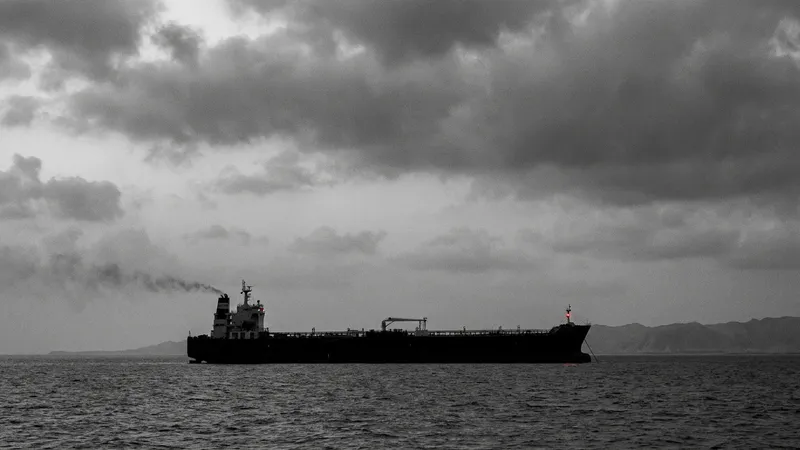
A tanker in the Strait of Hormuz was hit by one unknown projectile, adding a security test for the closely watched oil route after recent strikes.
United Kingdom Maritime Trade Operations said it received a report that the vessel caught fire after the strike. The agency said the blaze had been extinguished and that no casualties or environmental damage had been reported.
The report did not identify the tanker, its operator, its cargo, or the party responsible for the projectile. Those gaps limit what can be said about direct commercial exposure, insurance claims, or operational delays tied to the vessel.
UKMTO cites unknown projectile
UKMTO described the vessel as "hit by an unknown projectile causing fire to the vessel which has since been extinguished." The wording leaves the core security question unresolved: whether the incident was an isolated strike, part of a wider pattern, or linked to a state actor.
The Strait of Hormuz is a narrow waterway between Iran and Oman that connects the Gulf with the Gulf of Oman and the Arabian Sea. For oil traders, shipowners, and naval forces, even limited disruption can affect route planning, war-risk insurance, and cargo timing.
The latest report follows several tanker-related incidents described this month, though the available account gives no verified tally, damage estimate, or market price move. Without those figures, the market effect can be framed only through the mechanism: higher perceived risk can feed into freight costs, insurance premiums, and energy hedging.
Trump claim meets Iranian warning
The security report came after President Trump said Wednesday that the waterway had been cleared of mines, describing it as "a functioning strait." That statement pointed to the restoration of navigability, but the new UKMTO report shows that mine clearance would not remove every form of maritime threat.
Iranian Deputy Foreign Minister Kazem Gharibabadi gave a different condition for reopening, warning that the strait would not fully reopen until Washington meets its commitments under a lapsed June framework. The account does not specify the terms of that framework, so the claim remains attributable to Gharibabadi rather than a verified legal or diplomatic benchmark.
The competing messages matter for shippers. A route can be physically passable while still carrying political, military, and insurance risks that raise the cost of using it.
For the unidentified tanker operator, the immediate issues are likely to be inspection, crew welfare, cargo status, and any port-state or insurer requirements before the vessel resumes normal service. For the wider tanker sector, the more durable effect would come if underwriters, charterers, or navies treat the strike as evidence of a higher baseline threat.
Three paths for Hormuz
If the UKMTO report remains an isolated incident and no further damage is reported, the global macro effect would probably be contained to short-lived risk pricing in energy and freight markets. The tanker operator would still face vessel checks and possible schedule disruption, while the wider shipping industry would keep heightened monitoring rather than reroute at scale.
If further projectiles or attacks are reported, the mechanism changes. Energy traders could price a larger supply-risk premium, the tanker’s operator and peers could face higher war-risk cover, and regional shipping firms could delay sailings or adjust routes where commercially possible.
If diplomacy over the June framework resumes and both sides accept practical security steps, the macro effect would run through reduced route-risk pricing rather than new supply. The tanker owner would still manage the specific damage and compliance process, while the sector would look for evidence that naval patrols, mine clearance, and political commitments are aligned.
The main open questions are who fired the projectile, whether the tanker suffered damage beyond the extinguished fire, and whether the route’s political status matches its operational status. Until those are answered, the Strait of Hormuz remains open in the narrow shipping sense but exposed to risks that can change costs before they halt traffic.
More stories
- Ukraine support splits Europe as US rift widens over Kyiv
- US, China discuss reciprocal nuclear-facility visits
- Burnham says Brexit vote faced Russian meddling in 2016
- Russian strikes hit Ukraine plants after Trump ceasefire statement
- Saudi flights divert after Dammam airport targeted
- US said to threaten Ukraine weapons, intelligence aid
- Russian NORSI refinery blaze hits domestic fuel capacity
- Russia Romania tensions rise over planned Moscow summons
- Indonesia Intensifies Wildfire Battle Amidst Regional Haze
- Rohingya Displacement Surges Amid Rakhine Conflict
Latest news
- Will the Rally Survive? Wall Street Braces for CPI, Earnings and Missiles Over Riyadh
- iFi prices Up Play Bluetooth dongles at $59 and $89
- MSI prices RTX Spark convertible laptop from $3,299
- Goldman and CPI lead week with 3.6% inflation estimate
- BlackRock falls more than 8% from 2026 high before earnings