Ratko Mladic dies in Hague custody after genocide verdict
Ratko Mladic died at 84 while serving a life sentence for genocide, leaving the Hague tribunal to investigate the circumstances of his death.
Claire Dubois ·
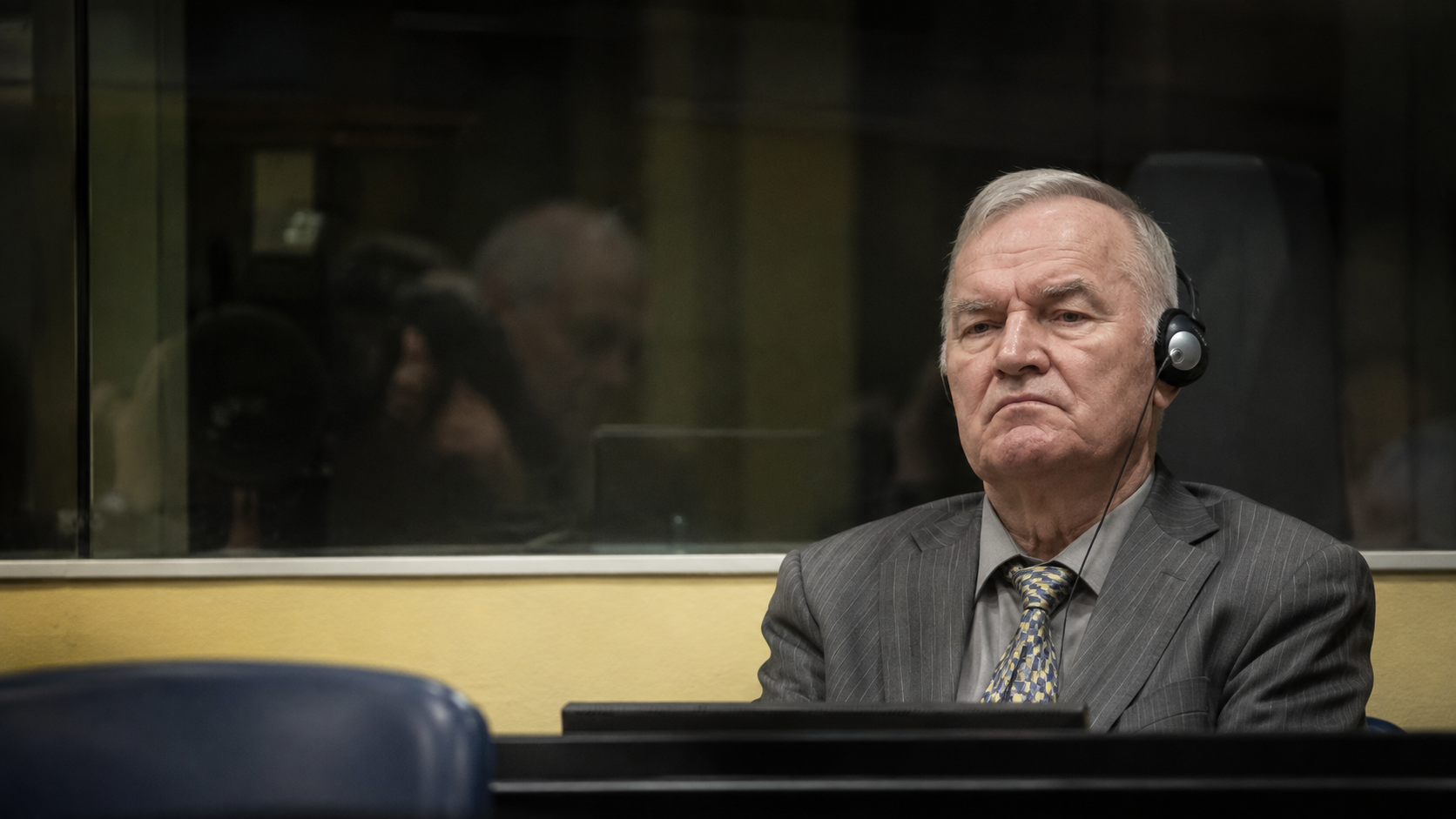
Ratko Mladic died at 84 in Hague custody, closing the life sentence of a Bosnian Serb commander convicted over Srebrenica.
The United Nations war-crimes mechanism confirmed his death on Thursday after he was hospitalized in The Hague. The tribunal did not give a cause of death.
Dutch authorities have started procedures required under national law, and the tribunal president has ordered a full inquiry into the circumstances. The court said Mladic was still in its custody while awaiting transfer to another country to serve the rest of his sentence.
The Hague inquiry begins
Mladic’s death ends the detention of one of the most prominent military figures prosecuted over the wars that followed Yugoslavia’s breakup. It does not alter the final judgments against him, which appeals judges upheld in 2021.
He had been indicted in 1995 but avoided arrest for nearly 16 years. Serbian authorities detained him in May 2011 in a village north of Belgrade and transferred him to The Hague soon afterward.
His lawyers repeatedly sought provisional release on medical grounds during his later years in detention. The tribunal rejected those applications, and his health remained a recurring issue while he awaited transfer from the court’s custody.
Srebrenica judgment remains
Mladic was found guilty in 2017 of genocide, war crimes and crimes against humanity and received a life sentence. The most serious findings centered on Srebrenica in July 1995, when Bosnian Serb forces killed more than 8,000 Bosniak Muslim men and boys after taking an area the United Nations had designated as safe.
International courts classified the Srebrenica killings as genocide. The massacre is regarded as Europe’s worst mass killing since World War Two, a comparison that anchored the case far beyond the Balkans.
The tribunal also held Mladic responsible for directing the siege of Sarajevo, where civilians faced shelling and sniper fire for nearly four years. The wider 1992-95 Bosnian war killed more than 100,000 people and displaced millions as Yugoslavia disintegrated.
Balkan divisions persist
Mladic remained a divisive figure across the region long after his conviction. Survivors and victims’ families treated the judgment as a formal record of wartime crimes, while some Serbian nationalists continued to cast him as a defender of Serbs.
United Nations Secretary-General Antonio Guterres expressed solidarity with victims and their families and said the tribunal’s final judgments formed part of the established historical record. He also condemned denial of the Srebrenica genocide and the glorification of convicted war criminals.
Emir Suljagic, director of the Srebrenica Memorial Center, said Mladic’s death did not return those killed or change the judgments against him. Milorad Dodik, the Bosnian Serb nationalist leader, praised Mladic as a commander who defended Serbs and blamed the tribunal for his death.
If the inquiry finds no breach in custody procedures, the immediate effect is likely to be institutional: the tribunal’s record remains the main reference point for governments, courts and memorial bodies. If it identifies failures, the mechanism may face renewed scrutiny over detention standards for elderly or ill prisoners convicted by international courts.
For Bosnia and the wider Balkans, the next phase is political rather than judicial. Mladic’s death removes a defendant from custody, but the record of Srebrenica, Sarajevo and the Bosnian war remains central to disputes over memory, reconciliation and the authority of international criminal justice.