

Russia concludes missile drills near disputed Islands, Japan protests
Russia’s Pacific Fleet recently completed live-fire missile exercises near the Kuril Islands, prompting a formal protest from Japan over the disputed…
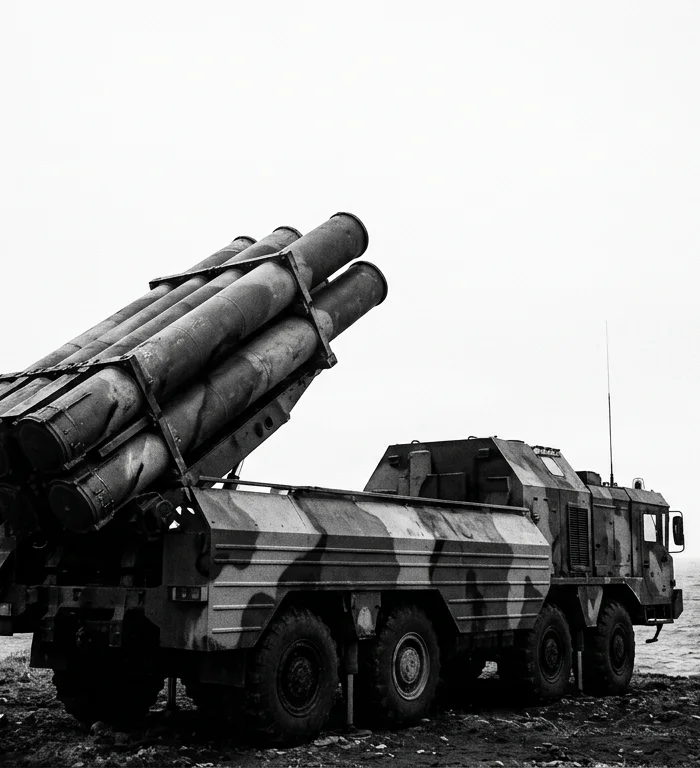
Russia's Pacific Fleet recently concluded significant live-fire missile exercises in the vicinity of the Kuril Islands, a territory that remains a subject of dispute with Japan. The military maneuvers, which commenced on August 4, involved a substantial deployment of military assets and personnel. This activity prompted a formal diplomatic protest from the Japanese government, which refers to the islands as its Northern Territories.
The drills intensified with the launch of Bastion surface-to-ship missiles from Etorofu island. Approximately 13,000 service members participated in the exercises, supported by 60 naval vessels, including submarines and guided-missile cruisers, alongside 30 aircraft. This large-scale operation underscores Russia's assertion of sovereignty and its strategic integration of advanced missile systems into the archipelago's defense, signaling heightened militarization in the region.
Japanese Government Condemns Actions
Japan's Foreign Ministry formally objected to the exercises, describing them as unacceptable. Foreign Minister Toshimitsu Motegi stated that any efforts to enhance military capabilities on the Four Northern Islands directly contradict Japan's long-held territorial claims and cannot be tolerated. The drills, which extended through August 29, further highlighted Moscow's tactical focus on the area.
This military demonstration followed a visit by President Vladimir Putin to the islands the previous week, a move that further strained bilateral relations. The root of this ongoing dispute dates back to the 19th century, and the disagreement over the islands continues to be a significant point of contention impacting broader diplomatic engagement between the two nations.
Broader Geopolitical Context
The diplomatic friction surrounding these exercises extends beyond the immediate territorial dispute, reflecting wider geopolitical tensions. Russia frames these actions as a response to perceived NATO influence in the Pacific theater, citing attempts by the alliance to establish a foothold and deploy new weapon systems that Moscow considers a threat. While such exercises are a recurring source of contention, they consistently demonstrate Russia's commitment to maintaining control over the islands.
Analysts suggest that the drills not only reinforce Russia's territorial claims but also serve to showcase its military capabilities in a critically strategic area. President Putin observed portions of the exercise on August 12 from the Varyag during his trip to the disputed islands and Sakhalin. This action aligns with a broader pattern of nations demonstrating military strength amidst evolving global alliances. The repeated assertion of military presence and capability in the Kuril Islands region signals a continued hardening of Russia's posture, ensuring the territorial dispute with Japan remains a prominent feature in international relations and regional security discussions, with potential implications for Pacific stability.
More stories
- Eisenkot secures first coalition deal but lacks majority
- Germans oppose Ukraine aid as poll shows support slipping
- Kim Jong-un receives 10 envoys after constitutional shift
- Ukraine claims Libya strike sinks Russian naval corvette
- COP31 climate talks collapse over fossil fuels and funds
- Russian military faces 1,087 recorded suicides in Ukraine war
- North Korea missiles test scaled-back US-South drill plan
- Strait of Hormuz tensions test Trump's Iran diplomacy plans
- Russia drone attack kills Uzbek citizens in Tatarstan city
- Taiwan defense budget plan reaches record $34.1 billion
Latest news
- Morocco targets 2030 World Cup final with new stadium bid
- Barclays puts AI bust risk at center of US growth debate
- US inflation reaches 3.8% before December Fed rate meeting
- Türkiye Desk: GTA 6 drains UK mobile spend as Turkish studios feel pressure
- Global stocks fall 0.4% as tariffs and US inflation loom
- CIA hack affects unclassified data; scope remains unclear
- Trump prepares tariffs on China and other major exporters
- New-car buyers pay record average $50,087 in October