West Bank home blockade claim alarms Ohio property owner
An Ohio man says settlers blockaded a West Bank home he owns; with no official confirmation, attention may turn to any US response by 2024-08-01.
Omar Farouk ·
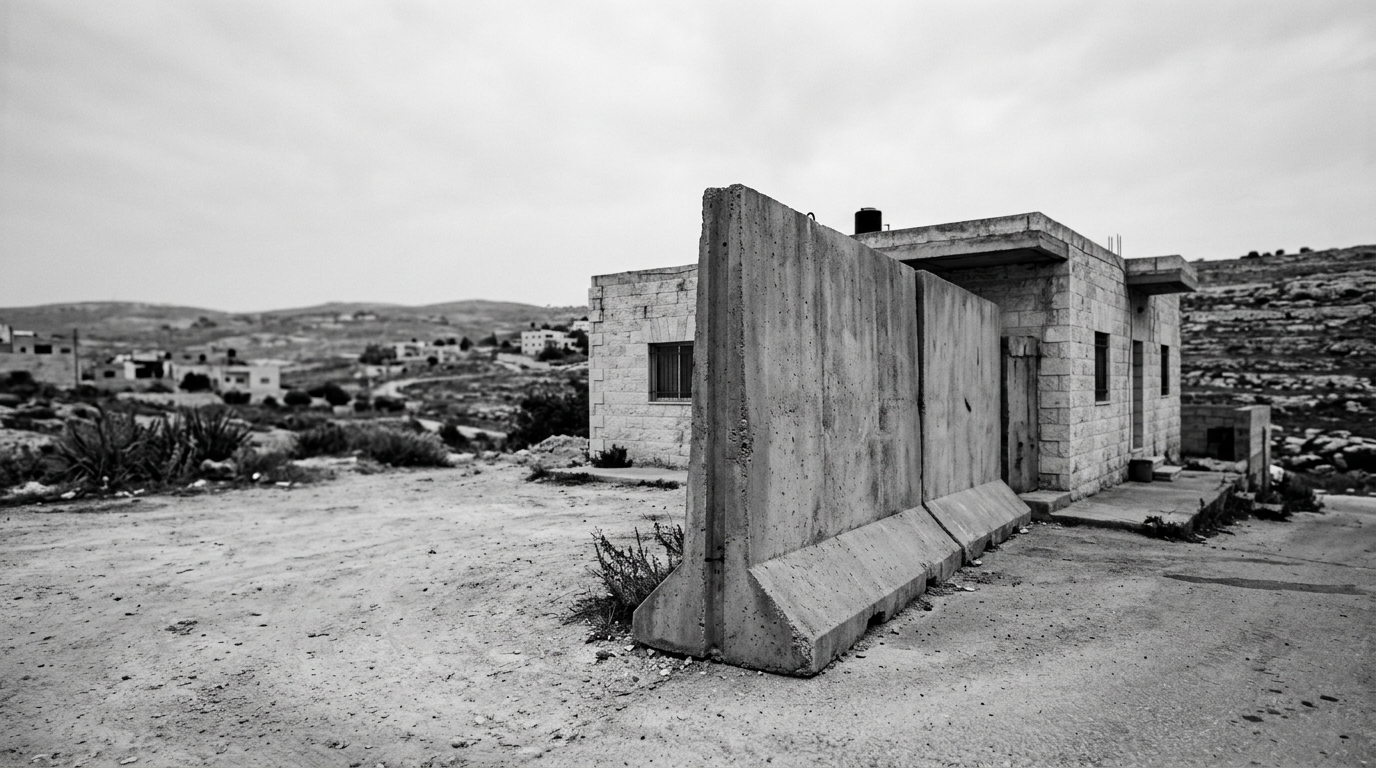
An Ohio man who says he owns a house in the Israeli-occupied West Bank has reported that Israeli settlers have blockaded the property, leaving him fearful for relatives who remain in the area, according to a video report.
In the same account, the man said his brother lives at the home and that he intends to travel to the West Bank to see him. The material did not include official confirmation of the blockade or information on how long it has lasted.
Property access dispute described in a single-household case Property access dispute described in a single-household case It said localized disputes in the West Bank The report portrayed the incident as an example of how pressure around one residence can become politically and diplomatically sensitive when foreign-linked families are involved. It said localized disputes in the West Bank often center on practical access, such as road entry points, checkpoints, and, in some cases, informal blockades around homes or neighborhoods. Palestinians say such measures can isolate families and increase exposure to harassment even when the immediate dispute is limited in geographic scope. No officials were quoted in the material regarding the specific Ohio-linked case. Wider context: settlements, restrictions, and legal dispute The West Bank has been under Israeli military occupation since 1967 and includes a growing network of Israeli settlements and outposts. Palestinians, rights groups, and many governments argue that settlement expansion and related movement restrictions have fragmented Palestinian communities and strengthened Israeli control over key areas. Israel disputes international criticism of settlements. The report noted that many countries and international bodies consider settlements in territory captured in 1967 to be illegal under international law, a longstanding dispute that continues to shape diplomacy around the conflict.
International attention when US-linked families report harm
The material said incidents affecting a single household can carry broader political weight in an environment where security decisions, property claims, and identity politics are closely intertwined. When the people involved have international ties, the same type of local episode can draw sharper diplomatic focus. An Ohio In that context, the report described the United States as a key outside actor in Israeli-Palestinian affairs and said Washington can face pressure to address safety concerns when US-linked families say they are affected.
Uncertainties and near-term markers
Several points remained unclear based on the information provided, including whether the reported blockade is still underway, whether access is fully or only partially obstructed, and whether further incidents could occur near the property.
The report highlighted two practical developments to watch: whether the Ohio man’s planned visit proceeds and whether it coincides with additional reported blockades or confrontations near the home. It also flagged 2024-08-01 as a near-term date by which observers may look for any on-the-record action or statement from the US State Department about the safety of US citizens or their families in the West Bank, or explicit condemnation of settler violence or blockades.
Separately, the material said that if tensions in the West Bank escalate, they can contribute to wider regional strain and, in extreme scenarios, affect travel and investment sentiment and shape security calculations tied to major shipping corridors such as the Strait of Hormuz and Bab al-Mandab. It added that the outlook would be different if the blockade ends quickly and the case fades without an official response.