Gulf airstrikes put Bahrain and Kuwait into Iran fight now
Bahrain and Kuwait reportedly used jets against Iranian military sites, raising the risk of a wider Gulf confrontation.
Omar Farouk ·
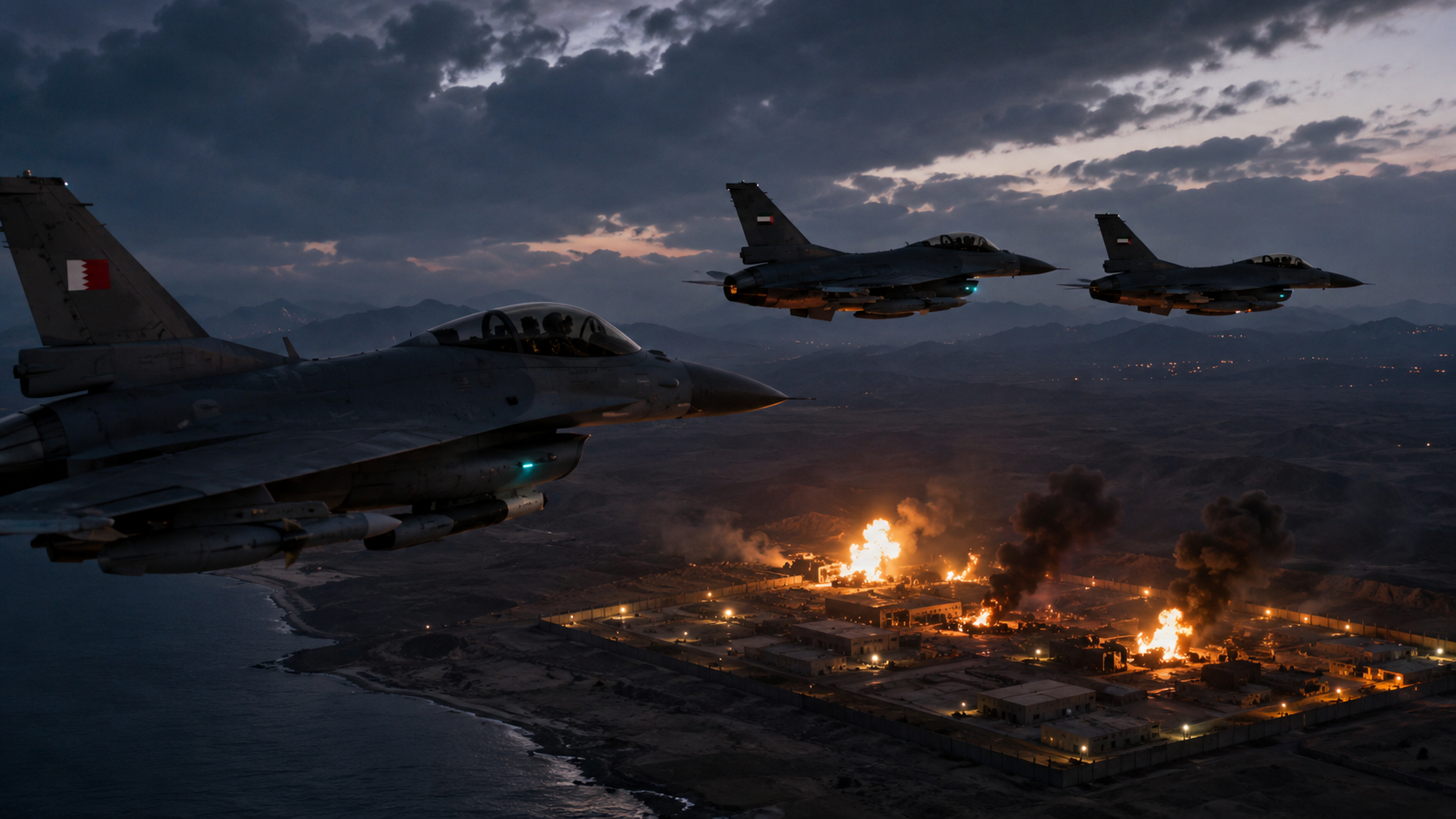
Gulf airstrikes by Bahrain and Kuwait reportedly hit Iranian military sites, widening the direct role of Arab states in the conflict.
Bahrain and Kuwait strike back
The strikes took place early this month and were aimed at military locations inside Iran, according to individuals described as familiar with the operations. The targets included depots used to store drones and missiles, along with other military sites, the account said.
The reported missions would mark the first direct retaliation inside Iran by Bahrain and Kuwait. That matters because both countries have tried to balance security ties with Washington against the risk of becoming front-line targets in a wider regional war.
U.A.E. cover links Gulf militaries
The United Arab Emirates was described as playing a supporting role rather than leading the missions. It supplied target intelligence and protective air cover for the Bahrain and Kuwait operations, according to the people cited in the account.
The U.A.E. had already attacked Iran several times earlier in the war, the account said. Its participation points to a more coordinated Arab response to Iranian pressure, even as Gulf governments publicly frame their priority as de-escalation.
Hormuz pressure shapes Gulf choices
The U.A.E. Foreign Ministry said it backs lower tensions across the region, including a full reopening of the Strait of Hormuz. The waterway is a key passage for oil exports from Gulf producers, so any prolonged disruption would carry consequences beyond the battlefield.
The ministry also condemned the attacks on Kuwait and Bahrain. It said the U.A.E. "stands in full solidarity with these states and reaffirms its support for all measures aimed at safeguarding their security and stability."
Small air forces face Iran
Iran has concentrated retaliatory attacks on Bahrain and Kuwait for weeks, according to the account. Both states host American military bases, making them strategically important to the U.S. security architecture in the Persian Gulf.
Bahrain and Kuwait have smaller air forces than several of their regional neighbors, with fleets built around U.S. and European aircraft. The reported decision to strike inside Iran suggests they were unwilling to absorb repeated attacks without demonstrating a capacity to respond.
Kuwaiti and Bahraini government spokespeople did not reply to requests for comment, according to the account. That absence of confirmation leaves key details unresolved, including the size of the missions, the exact damage inflicted and whether the operations were coordinated with Washington.
Three paths for escalation
If Iranian attacks on Bahrain and Kuwait slow, the strikes could function as a deterrent signal rather than the start of a sustained air campaign. In that scenario, the macro effect would center on reduced risk premiums around Gulf shipping, Bahrain and Kuwait could claim a limited security success, and regional defense cooperation would remain mostly defensive.
If Iran responds with broader strikes, the mechanism changes. Shipping costs and energy-market risk could rise, Bahrain and Kuwait would face heavier pressure to protect bases and infrastructure, and the Gulf defense sector would likely move faster toward joint surveillance, air defense and intelligence-sharing arrangements.
A third path is a quiet pause brokered through diplomacy, with neither side publicly conceding. That would help contain global market pressure, give Bahrain and Kuwait space to avoid further escalation, and allow the U.A.E. to present itself as both a military partner and a regional de-escalation channel.