

Congressional Scrutiny Intensifies Over ICE Training and Hiring Protocols
Lawmakers are questioning ICE training and vetting standards following reports of expedited hiring and fatal incidents involving agents who had not completed…
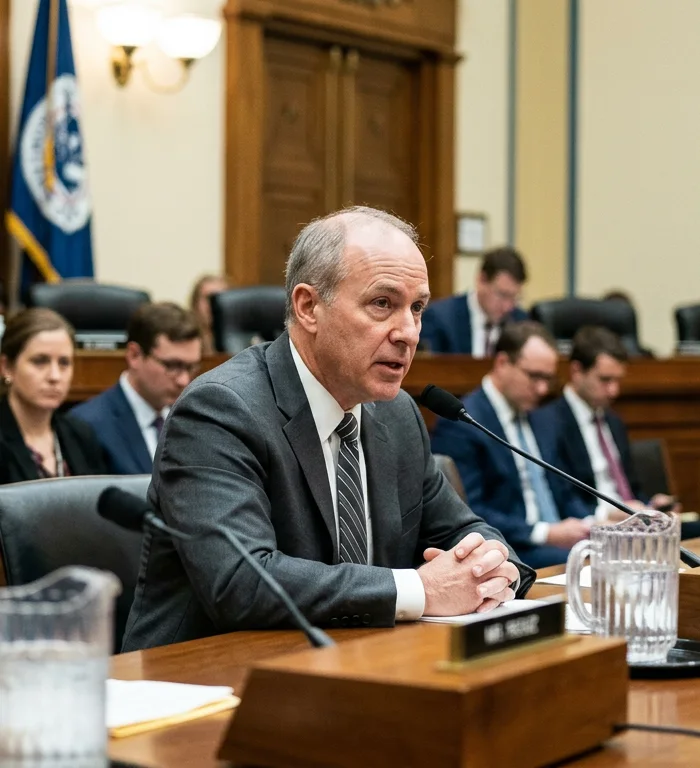
During a recent House Homeland Security Committee hearing, lawmakers challenged the Department of Homeland Security regarding the adequacy of training and vetting procedures for Immigration and Customs Enforcement (ICE) agents. The inquiry follows reports of violent incidents involving federal agents, some of whom were hired under expedited processes implemented during the previous administration. Critics highlighted that current ICE training requirements, which have fluctuated between 8 and 13 weeks, fall below the hourly training mandates required for licensed barbers in several U.S. states.
Secretary of Homeland Security Markwayne Mullin acknowledged that previous administrative decisions regarding hiring and training standards required corrective action. He confirmed that the department is currently working to restore a 13-week training curriculum. Regarding personnel security, the Secretary stated that all active ICE agents have undergone full background checks, noting that individuals with incomplete vetting are currently placed on administrative leave.
Legislative concerns were specifically raised regarding the deployment of agents prior to the completion of comprehensive background investigations. This practice was linked to a fatal shooting incident in Maine, where an agent involved had reportedly not completed the full vetting process. Lawmakers questioned the operational risks associated with deploying personnel who have not met standard security benchmarks.
Industry experts note that while direct comparisons between law enforcement training and trade licensing are complex, the discrepancy in hours remains a point of political contention. Federal agent training is specialized, focusing primarily on immigration law and deportation procedures, whereas local law enforcement training is broader and centered on public safety and de-escalation. The department maintains that it is committed to upholding elite standards for its agents, though it faces ongoing pressure to reconcile past hiring surges with current institutional security requirements.
More stories
- FCC approves prison cellphone jamming despite 2.5-mile warning
- Congress tests Black Democrats' growing policy influence
- Cotton faults Lutnick over AI chips allegedly sent to China
- Vance declines to back Iran strikes as Trump defends war
- Paul seeks 20%-30% federal credit for U.S. film shoots
- Trump targets data centers abroad with tax threat to firms
- Cao faces Senate scrutiny over $32.5m-a-day Iran blockade estimate
- Nvidia forms security panel as chip controls tighten again
- Trump administration escalates election suits before vote
- Trump holds back on Bolsonaro claim to Brazil leadership
Latest news
- Trump prepares tariffs on China and other major exporters
- New-car buyers pay record average $50,087 in October
- Banks face ECB reserve debate over liquidity and profits
- Investors see Anthropic debut gains fade below $83 a share
- Iraq orders federal control over Kurdish-area oilfields
- Germans oppose Ukraine aid as poll shows support slipping
- Kim Jong-un receives 10 envoys after constitutional shift
- Ukraine claims Libya strike sinks Russian naval corvette