

India Approves $335 Million Boost for Domestic Battery Mineral Refining
India has launched a $335 million subsidy program for domestic lithium and nickel refineries to reduce import dependence and secure its supply chain.
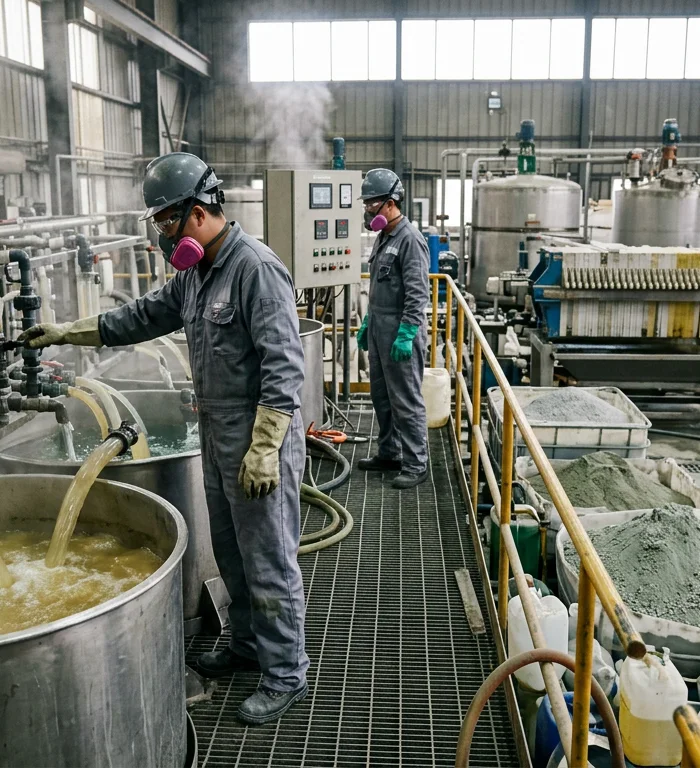
The Indian government has approved a $335 million (Rs 2,814 crore) capital support scheme to establish four commercial-scale lithium and nickel refineries. This initiative aims to address a critical vulnerability in the nation’s battery supply chain by reducing reliance on imported processed chemicals, which currently originate primarily from China. The program will subsidize 30% of the capital costs for two lithium refineries and two nickel plants, with a target of achieving significant domestic processing capacity by 2030.
To complement this supply-side investment, the cabinet also authorized $1.7 billion (Rs 14,500 crore) in viability gap funding for 92 GWh of grid-scale energy storage projects. These projects will be subject to domestic content requirements, effectively creating a captive market for the output of the new refineries. The Ministry of Mines has simultaneously relaxed auction rules for critical mineral blocks, reducing the minimum number of qualified bidders required to accelerate the allocation of mining assets.
The Indian
India currently remains entirely import-dependent for lithium, nickel, and cobalt. In 2025, the country imported lithium compounds valued at approximately $1.3 billion, with two-thirds sourced from China. While the government has previously focused on exploration and downstream cell manufacturing, this new policy marks the first dedicated effort to secure the mid-stream processing phase of the battery value chain.
Despite the strategic intent, the scale of the investment remains modest compared to international peers. The $335 million allocation is significantly smaller than the capital deployed by the United States or the export-control strategies utilized by Indonesia and Zimbabwe to force domestic smelting. Analysts note that the success of the program will depend on the private sector’s ability to overcome high capital requirements and limited access to proprietary processing technology. The government’s reliance on a one-time capital subsidy model is designed to limit fiscal exposure, but it places the burden of operational risk and market volatility entirely on private developers.
More stories
- Banks face ECB reserve debate over liquidity and profits
- Investors see Anthropic debut gains fade below $83 a share
- Iraq orders federal control over Kurdish-area oilfields
- Nvidia shares retreat as AI rally cools before PCE data
- Nvidia board gets Trump input on Jensen Huang return as CEO
- Rwanda faces budget strain from 85% electricity access push
- ECB succession race narrows to Dutch and Spanish choices
- EIA raises 2026 Brent forecast to $97.44 a barrel
- Treasury yields hit 5% as weak auction jars markets anew
- Non-citizen voter registrations show US state system gaps
Latest news
- Germans oppose Ukraine aid as poll shows support slipping
- Kim Jong-un receives 10 envoys after constitutional shift
- Ukraine claims Libya strike sinks Russian naval corvette
- Macy’s parade faces balloon limits as storm winds approach
- COP31 climate talks collapse over fossil fuels and funds
- Highly diversified investors report 91% confidence in retirement